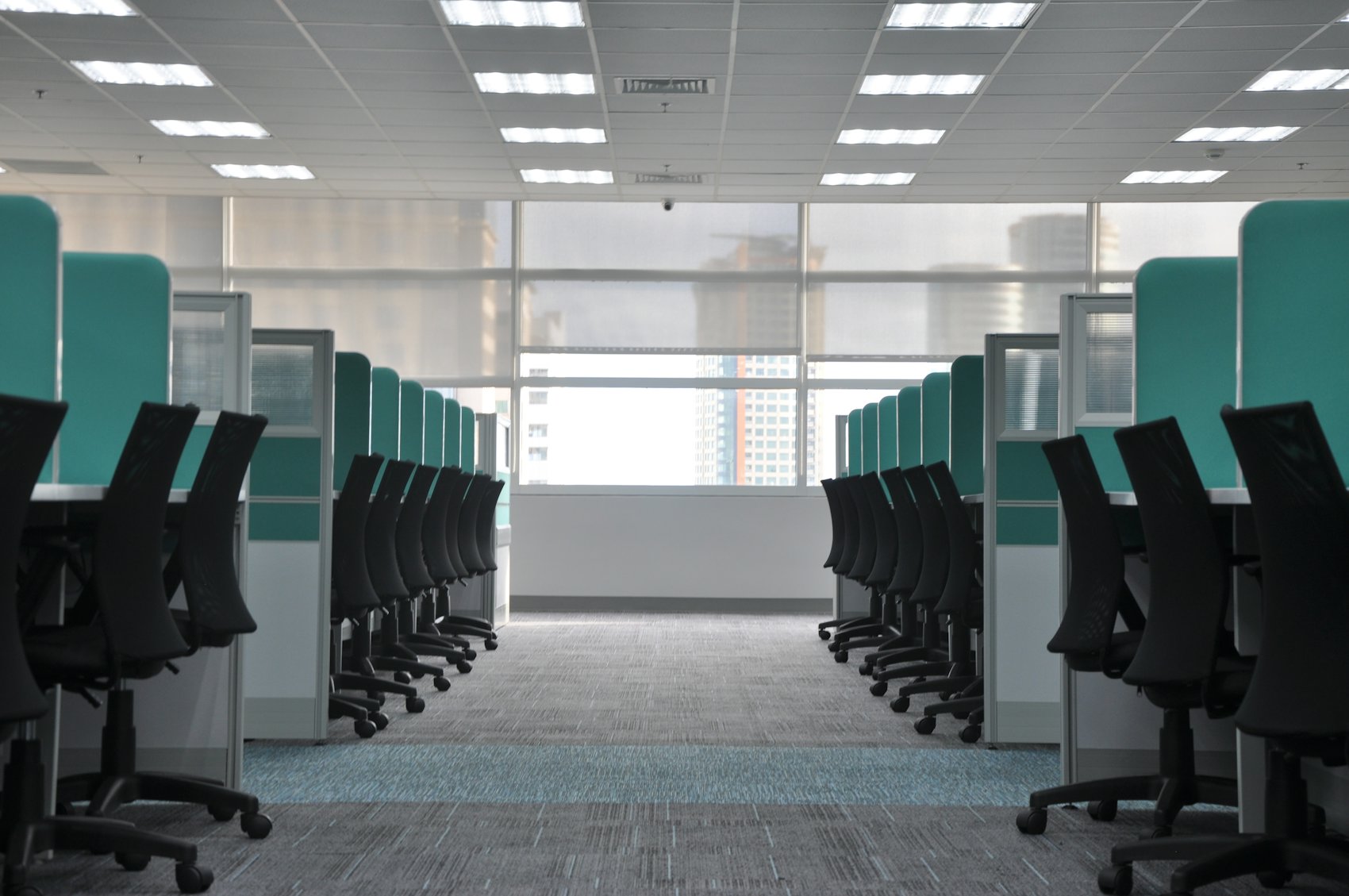
Photo: DPPed, CC BY-SA 3.0, via Wikimedia Commons
Short answer: Cubicle installation in Phoenix means delivering, staging, assembling and leveling a panel system to an approved space plan, then leaving powered runs ready for a licensed electrician to connect to the building. Office Station crews install across Greater Phoenix, including nights and weekends where buildings require it. Installation is quoted as its own line, and electrical work and any permit it needs are quoted separately. Every project is quoted individually.
- What cubicle installation covers
- Base feeds, power poles and the electrician
- Leveling and floor conditions
- Phoenix building rules and access
- After-hours and phased installs
- How long installation takes
- Installing or moving systems you already own
- Before the crew arrives
What cubicle installation covers
Panel-system cubicles are not flat-pack furniture. Each station is a set of panels, connectors, worksurface brackets, storage and power components that must go together in the right order and line up with the stations around it. A good install is invisible: straight runs, level worksurfaces, panels that close tight, and cables out of sight.
This page covers panel systems and workstations specifically. For desks, conference tables, reception and general furniture assembly, see office furniture installation in Phoenix.
- Layout. The approved space plan is chalked or taped on the floor so the first panel lands in the right place relative to columns, walls and power.
- Staging. Panels and parts are sorted by station so the floor stays clear and nothing is installed out of order.
- Panels and connectors. Spines go up first, then the panels that branch off them, joined with the system's own connectors at L, T and X junctions.
- Stackers and finishes. Glass, fabric or marker board stackers are added to reach the specified height.
- Worksurfaces and storage. Brackets, worksurfaces, overhead storage, pedestals, keyboard trays and monitor arms.
- Power and cable management. In-panel harnesses and receptacles are installed, and raceways are left ready for data cabling.
- Leveling and punch list. Glides are adjusted, gaps closed, and the run walked with you before the crew leaves.
Base feeds, power poles and the electrician
Powered cubicles carry electricity through a harness in the base or beltline of each panel, with receptacles clipped in where each person needs them. Getting building power into that harness is the part most buyers ask about.
| Power entry | How it works | Where it fits in Phoenix buildings |
|---|---|---|
| Wall base feed | A flexible conduit runs from a wall junction box into the base of the nearest panel | Runs that start at a wall, common in smaller business-park suites |
| Floor base feed | Feeds up from a floor box or poke-through under the panel | Island runs in the middle of a floor, more common in newer build-outs |
| Ceiling power pole | A pole drops from the ceiling into the run, carrying power and often data | Slab-on-grade or older floors where cutting into concrete is not practical |
Installers set the panel harnesses, receptacles and the feed location in the system. Connecting that feed to the building's circuits is electrical work for a licensed electrician, and it is quoted as a separate line. In Arizona, electrical contractors are licensed through the Registrar of Contractors. Whether the connection needs a permit is up to the electrician and the city where the office sits, whether that is Phoenix, Tempe, Scottsdale or elsewhere in the Valley. Data and phone cabling is usually handled by your low-voltage or IT vendor after the panels are up.
Tell us early how many circuits the plan needs. New systems such as the OS2 workstation system use a 4-circuit base, which lets monitors, task lights and chargers be split across circuits. Pre-owned systems vary by manufacturer and era, and the quote states what the power components are.
Leveling and floor conditions
A run that is out of level shows up as gaps between panels, worksurfaces that slope and storage doors that will not close. Leveling is done with adjustable glides at the base of each panel, and it matters more in some Phoenix buildings than others.
- Older slab floors in Midtown and central Phoenix buildings can have dips and joints that need more glide adjustment across a long run.
- Carpet tile over concrete is the most common surface. Glides sit on the carpet, so thick pad can make long runs settle unevenly.
- Raised access floors in some data-heavy offices need the panel feet placed to avoid tile seams.
- Polished concrete in converted warehouse and flex space in Tempe, Deer Valley and the Scottsdale Airpark needs glides that will not slide.
Phoenix building rules and access
Most installation delays have nothing to do with the furniture. They come from the building. Settle these before a truck is booked.
- Certificate of insurance. Towers on Central Avenue, the Camelback Corridor and the Biltmore area typically require specific additional-insured wording, sent to property management ahead of time.
- Dock and freight elevator. High-rises book these by the hour. A large order may need several windows, and the elevator cab size limits how long a panel can ride.
- Liftgate unloading. Many suites in Chandler, Gilbert, Mesa and Glendale business parks have no dock, so trucks unload by liftgate. Office-park and HOA rules may limit truck size, parking and hours.
- Protection. Floor runners, elevator pads and corner guards are standard requests, especially in finished lobbies.
- Packaging removal. New systems arrive boxed. Confirm where cardboard and wrap can go, because many buildings do not allow it in their dumpsters.
- Light rail. Along the Valley Metro line in Downtown, Midtown and Tempe, trucks cannot stop on the tracks, so the unloading point needs planning.
After-hours and phased installs
Many installs run at night or on weekends, either because the building requires it or because the office is occupied. An occupied floor is usually done in phases: one section is cleared, installed and handed back before the next starts, so people keep working.
Summer sets its own schedule. From May through September, deliveries are booked for early morning so panels, laminate and adhesives do not sit in a hot trailer, and monsoon storms from mid-June through September can interrupt afternoon unloading. Ask building management to have the suite's air conditioning running, because new build-outs sometimes have power before cooling.
How long installation takes
Installation time depends on station count, panel height, how much is powered, building access and working hours. Taller panels with stackers and overhead storage take longer than low benching. The furniture's lead time comes first.
| Grade | Furniture lead time | Installation note |
|---|---|---|
| Liquidation grade | In stock, installed in as little as 72 hours | Components arrive sorted by station, ready to assemble |
| Remanufactured | Usually 7 to 14 days | Rebuilt components, installed like a new system |
| New | 4 to 6 weeks | Boxed parts, more staging and packaging removal |
To compare the grades, see office cubicles in Phoenix, remanufactured cubicles and new cubicles in Phoenix.
Who does what on install day
A cubicle install usually involves more than one trade. Knowing who owns each task keeps the schedule from stalling while one waits on another.
| Task | Who handles it | When |
|---|---|---|
| Space plan and floor layout | Office Station | Before the order is approved |
| Delivery, staging and assembly | Office Station installation crew | Install window set with the building |
| In-panel power harnesses and receptacles | Office Station installation crew | During assembly |
| Hardwired connection to building power | Licensed electrician, quoted separately | After the panels are up |
| Data and phone cabling | Your IT or low-voltage vendor | After the panels are up |
| Certificate of insurance and building access | Property management, with details from Office Station | Before the truck is booked |
The usual bottleneck is the electrician and IT vendor arriving before the runs are finished, or long after. Book both for the day after assembly is complete, and keep one person on your side as the contact for the building, the crew and the trades. If the team needs to be working on a fixed date, put that date in writing on your quote request so every trade plans backward from it.
Installing or moving systems you already own
Office Station can quote work on panel systems you already have: adding stations, changing panel heights, adding power, or taking a system down and reinstalling it in a new Valley suite. Whether it makes sense depends on the manufacturer, the condition of the parts and whether connectors and hardware are complete. Mixing parts from different manufacturers generally does not work.
See office reconfiguration in Phoenix for rebuilding in place, and office furniture relocation in Phoenix for moving a system between buildings. Office Station is an independent reseller, not an authorized dealer, and manufacturer warranties generally do not transfer to pre-owned furniture.
Before the crew arrives
- Approved space plan, with power entry points marked for each run.
- Certificate of insurance sent to property management.
- Dock, liftgate and freight elevator times reserved.
- Carpet, ceiling grid and paint finished in the install area.
- A clear staging area near the work.
- Air conditioning running on install day.
- Electrician and IT vendor scheduled for after assembly.
If you do not have a plan yet, start with office space planning in Phoenix. For every furniture category in the Valley, see office furniture in Phoenix.
Space planning is free. Email hello@officestation.com with your headcount, address, floor plan and move-in date, or request a quote, and installation, electrical and delivery come back as separate lines.
Frequently asked questions
Who installs office cubicles in Phoenix?
Office Station crews install panel-system cubicles and workstations across Greater Phoenix, for furniture bought from Office Station and, case by case, for systems you already own. Installation covers delivery, staging, panel assembly, worksurfaces, storage, leveling and wire management. It is quoted as its own line, and the hardwired electrical connection is quoted separately and done by a licensed electrician.
How long does cubicle installation take?
It depends on station count, panel height, power, building access and working hours. A small suite needs a short install window, while a large floor is phased over several nights or a weekend. The furniture lead time comes first: in-stock liquidation grade can be installed in as little as 72 hours, remanufactured usually takes 7 to 14 days and new takes 4 to 6 weeks.
Do I need an electrician to install powered cubicles?
Yes, for the building connection. Installers assemble the panel power harnesses and receptacles inside the system, but connecting a base feed or power pole to the building's circuits is electrical work for a licensed electrician. That work is quoted as a separate line, and the electrician decides whether a permit is needed from the city where the office is located.
Can cubicles be installed at night or on weekends in Phoenix?
Yes. Many Downtown, Midtown, Camelback Corridor and Tempe buildings only allow large deliveries and noisy work after business hours or on weekends, and occupied offices often prefer it. After-hours windows are set around the building's rules and confirmed before the truck is booked. Timing affects how crews are scheduled, so it is reflected in the installation quote.
Do you install cubicles bought from someone else?
Sometimes. Office Station can quote installation, reconfiguration or relocation of panel systems you already own, depending on the manufacturer, the condition of the parts and whether connectors and hardware are complete. Send photos, the brand if known, a station count and the address to hello@officestation.com so the crew can confirm what is needed.
What should I prepare before cubicle installers arrive?
Have the approved space plan, the building's certificate of insurance requirements, a reserved freight elevator or dock time, a clear staging area and the suite's air conditioning running. Carpet, ceiling grid and wall paint should be finished. Confirm where power will enter each run, whether from wall boxes, floor monuments or ceiling poles, so the electrician can be scheduled after assembly.