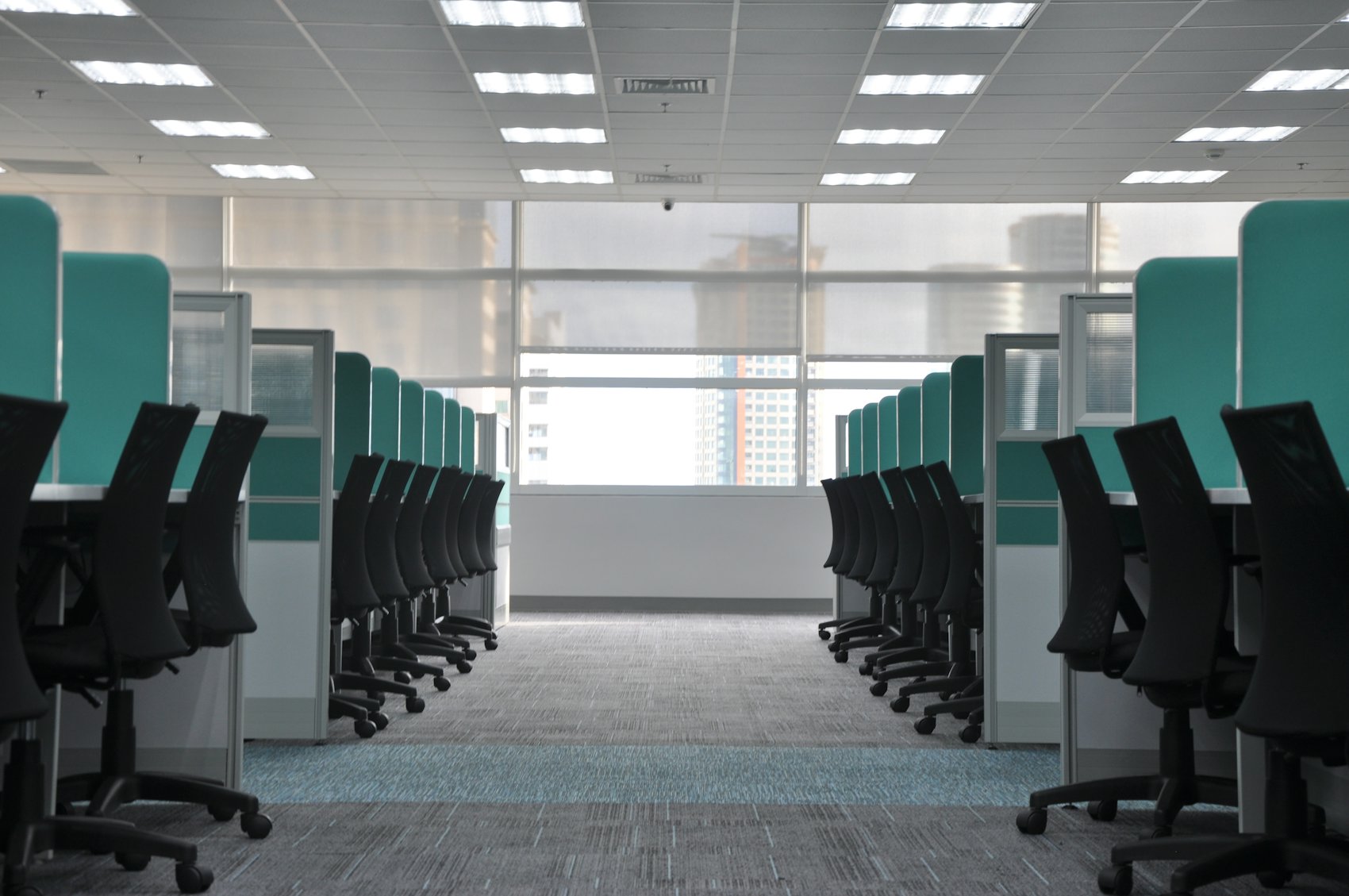
Photo: DPPed, CC BY-SA 3.0, via Wikimedia Commons
Short answer: Office Station reconfigures office furniture across Greater Phoenix. Crews tear down and rebuild cubicles and modular workstations in place, add stations, change panel heights, bring power to new runs and rework floors for hybrid and return-to-office schedules. When the system you own runs short, matching pre-owned, remanufactured or new components fill the gaps. Space planning is free, and every project is quoted individually.
- When reconfiguration makes sense
- What a reconfiguration can change
- Reconfigure, add to or replace
- Matching parts: pre-owned, remanufactured or new
- Hybrid and return-to-office layouts
- How a Phoenix reconfiguration runs
- Reconfiguration across the Valley
When reconfiguration makes sense
Most reconfiguration calls come from offices that are not moving. The lease is staying put, but the way the floor is used has changed. A team has grown and needs more seats. A department has shrunk and left a block of empty stations. A hybrid schedule has turned assigned desks into shared ones. Or the layout simply never worked, with tall panels blocking light and a team split across two corners.
In each case, the furniture is often fine. Panel systems are built to come apart and go back together in a different shape, and the parts that wear out first, such as fabric, worksurface edges and keyboard trays, can be replaced without throwing away the frames. Reworking what you own is usually faster than ordering a new floor, and it keeps usable furniture out of the dumpster.
Reconfiguration is a poor fit when the system is so old that parts cannot be found, when the station size has to change a great deal, or when the layout needs a type of furniture you do not have, such as benching or private offices on an open floor. The comparison below helps sort that out early.
What a reconfiguration can change
The scope can be as small as one team pod or as large as a full floor. These are the most common changes on Phoenix projects:
- Teardown and rebuild in place. Stations are taken down, the floor is cleared or recarpeted, and the same furniture goes back up in a new plan.
- Adding stations. Extra workstations are added to an existing run, or a new cluster is built from spare and matching parts.
- Removing stations. Surplus stations come out to open up collaboration space, a project room or wider aisles.
- Changing panel heights. Panels are lowered for open, collaborative teams or raised with stackers and glass toppers for privacy and call work.
- Adding power and data. Powered base raceways and new feeds bring outlets and data to stations that did not have them, with a licensed electrician making the connections.
- Swapping components. New worksurfaces, pedestals, overhead storage, monitor arms or sit-stand bases on existing frames.
- Refreshing the look. Panels re-covered and frames refinished as part of a remanufacturing pass, so old and added stations match.
The layout options themselves, from single stations and 2-packs to inline runs, clusters, bullpens and benching, are laid out on the cubicle configurations page. The national overview of this service is on office furniture reconfiguration.
Reconfigure, add to or replace
There are three realistic routes for most Phoenix floors. The right one depends on the condition of the furniture, how far the new layout is from the old one and how soon the team needs to be working in it.
| Route | What happens | Fits best when | What sets the timeline |
|---|---|---|---|
| Reconfigure only | Existing panels, worksurfaces and storage are taken down and rebuilt in a new plan | The system is in good condition and the new layout uses the same or fewer stations | Station count, power work and how many zones the building allows per night |
| Reconfigure and add | Existing furniture is reworked and matching pre-owned, remanufactured or new parts fill the gaps | Headcount has grown, or the new plan needs taller panels, more storage or more power | Lead time on the matching parts and whether they need new fabric or paint |
| Replace | The old system is cleared and a different system goes in, sized for the new plan | Parts are discontinued, finishes are worn, or the station size has to change | Grade of the replacement furniture and the removal of the old system |
Both reconfiguring and replacing can be quoted against the same space plan, so the decision is made on real options rather than guesses. If you do replace, the old furniture can be cleared in the same project through Phoenix office furniture liquidation, and the new stations are covered on office cubicles in Phoenix.
Matching parts: pre-owned, remanufactured or new
Adding to a system you own is a matching problem. Panels from the same manufacturer and product line usually connect, but frame heights, connector types and finishes vary by generation. The walkthrough records panel labels, connector styles, worksurface sizes and finish colors, so the search is for parts that actually fit.
| Grade | Lead time | How it matches |
|---|---|---|
| Liquidation grade | Installed in as little as 72 hours when in stock | Same product line from a Valley office liquidation, inspected and graded; finishes may vary slightly from yours |
| Remanufactured | Usually 7 to 14 days | Frames rebuilt, panels re-covered and surfaces refinished in colors chosen to match or refresh your floor |
| New | 4 to 6 weeks | Ordered new where the product line is still made, or a compatible new system for a separate zone |
When a perfect match is not available, a common answer is to keep the original system in one zone and put a different, matched set in another, such as a new team area or project room. Brand and model names identify the original manufacturer only. Office Station is an independent reseller, not an authorized dealer of any manufacturer, and manufacturer warranties generally do not transfer to pre-owned furniture. For the trade-offs between grades, read used vs remanufactured vs new cubicles.
Hybrid and return-to-office layouts
Hybrid schedules and return-to-office plans are behind many Phoenix reconfigurations. The furniture question changes from how many people work here to how many people are here on the busiest day, and what they come in to do.
- Shared stations. Assigned cubicles become bookable desks. Stations get cleaner surfaces, lockers or mobile storage replace personal pedestals, and power and monitor arms are standardized so anyone can sit anywhere.
- More meeting space. A row of empty stations becomes a project room or huddle area. Removed panels and worksurfaces can be reused to build team tables.
- Lower panels, then taller ones. Teams that come in to collaborate often want lower panels. Teams on calls all day still need height, so one floor may end up with two panel heights.
- Return to office. When more people come back than the current plan seats, spare stations are rebuilt from storage or added with matching parts on a phased schedule.
Before committing, test the plan on paper. A free Phoenix space plan shows how many stations fit, where the aisles go and where power enters each run.
How a Phoenix reconfiguration runs
- Walkthrough. Free, and typically scheduled within 48 hours in Greater Phoenix. It records the system, panel heights, power, parts on hand, building rules and your target date.
- Space plan and quote. The new layout is drawn against your existing inventory, showing what is reused, what is added and what is surplus. Electrical and installation are quoted as separate lines.
- Parts and phasing. Matching parts are ordered to their grade's lead time, and the floor is split into zones so teams keep working.
- Install nights. Each zone is taken down, rebuilt, leveled and connected, often in the evening or on a weekend. Staff pack desks before their zone moves.
- Punch list. The finished floor is walked with you, and anything out of square or missing is closed before the crew leaves.
Summer matters here too. From May through September, deliveries of added parts are booked for early morning so panels and seat foam are not left in a hot truck, and the suite's air conditioning should stay on during night work. Crew work is covered in more detail on office furniture installation in Phoenix.
Reconfiguration across the Valley
Crews reconfigure offices throughout Greater Phoenix. Each city page below covers local buildings and the furniture available for adding stations:
- Scottsdale, including the Airpark, where many suites unload by liftgate
- Tempe, Mesa, Chandler and Gilbert in the East Valley
- Glendale and Peoria in the West Valley
Most of these cities also have a cubicle page, linked from office furniture in Phoenix. If the reconfiguration is part of a move to a new suite, see office furniture relocation in Phoenix instead.
Request a reconfiguration quote
Send photos of your current workstations, a floor plan or sketch, your headcount and your target date to hello@officestation.com or through the contact page. The walkthrough and the space plan are both free.
Frequently asked questions
Can you reconfigure our existing cubicles in Phoenix?
Yes. Office Station tears down and rebuilds panel systems and modular workstations in place across Greater Phoenix: new runs, more or fewer stations, different panel heights, new power routes and reworked team areas. Send photos of the panels, connectors and worksurfaces with your floor plan, and the free space plan shows what your existing system can do before anything is quoted.
Can we add stations that match our current workstations?
Often, yes. Matching pre-owned or remanufactured components can be sourced for many name-brand systems, and new parts can be ordered for systems still in production. Liquidation-grade parts in stock can be installed in as little as 72 hours, remanufactured parts usually take 7 to 14 days, and new parts take 4 to 6 weeks.
Can you change the panel height of our cubicles?
Usually. Many panel systems can be lowered by removing a stacked segment or raised by adding a stacker or glass topper, as long as the connectors and frames allow it. Lower panels suit collaborative teams, and taller panels suit call areas and focused work. Bring panel labels or photos of the frame ends to the walkthrough.
Who handles power when workstations move?
Powered panels are disconnected and reconnected by a licensed electrician, quoted as a separate line. If new runs land away from the existing floor boxes or ceiling feeds, the building may need new feeds, which is worth knowing before the layout is final. The space plan marks where power enters each run so the electrician can price it.
Can the office keep working during a reconfiguration?
Yes, in most cases. Phoenix reconfigurations are usually phased by zone, with crews working evenings and weekends so each team leaves on a Friday and returns to finished stations on Monday. Staff pack their own desks before each phase. Your building's rules on after-hours work and freight elevators set how many zones fit into each night.
Is it cheaper to reconfigure or to buy different furniture?
It depends on the system and the new layout. Reconfiguring tends to win when the furniture is in good shape, parts are available and the layout change is moderate. Replacing tends to win when the system is discontinued or the station size has to change. Every project is quoted individually, and both options can be quoted side by side.