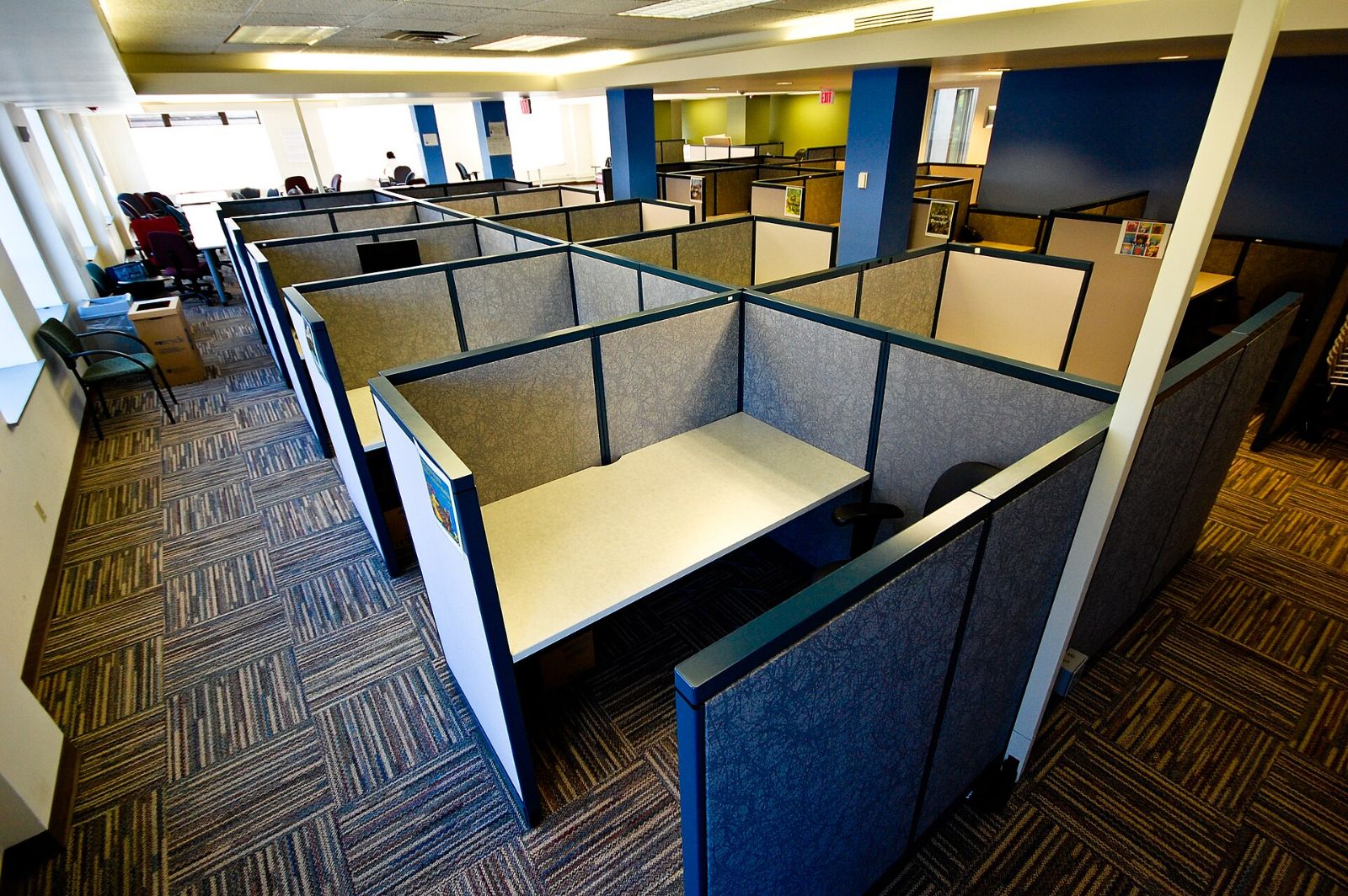
Office furniture reconfiguration means taking your existing workstations apart and rebuilding them into a different layout. Panels get shortened or re-spined, worksurfaces move, storage shifts, and a room of 8x8 stations can become a denser pod of 6x6 stations or an open bench-style run. Done well, it costs a fraction of new furniture and keeps usable pieces out of the landfill.
This page walks you through how a reconfiguration project works at Office Station, what it costs, and how to decide whether to rework, add to, or replace what you have.
When reconfiguration makes sense
Reconfiguration is the right call when the furniture itself is in good shape and the problem is the layout. Common triggers include:
- Headcount changes. You need to fit more people in the same footprint, or you shrank and want to open up collaboration space.
- A move within the building or to a new suite with a different column grid or window line.
- Hybrid schedules. Assigned stations become shared touchdown stations, and you need fewer of them.
- Department reshuffles where teams need to sit together and the current rows no longer work.
- Privacy complaints. Panels are too low for focused work or too high for teams that talk all day.
It usually does not make sense when components are damaged, discontinued parts are impossible to source, or the panel system is so mixed that nothing connects cleanly. In those cases, a partial or full replacement with used cubicles may cost less than fighting the old system.
How a reconfiguration project works
- Tell us what you have. Send photos, a rough count of stations, the manufacturer and panel line if you know it, and your floor plan if you have one.
- Free space planning. We draft a layout that fits your headcount, circulation paths and power locations, and we flag which existing components carry over and which you are short on.
- Parts list and quote. You get a clear list: stations rebuilt from your inventory, any add-on components or stations needed, installation labor, and delivery if parts are coming in.
- Schedule the work. Crews can work nights and weekends so your team is not sitting in a construction zone. We coordinate freight elevators, dock time and certificates of insurance with your building.
- Teardown and rebuild. Stations come down, components are sorted, and the new layout goes up. Your electrician handles any powered-panel changes.
- Surplus handled. Leftover pieces can be liquidated, removed, or stored by you for future growth.
Reconfiguration pricing
Pricing is straightforward. Space planning is free. Installation labor and anything new you need are quoted with your project.
| Item | Notes |
|---|---|
| Space planning | Layout drafted around your headcount and floor plan |
| Installation | Quoted with your project |
| Added 6'x6' station, liquidation-grade | Furniture only; as little as 72 hours when in stock |
| Added 6'x6' station, remanufactured | Furniture only; usually 7-14 days |
| Added 6'x6' station, new | Furniture only; 4-6 weeks |
| Delivery, Greater Phoenix | Elsewhere, freight is quoted per project |
Electrical, delivery and professional installation are quoted as separate lines. Larger orders are quoted together, and your quantity is reflected in the written quote.
Here is a simple example. You have 24 existing stations and want to rebuild them into 30. Installation is quoted with your project, based on the number of stations, building access and the complexity of the layout. Workstation pricing depends on grade (liquidation-grade, remanufactured or new), station size, panel height, finishes and quantity, so every project is quoted individually. The savings are obvious.
Rework, add, or replace
Most projects end up as a mix. Here is how to think about each piece of your inventory:
- Rework panels, frames and worksurfaces that are structurally sound. Fabric wear is cosmetic and often acceptable in back-office areas.
- Add matching or compatible stations when your layout needs more seats than you own. Liquidation-grade is the fastest; remanufactured gives you refreshed finishes that blend better next to clean existing panels.
- Replace components that are broken, badly stained, or from a line where connectors are no longer available. Replacing a small percentage is usually cheaper than rebuilding around them.
Condition grades help you decide what to add. Grade A is like new, grade B is very good, and grade C is good. Pairing grade A or B additions with your existing furniture keeps the room consistent.
Checklist before you reconfigure
- Manufacturer and panel line of your current stations, including any labels under worksurfaces
- Current and future headcount, including hybrid seat-sharing ratios
- Location of power and data feeds, and whether panels are powered
- Building rules for after-hours work, elevator reservations and insurance certificates
- Fire code clearances and aisle widths in your space
- Seating needs, since a new layout is a good moment to look at pre-owned office chairs
- What happens to the pieces you will not reuse
What happens to leftover furniture
Reconfigurations often free up storage, extra panels or whole stations. You can keep them for growth, but if they are sitting in a storage room they are costing you space. Through our office furniture liquidation service, Office Station walks them for free and recommends the best route: resale, a buy, a quote to clear, donation or recycling, case by case. If the whole floor is going away rather than being reworked, look at office decommissioning instead.
Frequently asked questions
What does office furniture reconfiguration cost?
Installation is quoted with your project, based on the number of stations, building access and the complexity of the layout. Space planning is free. If the new layout needs extra stations or parts, those are priced separately by tier. Electrical work and delivery are not included in the per-station rate.
Can you add stations that match my existing cubicles?
Often, yes. Office Station sells pre-owned systems furniture from major manufacturers, so matching a common panel line is usually possible. Finish and fabric matches depend on what is available, and we will tell you plainly if a close match is not realistic.
Do I need an electrician for a reconfiguration?
If your panels carry power or data and the new layout moves feeds, base-feed locations or circuits, plan on a licensed electrician. Our pricing excludes electrical work, and we coordinate the layout so your electrician knows exactly where feeds land.
Will reconfiguring void my manufacturer warranty?
Warranty terms are set by the manufacturer and vary. Office Station is an independent reseller, not an authorized dealer, and manufacturer warranties generally do not transfer to pre-owned furniture. Check your original purchase paperwork if warranty coverage matters to you.
What if some of my furniture is not worth keeping?
Surplus pieces can go through our liquidation service. We walk them for free and recommend the best route: resale, a buy, a quote to clear, donation or recycling, case by case.