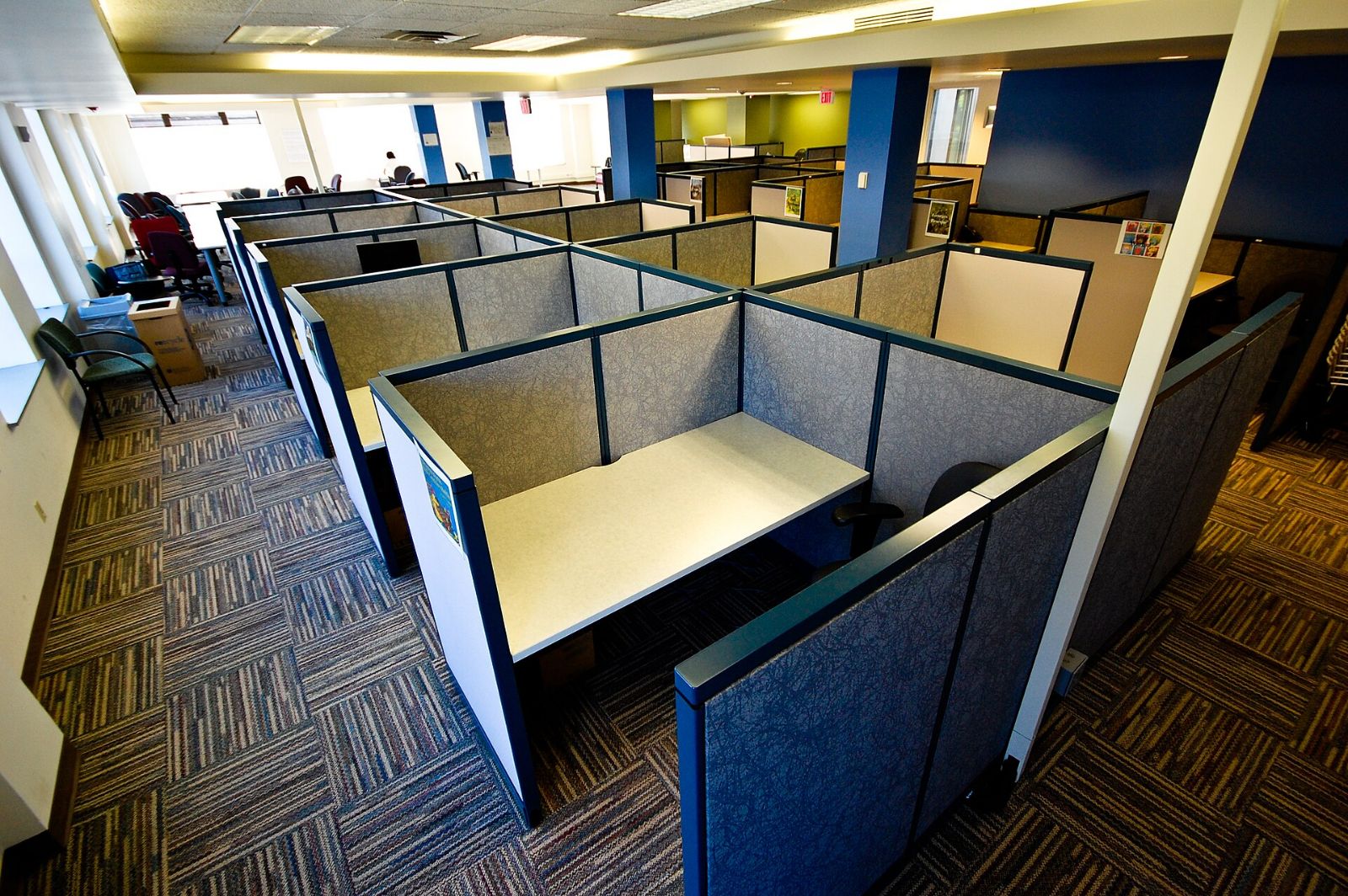
An office move looks simple on a floor plan. In practice it is a stack of dependencies. The new space needs furniture before people arrive, the old space has a lease end date, the building wants insurance certificates and elevator reservations, and somebody has to decide what happens to everything that is not coming along.
That last question is where moves go over budget. Leftover furniture, old electronics and file rooms tend to get handled last, in a rush, by whoever is still available. Office move management from Office Station plans both ends together so the exit is scheduled as carefully as the arrival.
What office move management covers
- Move planning and sequencing. A timeline built backward from your lease end and forward from your move-in date.
- Building coordination. Certificates of insurance issued to each building's requirements, freight elevator reservations and loading dock scheduling at both addresses.
- Nights and weekends crews. Work happens outside business hours so your team keeps working.
- Itemized inventory. A written list of what moves, what is liquidated and what is recycled, so decisions are made once.
- Liquidation of what stays behind. A written net offer on furniture you are not taking.
- E-waste handling. Electronics removed with certificates of data destruction.
- Clean handback. A photo-documented broom-clean space and a diversion summary showing where materials went.
If you only need the exit side, see office decommissioning. For relocations that include new furniture at the destination, see corporate relocation.
How the net offer offsets your move
Every piece you leave behind has a resale value and a removal cost. Your written net offer is simply the first minus the second. When resale value is higher, the number is positive and Office Station pays you. When removal costs more, you see the exact figure before you commit, not on a final invoice.
That clarity matters during a move. You can decide item by item whether to take a piece, sell it or replace it at the new space, with real numbers behind each choice.
A typical move management timeline
| Phase | What happens | Your decisions |
|---|---|---|
| Walkthrough | Typically within 48 hours in Greater Phoenix, 2 to 3 business days in other markets | Share floor plans, lease dates and building contacts |
| Written offer and plan | Itemized inventory and net offer within 5 business days | Mark what moves, what is liquidated and what is recycled |
| Building paperwork | COIs issued, freight elevator and dock time reserved at both sites | Confirm move windows with property managers |
| New space setup | Furniture delivered and installed before people arrive | Approve layout from free space planning |
| Move window | Nights and weekends crews move people and equipment | Have staff pack personal items and label desks |
| Decommission | Liquidation, e-waste removal with data destruction certificates | Sign off on the final inventory |
| Handback | Photo-documented broom-clean space and diversion summary | Deliver documentation to your landlord |
Furnishing the new space
If the new office needs workstations, choose a tier based on how much time you have:
- Liquidation-grade: $615 for a 6'x6' workstation, furniture only. In-stock items can be ready in as little as 72 hours.
- Remanufactured: $1,245, usually 7 to 14 days.
- New: $1,920, typically 4 to 6 weeks.
Prices exclude electrical, delivery and professional installation. Installation is $95 per workstation with a $495 minimum. Greater Phoenix delivery is $195 central or $295 metro, and freight elsewhere is quoted per project. Volume pricing applies at 5% for 20 or more stations, 8% for 50 or more and 12% for 100 or more.
Tight timelines often favor keeping good existing furniture and filling gaps with liquidation-grade or remanufactured stations, rather than waiting on new production.
Move management checklist
- Confirm lease end date and handback conditions in writing.
- Get building COI requirements for both the old and new addresses.
- Reserve freight elevator and dock times early.
- Walk the old space and build an itemized inventory.
- Decide move, liquidate or recycle for every category.
- Separate electronics and storage media for data destruction.
- Finalize the new layout and order any furniture that has a lead time.
- Coordinate with your IT and telecom vendors on disconnect and reconnect dates.
- Schedule after-hours crews and communicate the plan to staff.
- Collect the broom-clean photos, data destruction certificates and diversion summary.
Where office moves usually go wrong
- Treating the old space as an afterthought. Crews that just finished the move-in are rarely available for the cleanout, and the lease date does not move.
- Missing building paperwork. A COI that names the wrong entity can keep a crew at the dock for hours.
- Moving furniture that should have been sold. Paying to move and reinstall pieces that do not fit the new layout costs twice.
- Leaving electronics for last. Old computers and storage media need documented data destruction, not a dumpster.
Where we work
Liquidation and decommissioning are available in Phoenix, Tucson, Flagstaff, Las Vegas, Reno, San Diego, Orange County, Northern California including the Bay Area and Sacramento, Denver, Salt Lake City and Albuquerque. Tell us both addresses and your dates, and we will scope the move from there.
Prefer email? Reach us at hello@officestation.com.
Average market rate Prices subject to availability and project pricing.
Frequently asked questions
What does office move management include?
It covers planning the move timeline, coordinating building requirements such as certificates of insurance, freight elevator reservations and dock times, and scheduling crews. With Office Station it also includes clearing the space you leave through liquidation, e-waste handling with certificates of data destruction, and a photo-documented broom-clean handback.
How does liquidating leftover furniture affect the cost of a move?
You receive a written net offer equal to the resale value of the furniture minus the cost of removing it. If that number is positive, Office Station pays you, which can offset part of your move. If it is negative, you know the exact decommissioning cost up front.
Can the move happen after business hours?
Yes. Nights and weekends crews are available so your team keeps working until the move window. After-hours work is also common because many buildings restrict freight elevator and dock use during the day.
How quickly can you start?
Walkthroughs are typically within 48 hours in Greater Phoenix and 2 to 3 business days in other liquidation markets. Written offers follow within 5 business days of the walkthrough.
Which markets do you serve?
Liquidation and decommissioning are available in Phoenix, Tucson, Flagstaff, Las Vegas, Reno, San Diego, Orange County, Northern California including the Bay Area and Sacramento, Denver, Salt Lake City and Albuquerque. Contact us to confirm the details for your project.