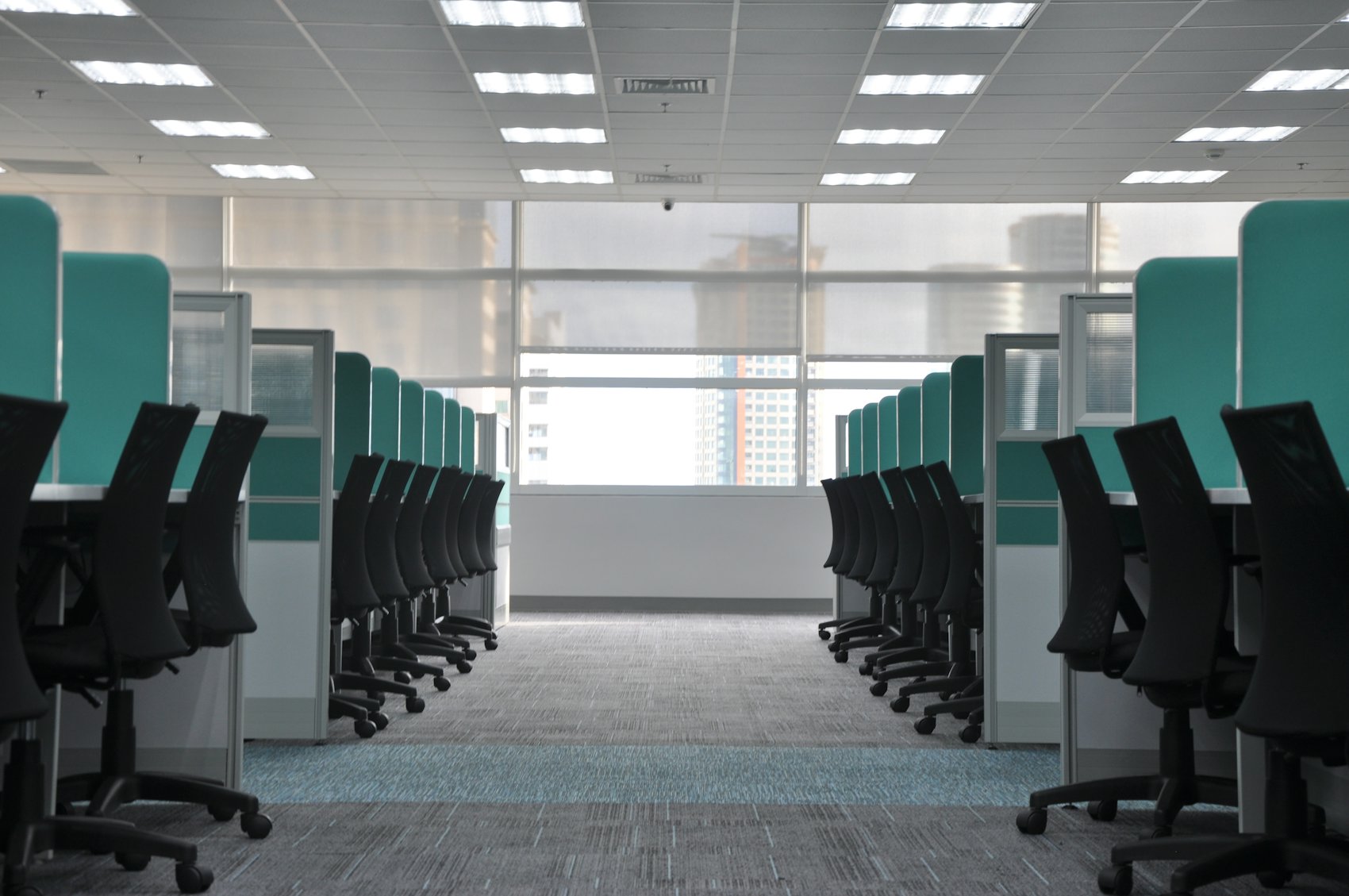
Photo: JDrewes see www.jandrewes.de, CC BY-SA 3.0, via Wikimedia Commons
An office relocation in San Diego is two projects that share one deadline: setting up the new space and clearing the old one. A reconfiguration is the same work without the truck, when the lease still makes sense but the layout no longer does. Both start with the same decision about your furniture: keep it as it is, rework it, or replace it. This guide walks through that decision, a realistic timeline, the building rules that shape it and how to leave the old suite on time. Office Station serves San Diego with installation, reconfiguration, pre-owned and new furniture, and clear-outs, with free space planning.
- Why San Diego offices move and restack
- Move, reconfigure or replace
- Reconfiguring the space you have
- A relocation timeline
- Two buildings, two sets of rules
- Clearing the old suite
- Common relocation mistakes
Why San Diego offices move and restack
San Diego's office market is large and active. Kidder Mathews' 3Q 2026 San Diego office report counted about 112 million square feet of office inventory, and the quarter's notable deals included new leases in Sorrento Mesa, Downtown and Del Mar Heights and Carmel Valley, alongside large renewals in Rancho Bernardo and Kearny Mesa. Behind numbers like these are companies changing how much space they hold and where it is.
Real moves within the county show the pattern. SANDAG ended its 35-year presence at Wells Fargo Plaza, 401 B Street, and moved its downtown offices to a 37-story mixed-use building at 1011 Union Street under a 15-year lease, with public meetings at the new location starting April 3, 2025. In UTC, JLL announced it would relocate its local office from 8910 University Center Lane to the full 11th floor, 15,869 square feet, of La Jolla Commons III at 4727 Executive Drive, with a planned January 2026 move-in. Each move like these leaves one space to clear and another to furnish.
Not every change needs a new address. Renewals often come with a decision to restack: give back part of a floor, fit the same team into a tighter layout, or turn rows of workstations into meeting and collaboration space.
Move, reconfigure or replace
Make this decision before the move is booked, because it changes the crew plan, the timeline and what happens to the old suite.
| Approach | Choose it when | Main risk | Lead time to plan around |
|---|---|---|---|
| Move existing furniture as is | Furniture is in good shape and the new floor plate suits it | Column spacing, window lines or power locations in the new space do not match the old layout | Set by dock and elevator bookings at both buildings |
| Move and reconfigure | The system is sound but station sizes, panel heights or groupings need to change | Discontinued connectors, power harnesses or worksurfaces | Set by parts availability |
| Replace with liquidation grade | The date is close and the finish can follow available stock | Matched quantities depend on current stock | As little as 72 hours where in stock |
| Replace with remanufactured | You want a consistent, refreshed look in your own colors | Finish choices need to be made early | Usually 7 to 14 days |
| Replace with new | A brand standard or finish cannot be met pre-owned | The longest lead time of the three grades | 4 to 6 weeks |
The quickest way to decide is a space plan of the new floor with your current stations drawn in. If they fit with little waste, moving them is usually sensible. If the plan shows lost seats, awkward aisles or the wrong panel heights, compare that against matched pre-owned furniture sized for the new space. Freight to San Diego is quoted per project, so include it when you compare. Grades and lead times are covered on used office furniture in San Diego and in the San Diego buyer's guide.
Reconfiguring the space you have
Reconfiguration is the right answer more often than people expect. Systems furniture is designed to be taken apart and rebuilt, and a well-kept system can usually change shape several times over its life.
Common reconfigurations
- Densify. Smaller stations or a cluster layout to seat more people in the same area.
- De-densify. Fewer, larger stations, or a row of stations removed to widen aisles and add touchdown space.
- Lower panels. Shorter panels or glass toppers to open the floor and let more light reach the interior.
- Regroup teams. Stations moved so teams that work together sit together.
- Convert space. Workstations removed from part of the floor to create meeting or project rooms.
What decides whether it works
Parts are the deciding factor. Every panel system has its own connectors, supports and power components, and older lines can be hard to match. Before you plan a reconfiguration, send photos of the panels, connectors and any manufacturer labels, along with the layout you want. Parts from stations being removed can often be reused elsewhere on the floor. The office furniture installation in San Diego page covers how reconfiguration and after-hours work are handled, and the configuration picker shows the common layouts.
A relocation timeline
Work backward from the date the team must sit down in the new space, and the date the old space must be returned. They are rarely the same day.
- Three to four months out. Read both leases, including the return-condition clause on the old space. Request contractor rules from both buildings. Gather floor plans, and start the space plan for the new floor.
- Ten to twelve weeks out. Decide move, reconfigure or replace for each area. Order anything new now, since new furniture takes 4 to 6 weeks. Request a walkthrough of the old suite to plan its clear-out.
- Six to eight weeks out. Approve the final plan. Book the electrician and IT vendor. Submit certificates of insurance and request dock and elevator dates at both buildings.
- Three to four weeks out. Confirm remanufactured orders, which usually take 7 to 14 days. Confirm in-stock liquidation-grade furniture for your exact count, along with freight. Tag every piece that is moving.
- Move week. Disconnect, disassemble, move and reinstall, usually over an evening or weekend. The electrician connects power after installation.
- After the move. Punch-list walkthrough in the new space. Clear the old suite and hand it back to the landlord.
Short timelines are possible, especially with in-stock liquidation-grade furniture, but every week removed from this plan reduces your choices.
Two buildings, two sets of rules
A relocation means satisfying two property managers. Each will want its own certificate of insurance wording, dock booking and elevator reservation, and the two calendars have to line up.
- Downtown towers commonly limit moves to evenings and weekends, share one freight elevator across tenants and book docks tightly.
- UTC and University City buildings are newer, with managed docks and structured parking.
- Sorrento Mesa buildings often mix office and lab space, so lab rooms stay out of the furniture scope.
- Kearny Mesa and Carlsbad are mostly business parks and campuses with dock-high or grade-level doors and shared drive aisles.
Get both buildings' rules in writing before you choose a move date. A move that suits one building and breaks the other's rules has to be rescheduled.
Clearing the old suite
Whatever does not make the move still has to leave before the lease ends. Matched, well-kept furniture may suit resale, while older or mixed pieces usually go to donation or recycling, decided case by case. Electronics go to recycling with certificates of data destruction. If the lease requires the space returned to a landlord's standard, the scope grows to include cabling and fixtures.
Commercial furniture removal in San Diego covers clean-outs and partial clear-outs, San Diego office furniture liquidation covers routing furniture case by case, and the San Diego office liquidation guide covers lease-end planning and California disposal rules. Walkthroughs in San Diego are scheduled on request.
Common relocation mistakes
- Assuming the old furniture fits. Draw it on the new plan before you pay to move it.
- Booking the move before the buildings. Dock and elevator dates come first.
- Forgetting the electrician. Powered stations without power are just furniture.
- Leaving the old suite to the end. Plan the clear-out alongside the move, not after it.
- Ordering new furniture late. New takes 4 to 6 weeks, so it sets the pace for everything else.
For how the whole program runs on one calendar, see corporate relocation. Workstation sizes and panel heights for the county are on used cubicles in San Diego, and you can request a quote and free space plan online.
Space planning is free. Send both addresses, your floor plans, headcount and dates to hello@officestation.com or through the contact page, and the plan comes back with your quote.
Sources: Kidder Mathews, San Diego office market report, 3Q 2026; SANDAG news release, April 3, 2025; JLL newsroom.
Frequently asked questions
Should we move our existing cubicles to the new office or buy different ones?
Compare both before booking the move. Moving existing stations works when they are in good condition, parts are available and the new floor plate suits them. Replacing makes sense when station size or panel height must change, the system is discontinued or finishes are worn. A space plan of the new floor with your current stations drawn in usually makes the answer clear.
How long does an office relocation take to plan in San Diego?
Start as early as you can, ideally three to four months before the move. That leaves time to decide what moves, order any new or remanufactured furniture, get building approvals at both addresses and book after-hours windows. New furniture takes 4 to 6 weeks, remanufactured usually 7 to 14 days, and in-stock liquidation grade as little as 72 hours.
Can we reconfigure our office instead of moving?
Often, yes. If the lease still works but the layout does not, existing workstations can usually be reconfigured: stations added or removed, panel heights lowered, teams regrouped or part of the floor turned into meeting space. It depends on the system and whether matching parts can be found. Send photos of the panels and connectors with the layout you want.
What happens to the furniture we leave behind in the old office?
It needs a route before the lease ends. Matched, well-kept furniture may suit resale, while older or mixed pieces usually go to donation or recycling, decided case by case. Electronics go to recycling with certificates of data destruction. Office Station can clear the old suite and set up the new one on a single calendar.
Do San Diego office buildings restrict move hours?
Many do, especially downtown and in UTC towers. Buildings commonly require a certificate of insurance naming the owner and property manager, a reserved freight elevator, a booked dock time and evening or weekend moves. Ask both the old and new buildings for their contractor rules in writing before you choose a move date.
Is a space plan included for an office relocation?
Yes. Space planning is free with a furniture or installation quote. The plan shows how your current furniture fits the new floor, where new or pre-owned pieces fill gaps, and where power and data need to land. It also gives the installers an approved drawing so no layout decisions are left for move day.