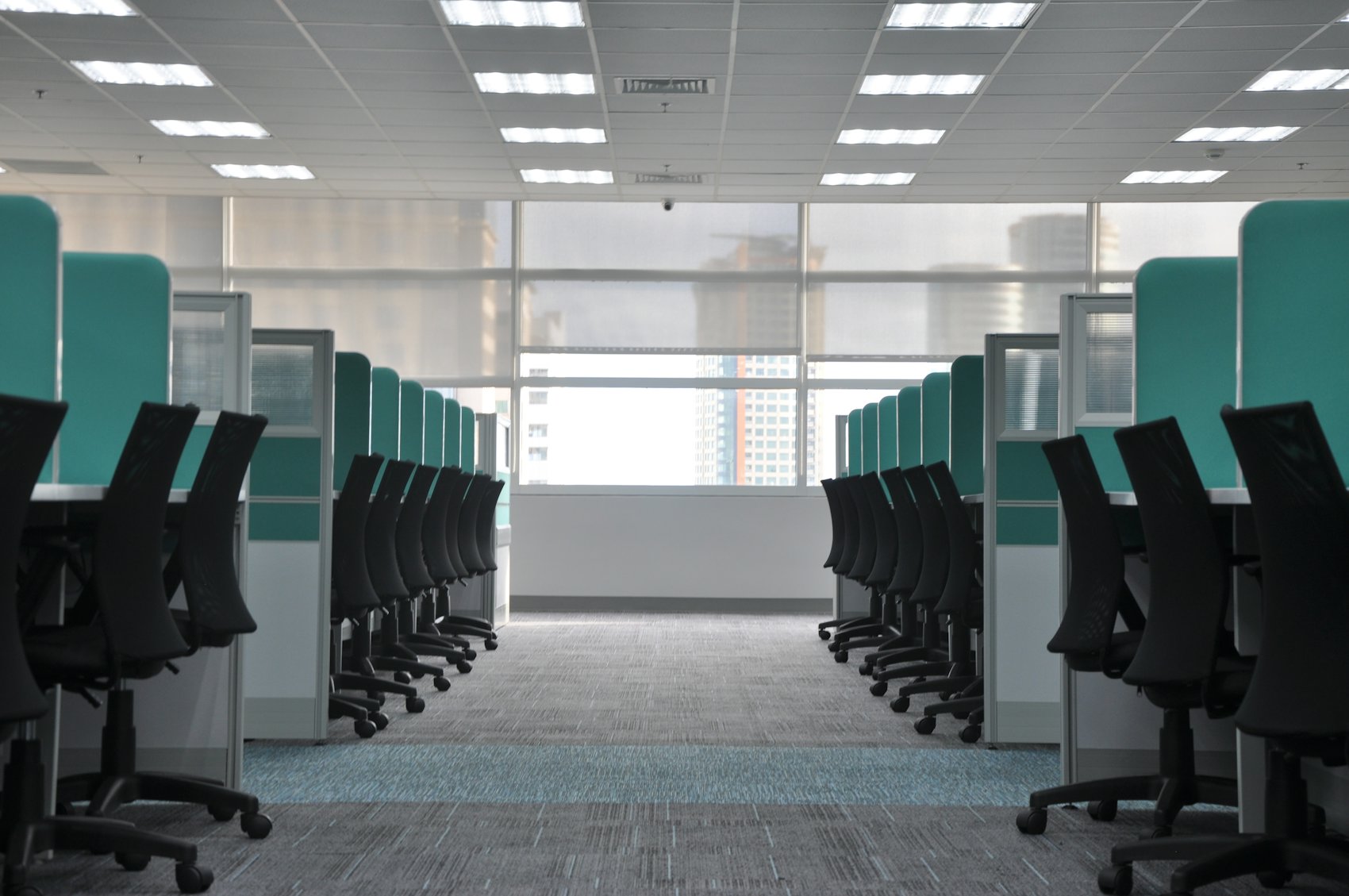
Photo: JDrewes see www.jandrewes.de, CC BY-SA 3.0, via Wikimedia Commons
Short answer: Office Station serves San Diego with commercial furniture removal: cubicles and panel systems, desks and chairs, file and storage cabinets, conference furniture and office equipment. That includes full clean-outs, partial clear-outs after a downsizing, and full decommissioning when a lease ends. Walkthroughs are scheduled on request, a written recommendation sets the route for each part of the inventory, and the space is handed back broom-clean with an itemized inventory. Every project is quoted individually.
- What a San Diego removal covers
- Removal, liquidation or decommissioning
- Downsizing and partial clear-outs
- Office clean-outs and inherited furniture
- Office equipment and e-waste
- How a removal runs
- Removal across San Diego County
What a San Diego removal covers
Most removal calls start with one of three situations. A lease is ending. A team is shrinking into less space. Or a new tenant has signed a lease and found the last tenant's furniture still standing. The furniture is usually the same in each case. What changes is how much of it goes, how fast, and whether the space has to be returned to the landlord's standard.
- Cubicles and panel systems. Electrical disconnect by a licensed electrician, then panels, worksurfaces, stackers, overheads and pedestals taken down and staged by type.
- File and storage cabinets. Lateral and vertical files, storage towers and wardrobes. Empty them before removal day. Locked units without keys can be opened on site if you mention them at the walkthrough.
- Desks and casegoods. Private-office desks, credenzas, bookcases and reception stations, taken apart where they were built in sections.
- Seating. Task chairs, guest chairs, lounge and breakroom seating, counted and sorted by model.
- Conference rooms. Large tables that will not fit a freight elevator in one piece, plus credenzas, whiteboards and wall-mounted screens.
- Office equipment. Computers, monitors, printers, phones, servers and breakroom appliances, recycled with documentation.
Some items need a decision before the crew is booked. Millwork fastened to walls, abandoned cabling above the ceiling and wall patching are lease questions, not furniture questions. If they are in play, the project is closer to a full exit, and office decommissioning is the better fit.
Removal, liquidation or decommissioning
These words get used as if they mean the same thing. They describe different jobs, and choosing the right one at the start keeps the scope honest and the schedule realistic.
| Service | What happens to the furniture | Who it fits | What drives the timeline |
|---|---|---|---|
| Commercial furniture removal | Taken down and hauled out, routed to resale, donation or recycling as condition allows | Tenants who need a suite, floor or room emptied by a date, and new tenants clearing inherited furniture | Quantity, building access, electrical disconnects and the move-out window the building allows |
| Office furniture liquidation | Graded and routed case by case to resale, donation or recycling, with a written recommendation first | Offices with matched, well-kept systems furniture and brand-name seating | Inventory grading, matched counts and how much time remains before the lease date |
| Office decommissioning | Everything out: furniture, cabling, fixtures and e-waste, with restoration items coordinated and the space returned to the landlord | Full lease exits and surrenders with a restoration clause | The surrender clause, the landlord's list, IT shutdown and the handback walkthrough |
| Donation | Usable pieces go to schools, nonprofits or community groups that can receive them | Mixed or older furniture with little resale demand but plenty of use left | Finding a recipient that can take the quantity on your dates |
Most San Diego projects end up as a blend. A floor of matched workstations may suit resale while the file room goes to recycling and the breakroom tables go to a nonprofit. The walkthrough is where that gets sorted, and the route is put in writing before anything is scheduled. The San Diego office liquidation guide covers lease-end planning, tower rules and California disposal rules in more detail.
Downsizing and partial clear-outs
A downsizing is the hardest kind of removal to schedule, because the rest of the office is still working. The usual pattern is to consolidate the remaining team into one part of the floor, then clear the vacated area so the landlord can re-demise or re-lease it.
- Decide what stays first. Tag the stations, chairs and storage the remaining team will keep. Anything untagged is in scope. This one step prevents most removal-day mistakes.
- Reconfigure before you remove. If the remaining team needs a tighter layout, existing stations can often be reconfigured with parts taken from the stations being removed. See office furniture installation in San Diego.
- Keep working areas clear. Removal in an occupied office often runs in the evening or over a weekend, with a clear path from the vacated area to the freight elevator or dock.
- Get the handback right. If the vacated area goes back to the landlord, ask what condition it must be in: cabling removed, floor boxes capped, walls patched.
Office clean-outs and inherited furniture
Not every job is a whole floor. A San Diego office clean-out is often one of these:
- A storage or file room. Years of lateral files, spare chairs and boxed parts that nobody wants to take to the next office.
- Inherited furniture. A new tenant finds the previous tenant's cubicles still standing. Clearing them is the first step before the new layout goes in.
- A consolidation. Two offices become one, and the surplus from the closing location has to go on a fixed date.
- An office-and-lab building. In Sorrento Mesa, UTC and Carlsbad, office furniture can be cleared once the lab side has been released by your environmental health and safety team. Lab equipment and casework are a separate scope.
If the clean-out is making room for new furniture, the old and new can run on one calendar. Furniture for the next layout is covered on used office furniture in San Diego and used cubicles in San Diego, and space planning is free.
Office equipment and e-waste
Office equipment removal covers the things that plug in: desktops and laptops, monitors, docking stations, printers and copiers you own, desk phones, network gear and servers, plus breakroom refrigerators, microwaves and coffee equipment. Leased copiers and printers belong to the leasing company, so check the lease and arrange their pickup separately.
California's e-waste rules are strict, so electronics never go in the dumpster. They are recycled, with certificates of data destruction for drives and storage devices. Keep your IT team involved: anything holding company or client data should be wiped or pulled by your own staff before the crew arrives, and the inventory should note which devices left the building. The office furniture disposal and e-waste guide walks through the routes.
How a removal runs
- Walkthrough. Scheduled on request. It covers the inventory, building access, dock and elevator rules, power disconnects and your date.
- Written recommendation. The route for each part of the inventory, the crew plan and the schedule. Every project is quoted individually.
- Building paperwork. Certificates of insurance with the holder wording your property manager needs, freight elevator and dock reservations, and floor and elevator protection.
- Removal days. Electrical disconnects first, then take-down, staging and loading, often at night or on weekends in occupied buildings.
- Handback. Broom-swept floor, an itemized inventory, photos and a summary of where furniture and equipment went.
What drives cost is the same list that drives time: quantity, panel systems versus freestanding pieces, electrical work, building access, after-hours requirements and how much of the inventory has a resale or donation route.
Removal across San Diego County
There is a steady supply of space changing hands. Kidder Mathews' 3Q 2026 San Diego office report counted about 112 million square feet of office inventory, with Downtown carrying the highest vacancy of the major submarkets it tracks and Kearny Mesa among the lowest. The same report listed new leases in Sorrento Mesa, Downtown and Del Mar Heights and Carmel Valley during the quarter. Every suite that turns over usually leaves furniture behind.
The building decides the plan more than the furniture does. Each district page covers local buildings and logistics:
- Downtown San Diego: shared freight elevators, booked docks and after-hours windows
- UTC and University City: newer towers, managed docks and lab neighbors
- Sorrento Mesa: low-rise office and R&D with mixed office and lab space
- Kearny Mesa: business parks, mid-rise office and high station counts
- Carlsbad: North County campuses with dock-high or grade-level doors
Moving rather than closing? The old space can be cleared and the new one set up on one schedule. See corporate relocation and the San Diego relocation and reconfiguration guide.
Market data: Kidder Mathews, San Diego office market report, 3Q 2026.
Request a San Diego walkthrough
Send your address, suite size, what needs to go and your move-out date to hello@officestation.com or through the contact page. The walkthrough is free, and if you are furnishing a new space, so is the space plan. Furnishing the next office instead? Request a furniture quote.
Frequently asked questions
Do you do office furniture removal in San Diego?
Yes. Office Station serves San Diego with commercial furniture removal: cubicles and panel systems, desks, chairs, file cabinets, conference furniture and office equipment. A licensed electrician disconnects hardwired power before panels come down. Work runs nights and weekends when the building requires it, and the space is handed back broom-clean with an itemized inventory of what left.
Do you remove office cubicles in San Diego?
Yes. Cubicle removal covers panels, worksurfaces, stackers, overhead storage, pedestals and power harnesses. Powered panels are disconnected by a licensed electrician first. Systems in good, matched condition may have a resale route, while older or mixed systems usually go to donation or recycling. The written recommendation sets out the route for each part of the inventory.
What is the difference between furniture removal and office liquidation?
Removal is about getting furniture out of the space by a date. Liquidation adds a decision about where each piece goes: resale, donation or recycling, decided case by case. Decommissioning goes further and covers everything needed to hand the space back to the landlord. Most San Diego projects are a blend, and the walkthrough sorts out which part fits which route.
Can you clear part of an office after a downsizing?
Yes. A clean-out can be a whole suite or one part of it: a vacated wing, a file room, storage closets, or furniture left behind by a previous tenant. The scope is agreed in writing after the walkthrough, including anything that stays, so the crew removes only what is listed and the rest of the office keeps working.
Do you remove office equipment and e-waste?
Yes. Computers, monitors, printers, phones, servers and breakroom appliances can be removed alongside the furniture. Electronics go to recycling with certificates of data destruction for drives and storage devices. Your IT team should wipe or pull company data before the crew arrives, and leased copiers go back to the leasing company under your lease terms.
How do I schedule a removal walkthrough in San Diego?
Email hello@officestation.com or use the contact page with your address, suite size, what needs to go and your move-out date. Walkthroughs in San Diego are scheduled on request. A written recommendation follows, and removal dates are then set around your lease date and the building's rules. Every project is quoted individually.