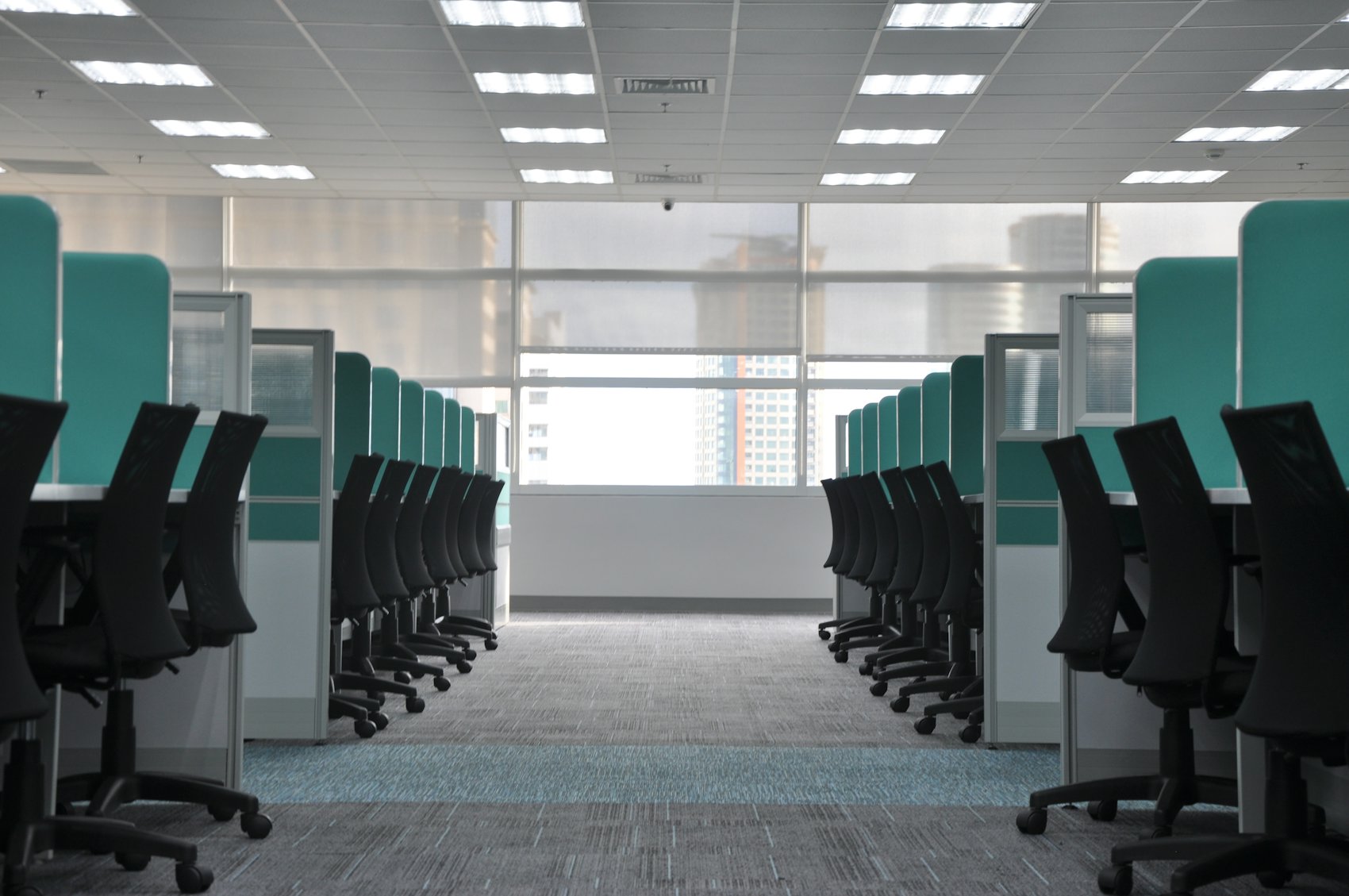
Photo: DPPed, CC BY-SA 3.0, via Wikimedia Commons
Short answer: Office Station decommissions offices for Arizona public agencies: state departments, cities and towns, counties, courts' administrative offices, utilities and special districts. The work follows your written scope and your surplus property rules. Furniture you release is routed to resale, donation, recycling or another department, cabling and fixtures come out where the scope calls for it, and the space is handed back with an itemized disposition record. Walkthroughs in Greater Phoenix are free and typically scheduled within 48 hours. Every project is quoted individually.
- Who this is for
- Scope we price against
- Surplus property comes first
- What a proposal includes
- Occupied buildings and security
- Disposition records
Who this is for
Public offices close, consolidate and move for the same reasons private ones do: a lease ends, a department moves into a county or city-owned building, a program winds down, or a remodel needs a floor emptied. What is different is the paperwork. A public project usually starts with a solicitation or a purchase order, has to respect surplus property rules, and ends with records someone may audit years later.
| Typical project | What usually drives it |
|---|---|
| Leased agency office closing | Lease end date and the landlord's surrender requirements |
| Department consolidating into an owned building | Move date, what transfers and what is released as surplus |
| Floor emptied for a remodel | Construction start date; furniture stored, reused or released |
| Program or field office shutting down | Closure date, records retention and equipment returns |
| Surplus backlog in a warehouse | Space needed back; items already released by the surplus process |
Scope we price against
A clear scope gets comparable bids. These are the line items Office Station prices when a solicitation or work order lists them:
- Furniture and cubicles: teardown and removal of workstations, private office casegoods, seating, files and storage, with each item routed as the agency directs.
- Cabling: abandoned data and low-voltage cabling above ceilings and in walls, removed after the network is shut down.
- Fixtures: whiteboards, signage, TVs and mounts, shelving and wall-hung storage.
- Electronics: recycling with certificates of data destruction for drives and storage devices, once your IT staff have wiped or pulled what they need.
- Moves inside the agency: items kept for another department or building, tagged, moved and reinstalled.
- Restoration and handback: patch and paint items to the landlord's list where the scope includes them, broom-swept floors and a joint walkthrough.
If you are writing the scope yourself, the guide to writing an office decommissioning RFP walks through each section.
Surplus property comes first
Government furniture is public property. Before anything leaves the building, your agency decides, under its own rules, what is kept, what transfers to another department, and what is released as surplus. Office Station does not decide that for you. The practical order is:
- Walkthrough and inventory, so the agency has a list to run through its surplus process.
- The agency marks each line: keep, transfer, or release.
- Released items are routed to resale, donation or recycling, and kept or transferred items are moved.
- Every line closes out on the disposition record.
Building the inventory early is what keeps a public project on schedule. Surplus approvals can take longer than the removal itself, so start the list as soon as the move or closure date is set.
What a proposal includes
A written proposal from Office Station follows the order of your scope and states:
- The work, line by line, as your solicitation or work order describes it, and anything excluded.
- The schedule: walkthrough, removal days, after-hours work and the handback date.
- How released furniture will be routed, and what the disposition record will show.
- The building requirements to be met before work starts, such as certificates of insurance, badging and elevator reservations, confirmed with your facilities team.
- References on request, and the documents your vendor registration asks for.
Questions during a solicitation go through the contact the solicitation names, so every bidder gets the same answer.
Occupied buildings and security
Many public projects clear one floor while the rest of the building stays open to the public. That usually means evening and weekend crews, protected routes through lobbies and corridors, and set elevator windows. Courts, public safety offices and buildings with secure areas may also require escorts, badges or background checks for each crew member. Share those requirements with the scope and they are planned and priced from the start, rather than discovered on day one.
Disposition records
At handback the agency receives an itemized inventory, photos of the empty space, a disposition record for every released item, and certificates of data destruction for recycled storage devices. Agencies that report diversion from landfill can use the record for that too. See sustainable office decommissioning for how furniture is routed to resale, donation and recycling.
For the full process, see office decommissioning in Phoenix, the decommissioning checklist and school and university furniture clear-outs.
Request a walkthrough or send a scope
Email hello@officestation.com with the solicitation number or scope, the building address and the date the space must be clear.
Frequently asked questions
Can Office Station respond to a public solicitation for office decommissioning?
Yes. Send the solicitation or the scope of work and the due date. Office Station reviews the scope, asks any questions through the channel the solicitation names, and responds with a written proposal built on your line items: removal, disposition, cabling, restoration items and the handback. Every project is quoted individually.
Who decides what happens to government-owned furniture?
Your agency does. Public property usually has to go through the agency's surplus process before it can be sold, transferred to another department, donated or recycled. Office Station works inside that process: items you release are routed as you direct, items you keep are moved or stored, and every route is listed on the inventory.
What paperwork do we get at the end?
An itemized inventory, photos of the space at handback, a disposition record showing which items went to resale, donation, recycling or another department, and certificates of data destruction for any drives or storage devices Office Station recycles. The format can follow the reporting your agency or auditors already use.
Can the work happen in an occupied public building?
Yes. Work in occupied buildings is usually scheduled after hours or on weekends, with the route through the building, elevator use, escorts, badging and any background-check requirements agreed before the first day. Tell us the building rules with the scope so they are priced and planned in.
Do you work outside Greater Phoenix?
Yes. Most public projects are in the Phoenix Valley, and Office Station also works in Tucson, Flagstaff and other Arizona communities. Outside Greater Phoenix, walkthroughs are typically scheduled within two to three business days.