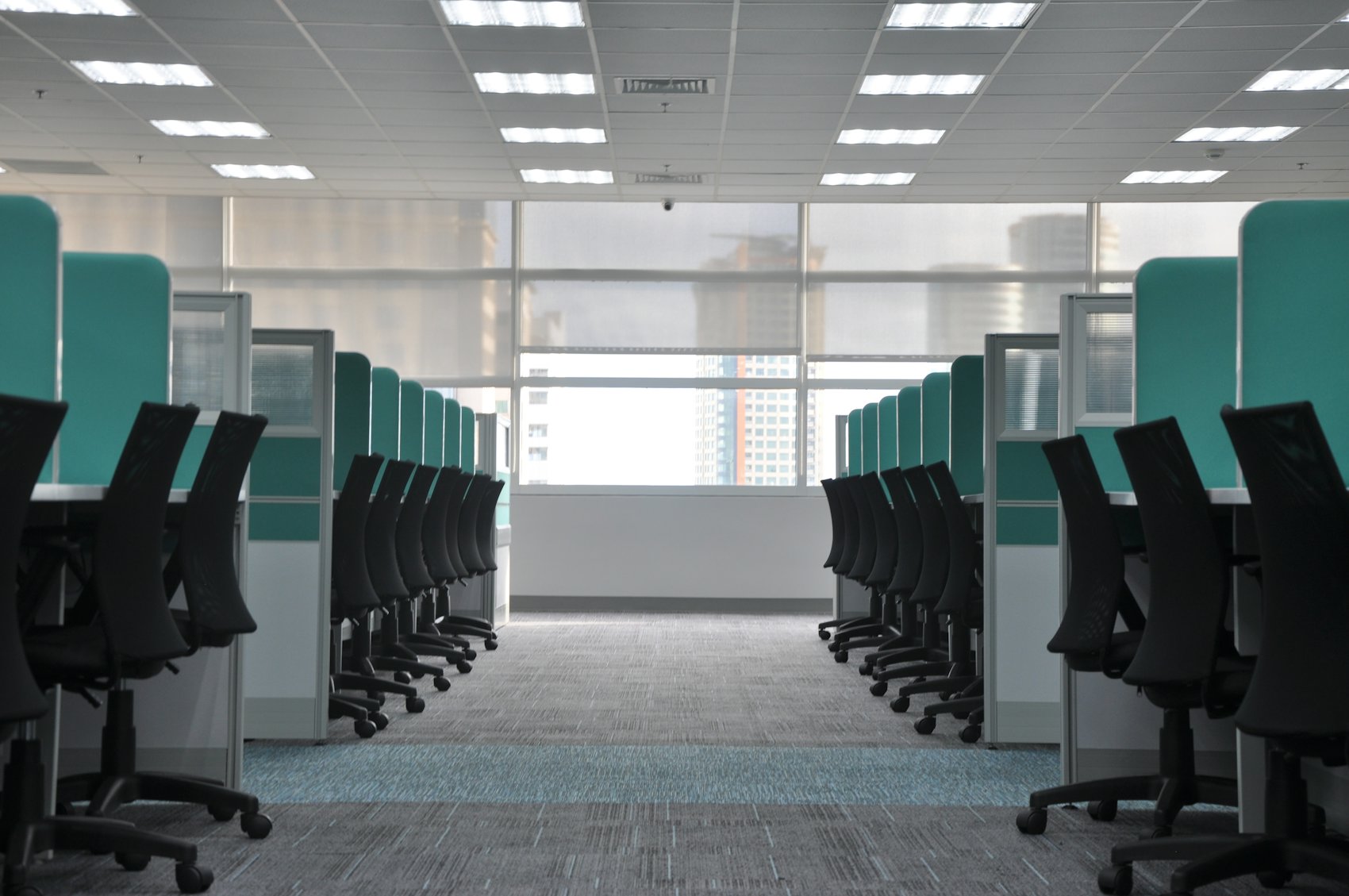
Open offices have a specific noise problem. It is rarely that the room is too loud. It is that the room is too quiet, so every phone call and hallway conversation carries clearly to the next desk. Your brain cannot ignore speech it can understand, and that is what breaks concentration.
Office sound masking addresses that problem by raising the background sound just enough to make distant speech unintelligible. But masking is one piece of a system. The furniture you choose, especially panel height, and the way you lay out the floor decide how much work the masking has to do.
The ABC approach: absorb, block, cover
Acoustic planners often describe open-office privacy in three parts. If one is missing, the other two struggle.
| Strategy | What it does | Typical tools |
|---|---|---|
| Absorb | Soaks up sound so it does not bounce around the room | Acoustic ceiling tile, fabric-wrapped panels, carpet, soft wall panels |
| Block | Stops the direct path of sound between people | Taller workstation panels, storage walls, screens, enclosed rooms |
| Cover | Reduces how intelligible remaining speech is | Engineered sound masking through ceiling speakers |
Workstation furniture handles much of the absorb and block work. Masking handles cover. That is why a furniture plan and a masking plan belong in the same conversation.
How sound masking works
A masking system uses a network of small speakers, usually hidden above a drop ceiling or mounted in an open ceiling. They play a continuous, shaped sound that resembles gentle airflow. The system is zoned and tuned so the level is even across the floor, rather than louder under one speaker.
When it is set correctly, people stop noticing it within days. What they do notice is that the conversation two desks away turns into a murmur. Set too low, it does nothing. Set too high, it becomes its own annoyance. Tuning is the job of the acoustic or audiovisual professional who designs the system, and it is worth paying for.
Masking does not cancel sound, and it will not quiet a loud person sitting next to you. It works on speech that has already traveled some distance and lost energy. That is exactly where panel height and layout come in.
Choosing panel heights
Panel height is the single biggest furniture decision for privacy. The basic question is whether a panel rises above the mouth and ear height of a seated person.
- Low panels, around desk height or just above, keep sightlines open and make team conversation easy. They block very little speech. Use them where collaboration is the point.
- Mid-height panels, roughly at seated head height, give visual privacy and break the direct sound path between seated neighbors. Standing conversations still carry over them.
- Tall panels, well above seated head height, block the most direct speech and give the strongest sense of personal space. They also block daylight and can make a floor feel closed in.
Many offices combine heights: taller panels between individual focus stations, mid-height along the spine between facing rows, and lower panels at the aisle so the floor still feels open. Glass or translucent stackers can add height without losing all the light.
Layout choices that help or hurt
Even with good panels and masking, some layouts leak sound. A few principles hold up in most spaces:
- Avoid direct face-to-face seating with low spines. People speak toward each other and project across the row. Offset seating or a taller spine helps.
- Group by noise level. Sales and support teams on the phone all day should not share a pod with people doing detailed focus work.
- Buffer with storage. A line of lateral files or a storage wall between departments adds blocking without building a wall.
- Keep circulation away from focus zones. Main walkways, break areas and printer stations generate constant traffic noise.
- Give loud tasks a place to go. A few small meeting rooms or phone booths take pressure off the open floor.
Office Station offers free space planning, so you can test panel heights and pod arrangements on your floor plan before committing to furniture.
Budgeting the furniture side
Because masking is installed in the room, it works with any workstation tier. That gives you room to put budget where it matters. For a 6'x6' workstation, furniture only, liquidation-grade runs $615, remanufactured $1,245, and new $1,920. Prices exclude electrical, delivery and professional installation, and installation is $95 per workstation with a $495 minimum.
If privacy is a priority, consider spending on taller, fabric-covered panels in focus zones and saving with used cubicles elsewhere. If you already own structurally sound stations with low panels, adding height through reconfiguration can be cheaper than replacing everything.
Open-office privacy checklist
- Walk the floor and note where complaints come from: phone calls, neighbors, walkways or meeting spill.
- Check the ceiling. Hard or open ceilings reflect more sound and may need absorptive treatment.
- Map teams by noise level before choosing seats.
- Choose panel heights zone by zone rather than one height everywhere.
- Prefer fabric-covered panels in focus areas.
- Bring in an acoustic or audiovisual specialist to design and tune masking.
- Coordinate masking installation with furniture delivery so ceiling work happens before stations go in.
- Add a few enclosed spaces for calls and meetings.
For more planning help, browse our office furniture guides or send us your floor plan.
Average market rate Prices subject to availability and project pricing.
Frequently asked questions
What is office sound masking?
Office sound masking is a low, steady background sound played through speakers, usually above the ceiling. It is tuned so nearby speech becomes harder to understand without making the room feel loud. It works best alongside absorptive surfaces and furniture that blocks direct sound.
Is sound masking the same as white noise?
Not exactly. Raw white noise tends to sound hissy and harsh. Professional masking is shaped to a spectrum that resembles soft airflow and is balanced across the room so people stop noticing it.
What cubicle panel height is best for privacy?
Panels that rise above seated head height block direct speech between neighbors far better than low panels. Many offices use taller panels between focused workers and lower panels along aisles or within collaborative teams. The right mix depends on how your people actually work.
Does Office Station install sound masking systems?
Office Station supplies pre-owned and new workstation furniture with free space planning, so we can help you choose panel heights and layouts that support privacy. The masking system itself is typically designed and tuned by an acoustic or audiovisual specialist. Plan the furniture and the masking together.
Can I add sound masking to used cubicles?
Yes. Masking is installed in the ceiling or room, not in the workstations, so it works with pre-owned, remanufactured or new furniture. Fabric-covered panels also help absorb sound, which supports the masking.