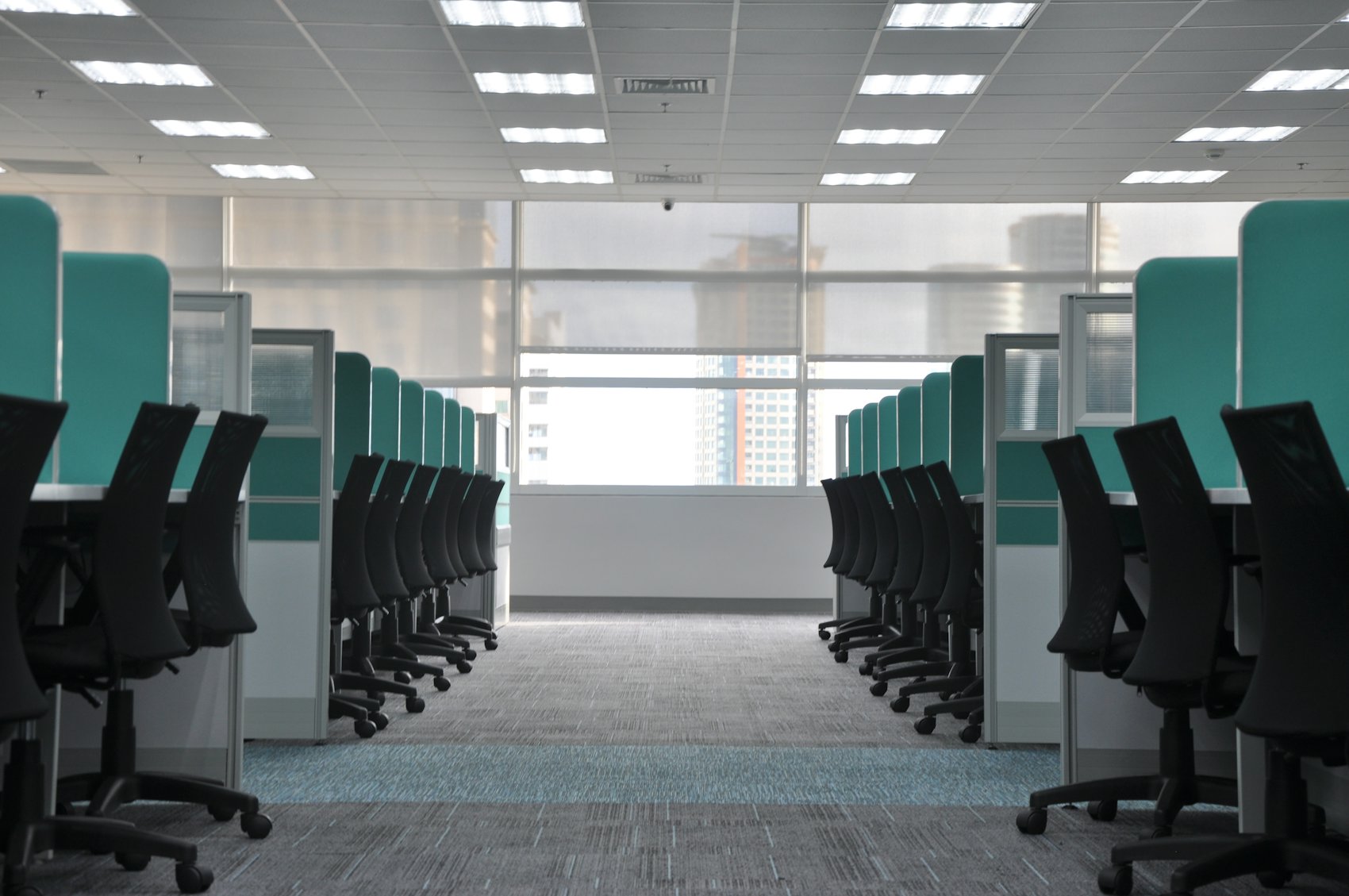
If people in your office wear headphones just to think, or conference calls drift across the room, you have a noise problem. The usual advice is to build more walls or private offices. That works, but it brings permits, landlord approvals, contractors and downtime.
There is a faster path. Most office noise comes from three things: direct lines between people talking and people trying to focus, hard surfaces that bounce sound around, and layouts that put loud and quiet work side by side. You can address all three with furniture and planning. Here is how to make an office quieter without a renovation.
1. Raise panel heights where focus matters
Panel height is the single biggest furniture lever you have. A taller fabric panel blocks the straight path sound takes from one mouth to another ear, and absorbs some of it along the way.
| Common panel height | Privacy while seated | Noise effect | Best for |
|---|---|---|---|
| About 42 inches | Low, you see over it easily | Minimal | Collaborative teams, short tasks |
| About 53 inches | Moderate, blocks seated eye contact | Noticeable reduction for nearby talkers | General staff, mixed work |
| 65 inches or taller | High, blocks standing sightlines too | Strongest separation | Phone-heavy roles, finance, focus work |
You do not have to pick one height for the whole floor. Many offices mix taller panels for call-heavy teams with lower panels for groups that need to talk constantly.
2. Zone the floor by noise level
Walk the space and label each area as loud, mixed or quiet. Loud includes reception, kitchens, printers, sales teams and anyone on the phone all day. Quiet includes accounting, legal, design and anyone doing deep work.
Then move people, not walls. Put loud functions near entries and break areas, and push quiet teams to the far end of the floor. Use storage runs, file banks or taller workstation clusters as a buffer between zones. A layout change like this often costs nothing more than labor and a floor plan. Office Station offers free space planning, which can help you test zones on paper before anyone moves a desk.
3. Break up straight aisles and long sightlines
Long, open aisles act like hallways for sound. When every desk faces the same direction down a clear runway, voices travel the full length of the room.
- Stagger workstation clusters so aisles turn instead of running straight through.
- Rotate some pods so people do not face each other directly across a low divider.
- Place tall storage or panel ends at the head of an aisle to interrupt the path.
4. Swap hard surfaces for soft ones
Glass, laminate and bare concrete reflect sound. Fabric absorbs it. If your current workstations use glass stackers or hard laminate panels, replacing them with fabric-wrapped panels can reduce the echo that makes a room feel loud even when nobody is shouting.
Other soft additions that need no construction:
- Upholstered lounge seating instead of hard café chairs in open areas.
- Area rugs in spaces with polished concrete or tile.
- Fabric-covered tackboards inside workstations, which also give people a place to pin notes.
5. Create quiet rooms from space you already have
Most offices have an underused private office, a storage room or an oversized conference room. Turn one into a phone room or a focus room with a small desk, a task chair and a clear rule: no meetings. If a large conference room rarely fills, a couple of freestanding workstations with tall panels along one wall can create focus seats without changing the room itself.
Post simple booking rules so the room does not become someone's permanent office.
6. Pair the furniture with a few ground rules
Furniture does the heavy lifting, but habits finish the job. Keep these short and visible:
- Calls longer than a few minutes go to a phone room or a tall-panel zone.
- Speakerphone stays off at open workstations.
- Group conversations move to a meeting space after a couple of minutes.
- Quiet zones are marked on the floor plan so new hires know where they are.
What a no-renovation quiet office costs
Because the fix is mostly furniture, costs are easy to estimate. As a reference point, a 6'x6' workstation, furniture only, is $615 liquidation-grade, $1,245 remanufactured and $1,920 new. Those prices exclude electrical, delivery and professional installation. Installation is $95 per workstation with a $495 minimum, and volume pricing takes 5% off at 20 or more stations, 8% at 50 or more and 12% at 100 or more.
If you are replacing low-panel stations, your existing furniture may have resale value. Office Station's liquidation service provides a written net offer, which is the resale value minus removal cost, and that can offset part of the upgrade.
Price taller-panel workstations
For more on panel choices and layouts, compare options on the used cubicles page, see seating in pre-owned office furniture, or browse more planning guides.
Average market rate Prices subject to availability and project pricing.
Frequently asked questions
What is the fastest way to make an open office quieter?
Raise panel heights between desks and move loud activities away from focus areas. Both can happen in days with furniture already on the market. Construction is usually the slowest and most expensive option.
Do cubicle panels actually reduce noise?
Fabric-covered panels absorb some sound and block direct lines between talkers and listeners. Taller panels block more than short ones. Glass or hard laminate panels reflect sound, so they help with privacy of sight more than noise.
What panel height should I choose for a quieter office?
Lower panels, often around 42 inches, keep sightlines open but do little for noise. Mid-height panels around 53 inches block a seated conversation. Panels 65 inches or taller give the most separation for focus work and phone-heavy roles.
Is pre-owned furniture a good way to fix office noise?
It can be. Liquidation-grade workstations can be in stock in as little as 72 hours, so you can test taller panels or new layouts without waiting weeks for new product. Check fabric condition, since worn panel fabric is still usable but may look dated.