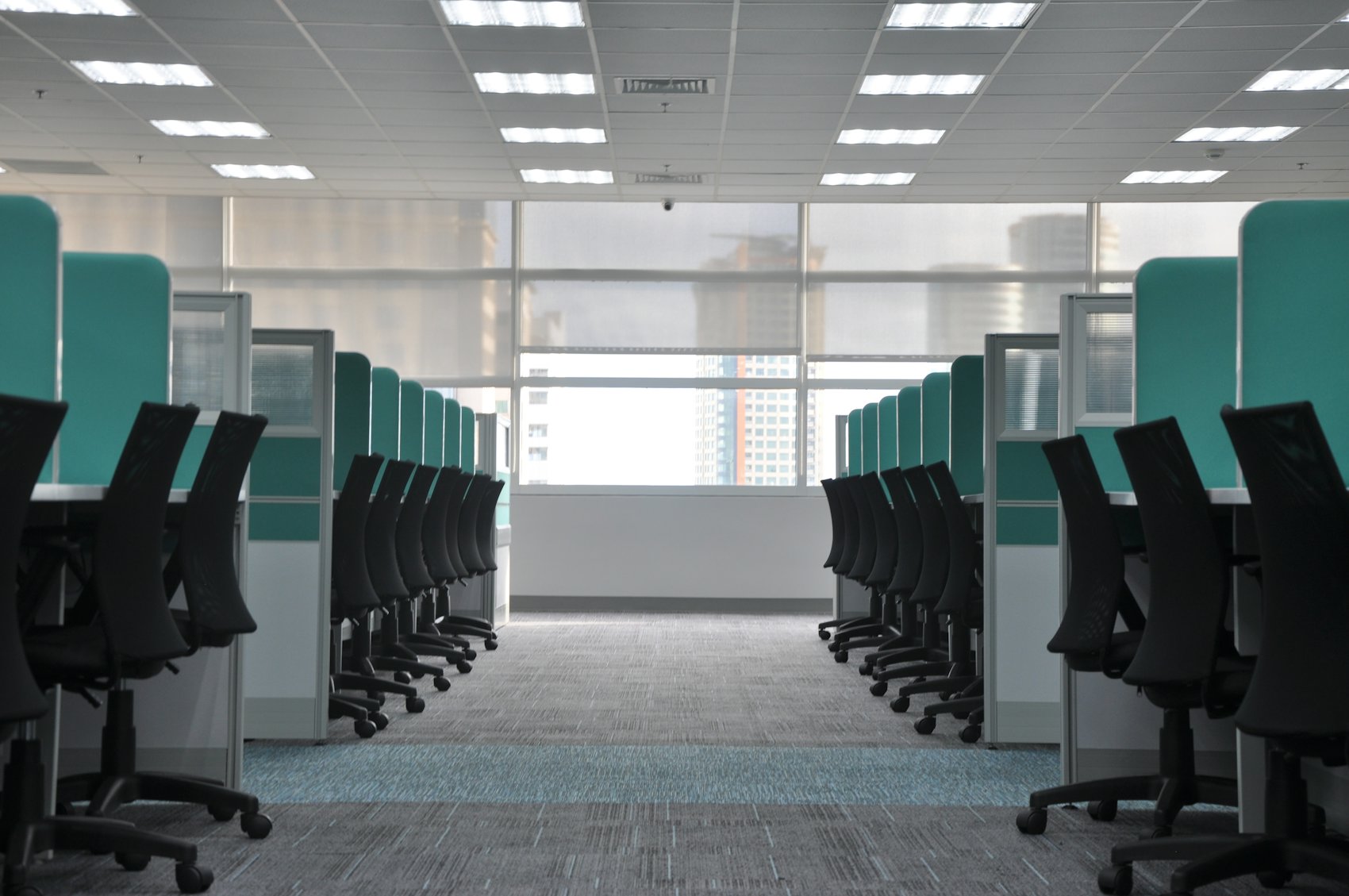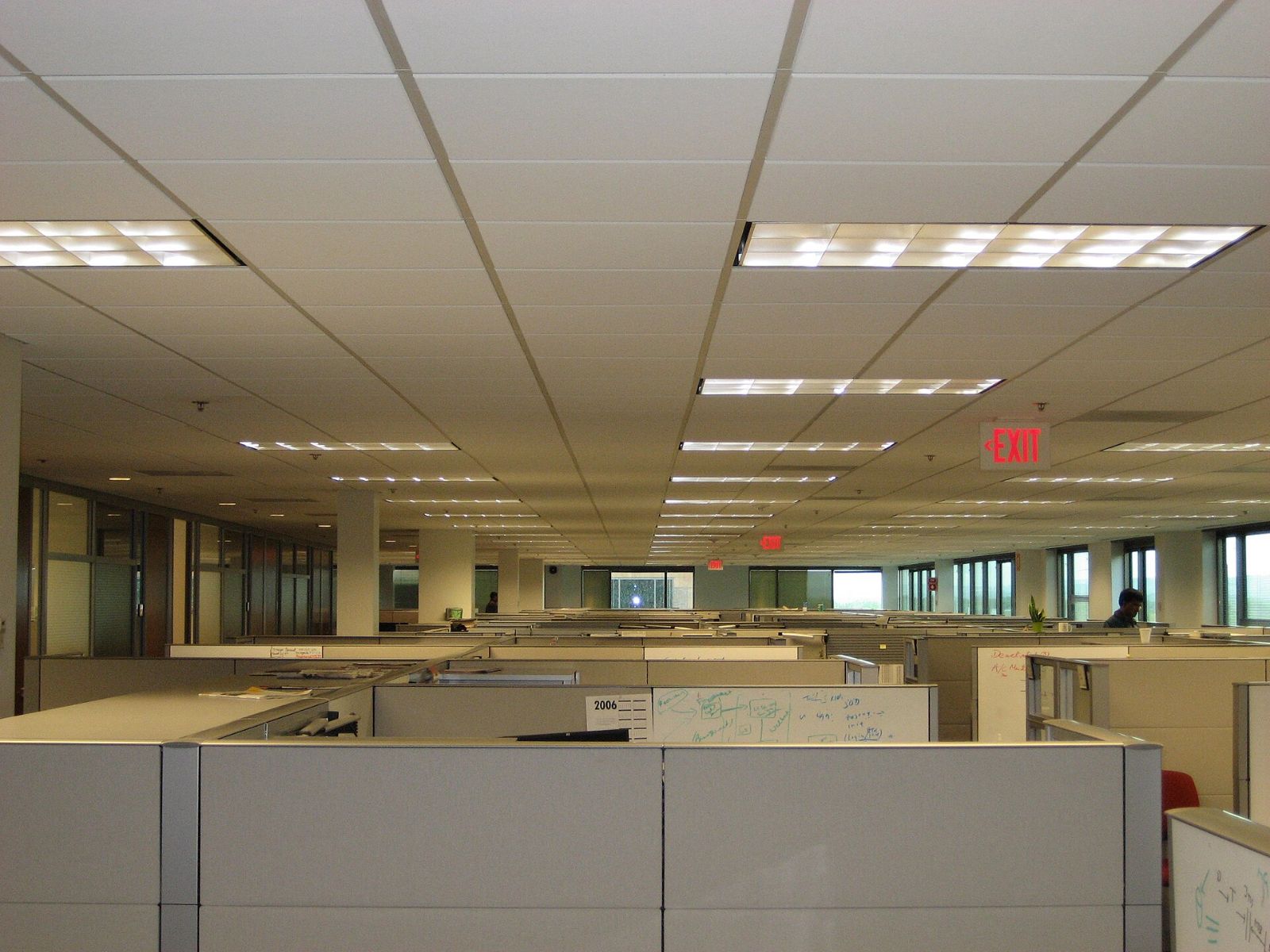
Open offices save space, but they also leave people staring at each other across a desk all day. The fix does not have to be a full furniture replacement. Pre-owned desk screens and modesty panels can add a clear visual boundary to the workstations you already own, and buying them used keeps the project at liquidation-grade cost.
This page explains the types of screens, how to make sure a used screen fits your desks, and how condition grades apply to panels that people will see all day.
Types of desk and modesty screens
Desktop privacy screens
These sit on or above the back or side edge of the work surface. A front screen blocks the line of sight to the person across from you. A side screen separates neighbors in a row. Height is the main decision: low screens preserve an open feel, while taller screens give a real sense of a personal zone when seated.
Modesty screens
A modesty screen hangs below the front of the desk, from the surface down toward the floor. It hides legs, bags and cable clutter from anyone walking by or sitting across. On desks that face an aisle or a reception area, a modesty screen often makes a bigger difference to how the office looks than anything above the surface.
Combination and wraparound screens
Some screens run from above the surface down past the front edge in one piece, or wrap around a corner. These add the most separation but have the strictest fit requirements.
Mounting methods compared
How a screen attaches decides whether it will work on your desks. This is the most important check when buying used.
| Mount type | How it attaches | Works with | Things to confirm |
|---|---|---|---|
| Clamp-on | Brackets clamp to the desk edge | Most freestanding desks across brands | Desk thickness fits the clamp range; clamp pads intact |
| Screw-mount | Brackets screw into the underside of the surface | Wood and laminate surfaces | Enough solid material to hold screws; existing holes line up or can be added |
| System-specific | Connects to a workstation's own frame or beam | The matching manufacturer and product line | Exact product line and part compatibility |
| Freestanding | Stands on the surface with feet or weighted base | Nearly any desk | Stability; enough surface depth to spare |
Condition grades for used screens
Screens sit at eye level or face the aisle, so their condition is on display. Office Station grades pre-owned items the same way across its inventory:
- Grade A, like new. Minimal to no visible wear. Use it for screens that face visitors, reception or a main walkway.
- Grade B, very good. Light wear visible up close, such as slight fabric pilling or small edge marks. Fine for most employee rows.
- Grade C, good. Visible wear such as faded fabric, scuffs or marks from previous mounting. A practical choice for back-of-house areas and modesty panels that sit below eye level.
Material matters too. Fabric-wrapped screens can show fading and pilling, while solid laminate, metal or acrylic-style panels are more likely to show scratches or chips. Ask what a screen is made of when you compare grades.
Browse pre-owned office furniture
Fit and condition checklist
- Confirm screen width matches or slightly undercuts the desk width.
- Check the mounting hardware is included and complete.
- For clamp-on screens, confirm your desk thickness is within the clamp range.
- Check for bent brackets, which cause screens to lean.
- Inspect fabric for stains, tears and fraying at corners.
- Look at solid panels for cracks, chips and sharp edges.
- Make sure a modesty screen will not block power access, a keyboard tray or knee space.
- Match color across a row, or plan to put mixed colors in different zones.
Screens or new workstations?
Screens are the right call when your desks are sound and the complaint is mostly visual: people feel watched, cords look messy, or the front of a desk faces an aisle. They are fast to add and do not disrupt the floor plan.
Full workstations make more sense when people also need storage, more surface, taller panels or a different layout. For comparison, a 6' x 6' workstation, furniture only, costs $615 liquidation-grade, $1,245 remanufactured or $1,920 new, excluding electrical, delivery and professional installation. See used cubicles for the full breakdown, or explore modular office desks if you want a system you can reconfigure later.
Lead times, delivery and installation
- Liquidation-grade items in stock can be ready in as little as 72 hours.
- Greater Phoenix delivery is $195 central and $295 metro. Elsewhere, freight is quoted per project.
- Free space planning helps you decide which desks need front screens, side screens or modesty panels.
Most clamp-on and freestanding screens are straightforward to add yourself. If screens are part of a larger workstation order, professional installation is available at $95 per workstation with a $495 minimum.
Ask about used screens for your desks
Average market rate Prices subject to availability and project pricing.
Frequently asked questions
What is the difference between a privacy screen and a modesty screen?
A privacy screen mounts on or above the work surface to block sightlines between people sitting across from or beside each other. A modesty screen, sometimes called a modesty panel, hangs below the front edge of the desk to hide legs, bags and cords from view. Many offices use both.
Will a used screen fit my existing desks?
It depends on the desk thickness, the mounting method and the width. Clamp-on screens are the most flexible across brands, while system screens are made for a specific product line. Measure your desks and share the brand if you know it before ordering.
What condition grades apply to used screens?
Office Station uses grade A like new, grade B very good, and grade C good. Fabric screens show wear differently than solid or glass-look panels, so ask what material a screen is before deciding which grade you need.
How fast can I get used privacy screens?
Liquidation-grade items in stock can be ready in as little as 72 hours. Remanufactured furniture usually takes 7 to 14 days, and new typically takes 4 to 6 weeks.
Should I add screens or replace my workstations?
If your desks are in good shape and the main complaint is visual distraction or exposure, screens are usually the cheaper fix. If people also need more storage, surface or acoustic separation, compare the cost of a full liquidation-grade workstation, which starts at $615 for a 6' x 6' station.
Average market rate Prices subject to availability and project pricing.