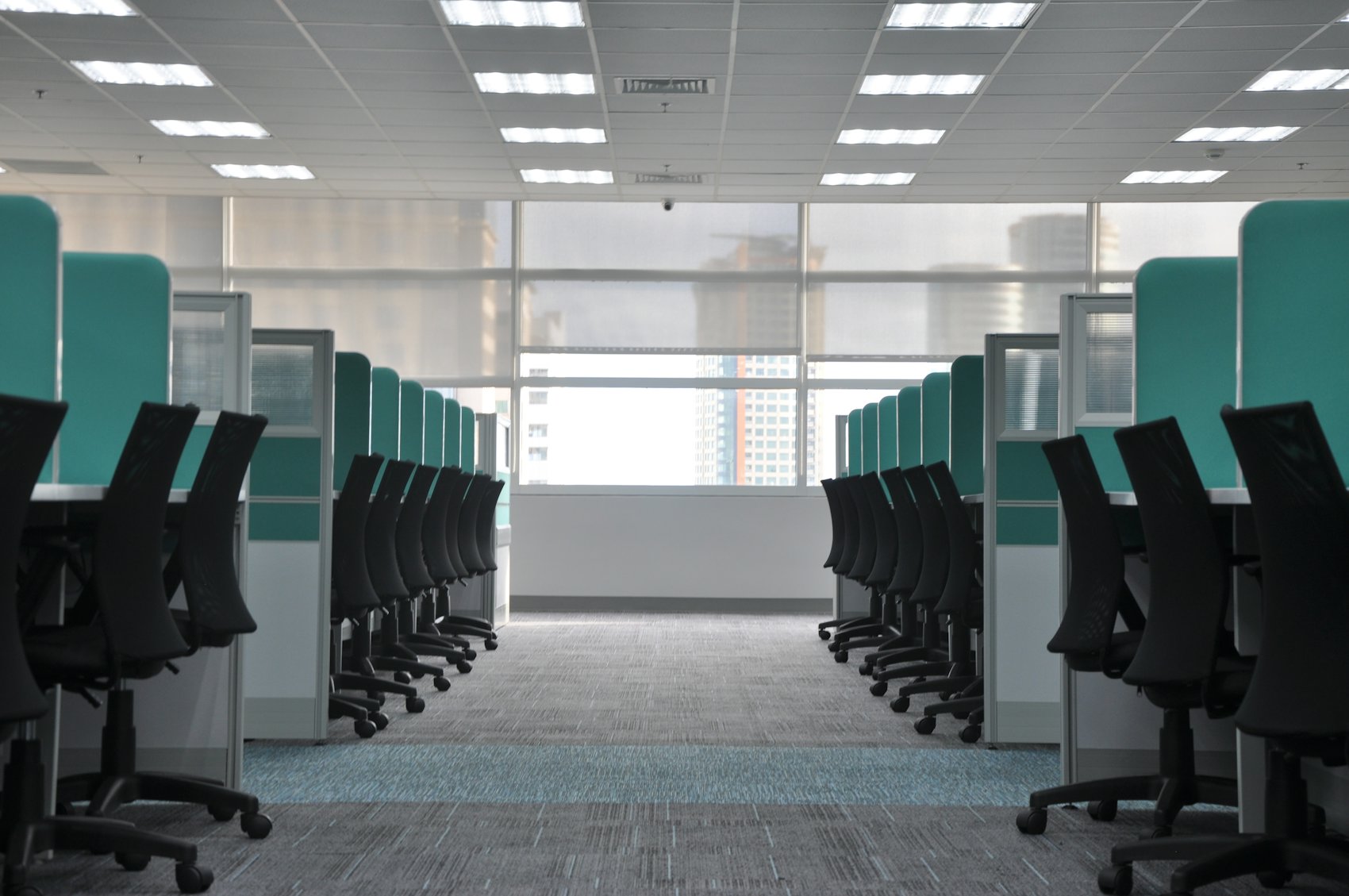
Photo: Levi Clancy, CC BY-SA 4.0, via Wikimedia Commons
Short answer: Office Station provides office decommissioning services across the Los Angeles metro. A decommission is the full lease exit: furniture routed case by case to resale, donation or recycling, abandoned cabling, wall fixtures and seismic-anchored storage out, electronics sent to e-waste recyclers as California requires, restoration items coordinated to the landlord's list, and the space handed back broom-clean by your lease date with an itemized inventory and a photo walkthrough. Every project is quoted individually after a walkthrough. Call 602-703-4000 and ask for Tony, or use the form on this page.
- What a Los Angeles decommission covers
- Decommissioning across a spread-out metro
- High-rise freight, insurance and building rules
- California e-waste and IT shutdown
- Seismic bracing and restoration items
- Studio, creative and tech office exits
- What happens to the furniture
- The lease-end countdown
- Liquidation, removal or decommissioning?
What a Los Angeles decommission covers
Decommissioning is everything the lease requires before you return the keys, not only the furniture. In Los Angeles that list usually includes more electronics handling and more wall-anchored items than tenants expect.
| Item | What is handled |
|---|---|
| Furniture | Workstations, seating, private office casegoods, storage, conference, breakroom and reception furniture, routed case by case |
| Cabling | Abandoned data and low-voltage cabling above ceilings and in walls, removed after the network is shut down |
| Walls and fixtures | Whiteboards, glass boards, interior signage, artwork, acoustic panels, wall-mounted displays and mounts |
| Anchored storage | Seismic-braced shelving, wall-anchored bookcases, file cabinets and tall storage released from their anchors and removed |
| IT and e-waste | Electronics you own routed to e-waste recyclers with documentation; leased and carrier-owned gear returned to its owners |
| Breakrooms | Refrigerators, microwaves, coffee equipment and cafe furniture |
| Restoration | Patch, paint and repair items scheduled to the landlord's list |
| Handback | Broom-swept floors, trash out, joint walkthrough with the property manager and the documentation pack |
Running it as one project means one walkthrough, one written scope, one schedule built backward from the lease date and one point of contact. When a furniture buyer, a cabling crew and an e-waste vendor are booked separately, each waits on the last, and in a metro this size the gaps tend to land in the final week. The national overview is on office decommissioning services, and the combined service is explained on office liquidation and decommissioning.
Decommissioning across a spread-out metro
Los Angeles is not one office market. It is several business districts separated by freeways, and the drive between them can decide the schedule as much as the size of the suite. Crew travel, truck windows and each building's access hours are planned together, so a removal day is not lost to a missed dock slot on the far side of town.
| District | What usually shapes the exit |
|---|---|
| Downtown LA | High-rise towers with shared docks, freight elevators booked in set windows, security check-in and tight street loading, so evening and weekend removal is common |
| Century City | Class A towers with strict building rules, underground loading and detailed certificate-of-insurance requirements; law, finance and agency suites with large private office counts |
| Santa Monica and Silicon Beach | Creative offices, converted buildings and low-rise campuses, often with limited parking, alley loading and neighbors close by |
| El Segundo and the South Bay | Mid-rise and campus-style buildings near LAX, frequently with large blocks of workstations and lab or engineering space |
| Burbank, Glendale and Pasadena | Studio-adjacent offices, mid-rise towers and older buildings with smaller elevators, where heavy casegoods may need to be broken down to move |
Truck windows are planned around the I-405, I-10, US-101, I-110 and I-5 peaks, and around event days near the major venues. Companies exiting more than one Los Angeles location can run them on one calendar with one inventory format. More on the market is on the Los Angeles office furniture liquidation page.
High-rise freight, insurance and building rules
Most Los Angeles office buildings publish move-out rules, and the property manager expects them followed to the letter. These are the items buildings typically ask for before a crew can start:
- Certificates of insurance. Many buildings require a certificate naming the landlord and the property manager as additional insureds, with set coverage amounts and wording. Ask the property manager for the building's sample certificate early, because a mismatch in wording can delay the first removal day.
- Freight elevator reservations. High-rise freight elevators are usually booked in blocks, often outside business hours, and some buildings require an operator or a security escort.
- Dock and loading windows. Shared docks are scheduled by the hour. Buildings without a dock may limit street or alley loading to certain times.
- Protection. Floor runners, elevator pads, and corner and door protection along the removal path are standard requirements.
- Work hours and noise. Cabling removal and anything that drills or cuts may be restricted to evenings or weekends in occupied buildings.
These are building requirements, and they differ from one property to the next. The walkthrough confirms each one, and the dates are booked only once the building has signed off on the plan.
California e-waste and IT shutdown
Electronics are where a California lease exit differs most from other states. Under the rules of the Department of Toxic Substances Control (DTSC), discarded electronic devices are generally treated as universal waste, a category of hazardous waste, and universal waste may not be put in the trash or sent to a landfill. Monitors, computers, phones, printers and similar devices from a Los Angeles office therefore go to e-waste handlers and recyclers, not into the dumpster at the dock. Fluorescent lamps and batteries are also universal waste in California and are handled the same way.
- Sort ownership first. Leased copiers, printers and carrier-owned routers go back to their owners. Everything else you own is listed on the inventory and routed.
- Clear your own data. Your IT team wipes or removes drives from anything holding company or client data before it leaves your control.
- Route with documentation. Electronics are sent to recyclers who provide documentation of what was received, and data destruction certificates for drives and storage devices where they are processed.
- Cut cabling last. Abandoned cabling comes out after the network is shut down, so the last week is not worked offline.
More detail is on office equipment liquidation and in the disposal and e-waste guide.
Seismic bracing and restoration items
Los Angeles offices carry items that rarely show up in lease exits elsewhere. Tall shelving, bookcases, file banks and server racks are commonly anchored to walls or floors to reduce tipping in an earthquake, and those anchors stay behind when the furniture leaves.
What to expect on the restoration list
- Anchor removal. Wall brackets, straps and floor anchors removed once the storage is released.
- Patch and paint. Holes from anchors, display mounts, whiteboards and signage patched and painted to the landlord's standard.
- Abandoned cabling. Often listed as a surrender item, so check the lease before assuming it can stay.
- Tenant improvements. Some leases require specialty build-out to be removed; others want it left. The surrender clause decides, and the written scope follows it.
Get the restoration list from the property manager before the walkthrough. Items that are not on it are not added to the scope, and items that are on it are scheduled so they finish before the final walkthrough, not after.
Studio, creative and tech office exits
A few Los Angeles exit types come up again and again, and each changes the plan:
- Studio and production offices. Edit bays, screening rooms and equipment closets mean more electronics, more cabling and more acoustic treatment on the walls. Owned gear is sorted from rented gear early, and e-waste is routed with documentation.
- Creative and agency offices. Open plans with benching, lounge furniture, custom millwork and large graphics. Designer seating and matched benching are checked for resale; custom pieces usually are not.
- Silicon Beach tech exits. Fast downsizes or consolidations into a smaller footprint, often with a short notice period, many monitors and docking stations, and partial floors given back while the team keeps working.
- Professional services suites. Century City and Downtown suites with many private offices, heavy wood casegoods and file rooms that need records cleared before removal.
Before the walkthrough, the closing an office checklist and the decommissioning checklist list what to gather.
What happens to the furniture
Every office is different. After the walkthrough and inventory grading, the written recommendation sets the best route for each part of the inventory, and most Los Angeles decommissions end up as a mix.
| Route | Usually fits |
|---|---|
| Resale | Matched runs of current, well-kept systems furniture and designer seating in quantity |
| Donation | Serviceable furniture a school or nonprofit can receive on your schedule |
| Recycling | Worn, mixed or damaged pieces, with materials recovered wherever possible |
| Removal | Custom, damaged or older inventory, tight access or a short deadline |
Decommissioning is quoted as a service fee, case by case. When furnishings can be recycled and are in market demand, their value often offsets part or all of that fee, but it depends on the inventory, its condition and the timing, and it is set out item by item on the written recommendation. Furniture can also stay behind for a subtenant or new tenant if the landlord agrees in writing; settle who owns it and who removes it later before the handback. Diversion options are covered on sustainable office decommissioning.
The lease-end countdown
| When | What happens |
|---|---|
| 120 days out | Review surrender and restoration clauses; decide what moves and what goes |
| 90 days out | Walkthrough, inventory grading and written recommendation |
| 60 days out | Removal dates booked; building rules, certificates of insurance and freight reservations confirmed |
| 30 days out | IT shutdown plan, e-waste routing and restoration scheduled |
| Removal week | Furniture, fixtures, anchored storage and e-waste out, then cabling once the network is down |
| Handback | Final walkthrough with the property manager, photos and inventory, and keys and badges returned |
Less time than that? Share your date anyway. The lease-end date guide covers how to compress the plan.
Liquidation, removal or decommissioning?
Three services get confused in a Los Angeles lease exit. The question to ask is what the lease says has to happen before you return the keys.
| If the job is | You likely need |
|---|---|
| Furniture out of a suite by a date, nothing else | Office furniture removal |
| Furniture out with a plan for resale, donation and recycling | Office furniture liquidation in Los Angeles |
| Furniture, cabling, fixtures, e-waste and restoration, with a landlord handback | Office decommissioning (this page) |
| Clearing part of a floor while the rest keeps working | A phased decommission, sectioned off and worked after hours where the building requires it |
| Closing one of several locations | Branch office decommissioning |
| Clearing one Los Angeles office while setting up the next | Decommissioning plus corporate relocation on one calendar |
Office Station also runs lease exits across Southern California, including Orange County, the Inland Empire and San Diego. Moving into new space? Pre-owned workstations for the next office are on used cubicles in Los Angeles.
Call 602-703-4000 and ask for Tony, email hello@officestation.com with your address, suite size and lease end date, or use the form on this page.
Related planning resources
More on office decommissioning by city:
- Office Decommissioning Services in Dallas-Fort Worth
- Office Decommissioning Services in Atlanta, Georgia
- Office Decommissioning Services in San Antonio, Texas
All of Office Station's planning guides and local service pages are collected on office furniture resources.
Frequently asked questions
Do you provide office decommissioning services in Los Angeles?
Yes. Office Station runs office decommissioning across the Los Angeles metro, including Downtown LA, Century City, Santa Monica and Silicon Beach, El Segundo and the South Bay, and Burbank, Glendale and Pasadena. A decommission covers furniture, abandoned cabling, fixtures, e-waste, restoration coordination and the landlord handback, run as one project with one schedule. Call 602-703-4000 and ask for Tony, or use the form on this page.
What is the difference between office liquidation and office decommissioning in Los Angeles?
Liquidation decides what happens to the furniture: resale, donation, recycling or removal. Decommissioning is the whole lease exit, including cabling, wall fixtures, IT and e-waste, restoration items and the handback walkthrough the lease requires. Most Los Angeles exits need both, so the furniture route and the decommissioning scope are set in the same written recommendation.
How much does office decommissioning cost in Los Angeles?
Every project is quoted individually after a walkthrough. Decommissioning is quoted as a service fee case by case, because suite size, building access windows, the amount of cabling and e-waste, and the landlord's restoration list all change the work. When furnishings can be recycled and are in market demand, their value often offsets part or all of the cost, but that is decided item by item on the written recommendation, not promised up front.
Can office electronics go in the dumpster in California?
Generally no. In California, discarded electronic devices are treated as universal waste, a category of hazardous waste regulated by the Department of Toxic Substances Control, and universal waste may not be put in the trash. Electronics from a Los Angeles decommission are routed to e-waste recyclers with documentation, and drives are wiped or removed by your IT team before anything leaves your control.
How far ahead should we plan a Los Angeles office decommission?
Start about 120 days before the lease ends so the surrender and restoration clauses can be reviewed. Aim for a walkthrough and written recommendation by about 90 days out and confirmed dates, building rules and certificates of insurance by 60 days. Shorter timelines are possible with evening and weekend crews, so share your lease date even if the countdown has already started.
Can you clear part of a floor while our team keeps working?
Yes. Partial clear-outs are common when a company gives back part of a floor, consolidates floors or shrinks a studio or creative office. The area is sectioned off, crews work evenings or weekends where the building requires it, and the rest of the office keeps running. You receive an itemized inventory of what left.