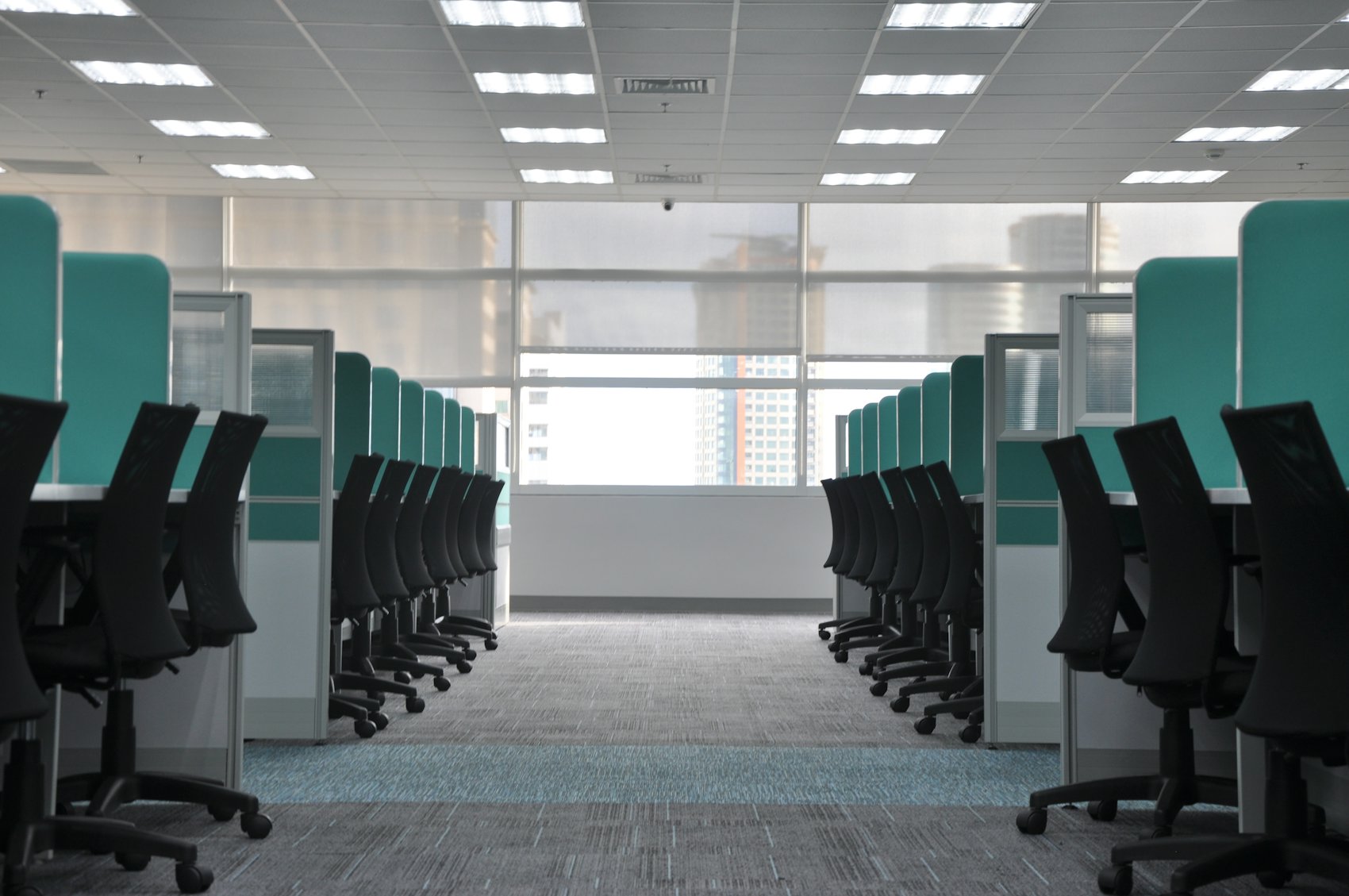
Herman Miller helped define the modern open office, and its workstation systems have been installed in corporate spaces for generations. As those offices close and relocate, a lot of that furniture comes back onto the market. Used Herman Miller cubicles give you commercial-grade construction and a recognizable design at a lower cost than new.
The challenge is that "Herman Miller cubicles" covers several very different systems. Action Office, Ethospace, Canvas Office Landscape and Layout Studio are built differently and serve different kinds of offices. Mixing them without a plan can leave you with parts that do not fit.
This guide covers how to identify each system, how they compare, what to know about compatibility and power, and what to inspect. One note up front: Office Station is an independent reseller of pre-owned furniture, not an authorized Herman Miller dealer, and manufacturer warranties generally do not transfer to pre-owned furniture.
In this guide:
- Why buy used Herman Miller workstations
- The four systems at a glance
- Action Office and the AO1/AO2 labels
- Action Office vs Ethospace
- Canvas and Layout Studio
- How to identify a Herman Miller system
- Compatibility and power
- Condition grades and pricing
- What to inspect before you buy
Why buy used Herman Miller workstations
Systems furniture is made to be installed, disassembled and rebuilt. Steel frames, connectors and worksurfaces are designed for that cycle, which is why a pre-owned system can serve a second office well.
Beyond price, you gain speed. Pre-owned inventory is ready now, without a factory lead time. You also keep usable furniture out of the waste stream.
The trade-off is choice. You buy the finishes, fabrics and panel heights from the original install. Working from real inventory is part of the process, and a good space plan helps you make the most of it.
Start with how your team works
Before you compare systems, answer a few questions. How many stations do you need now, and how many later? Does your team need privacy, open collaboration or both? Will every station need power? How much storage belongs at each desk?
Your answers point you toward the right system. Tall panels and powered stations suggest a traditional panel system. Low sightlines and shared desks suggest benching. Knowing this up front also helps you judge whether a given lot is complete enough for your project.
The four systems at a glance
These descriptions are general. Herman Miller offered many options within each system, and individual installations vary.
| System | General type | What buyers should know |
|---|---|---|
| Action Office | Panel system | Long-running and very common in resale. Generations and components vary, so matching matters. |
| Ethospace | Frame-and-tile system | Tiles attach to a structural frame, which allows varied looks within one station. |
| Canvas Office Landscape | Wall and freestanding system | A newer, more flexible system built around walls and freestanding pieces. |
| Layout Studio | Benching and desking | Designed for open, shared layouts rather than enclosed cubicles. |
Action Office and the AO1/AO2 labels
Action Office is one of the best-known panel systems ever made, and it has been produced and updated over a long period. That long history is why you will find so much of it on the used market, and why generations matter.
In the resale trade, sellers often describe Action Office components as "AO1" or "AO2." These are informal labels used to distinguish older and newer generations of components. They are useful shorthand, but they are not always applied consistently from one seller to another.
What that means for you:
- Do not rely on the label alone. Two sellers can use the same term for components that do not match.
- Match the actual hardware. Compare connectors, panel construction and how components hang. Ask for close-up photos.
- Be extra careful when adding to an existing install. Bring photos or a sample part of what you already own when you shop.
Action Office vs Ethospace
This is the comparison most buyers face, because both systems are widely available and both are Herman Miller panel-based products.
Action Office is the workhorse. It is practical, highly configurable and plentiful on the resale market. That availability makes it easier to find matching components if you need to expand or replace something.
Ethospace is generally known for its frame-and-tile construction. Tiles attach to a structural frame, so a single station can combine different tile types, such as fabric, glass or tackable surfaces. That flexibility gives Ethospace a more tailored, architectural look.
How to choose
- For value and volume, Action Office is often the practical pick, especially when a complete matched set is available.
- For appearance and flexibility of finishes, Ethospace's tile construction can be worth considering.
- For either, buy complete stations and confirm the system before you plan to combine anything.
Action Office and Ethospace are separate systems. Some combinations may be possible with specific transition parts, but confirm with manufacturer documentation or an experienced installer rather than assuming.
Canvas and Layout Studio
Canvas Office Landscape
Canvas Office Landscape is a newer Herman Miller system designed around flexible walls and freestanding elements. It suits offices that want a more open, adaptable feel than traditional high-panel cubicles.
If you search for "Herman Miller Canvas used," you will find that availability is less predictable than for Action Office, because Canvas has been on the market for a shorter time. When a complete Canvas installation does come available, buying it together is usually the best move.
Layout Studio
Layout Studio is a benching and desking system. Instead of enclosing each person in panels, it arranges shared worksurfaces in open rows. It works well for collaborative teams and for fitting more people into a given footprint.
If you are weighing enclosed cubicles against benching, our cubicle size guide explains how footprint choices affect headcount and comfort.
How to identify a Herman Miller system
Use several clues together. No single feature is a guarantee, and installations often include replaced or added parts.
- Find manufacturer labels. Check panel frames, the underside of worksurfaces and inside pedestal drawers for labels and part numbers.
- Examine panel construction. Note whether panels are single units or frames with removable tiles. Tiles are a strong hint toward a frame-and-tile system such as Ethospace.
- Look at the connectors. How panels join, and how corners are made, differs between systems and generations.
- Check how components hang. Worksurface supports and overhead storage attachments are useful identifiers.
- Look at trim and caps. Top caps, end trim and finish details vary by system.
- Compare with documentation. Match your findings to Herman Miller product literature, not marketplace photos.
Buying remotely? Ask for close-up photos of labels, connectors, panel edges and worksurface supports.
Compatibility and power
Mixing components
Components designed for one system are made to work within that system. Within a single system, differences between generations can still cause fit problems. Across systems, connectors, heights and electrical parts generally do not interchange.
Parts availability
Widely installed systems tend to have more replacement parts circulating through the resale market. Newer or less common systems can be harder to supplement. Before you buy, ask:
- Is all hardware included: connectors, brackets, supports and trim?
- Are extra panels or tiles available in matching finishes?
- How likely is it that you can add matching stations later?
Powered panels
Many Herman Miller panel installations route power through the panels. Reusing it can save money if you are careful:
- Keep electrical parts within the system. Never mix harnesses, receptacles or in-feeds across systems or manufacturers.
- Confirm the circuit configuration. It affects how many devices each station can support and how the system connects to building power.
- Check the in-feed type. Make sure the way power enters the panels, from wall, floor or ceiling, suits your space.
- Inspect for damage. Replace anything with cracked housings, damaged insulation or missing covers.
- Hire a licensed electrician. Connections should follow local code, and permits may be required.
Condition grades and pricing
Office Station grades pre-owned furniture after inspection:
- Grade A: like new, with minimal signs of use.
- Grade B: very good, with light normal wear.
- Grade C: good, with visible cosmetic wear, fully functional.
Brand pricing varies with system, configuration and availability, so a quote for a specific Herman Miller system depends on the inventory available. For a baseline, here is Office Station pricing for a 6' x 6' workstation, furniture only.
| Option | 6' x 6' workstation price | Best for |
|---|---|---|
| Liquidation-grade | $615 | Lowest cost and fast availability |
| Remanufactured | $1,245 | A refreshed appearance on a proven frame |
| New | $1,920 | Specific finishes and a fully new installation |
Average market rate Prices subject to availability and project pricing.
Prices exclude electrical, delivery and professional installation. Space planning is free. Learn more in our used cubicle prices guide and our comparison of used vs remanufactured vs new cubicles.
What to inspect before you buy
- Confirm the exact system using labels, construction and connectors.
- For Action Office, verify component generation by hardware, not just the AO1 or AO2 label.
- Check that each station is complete, including hardware, supports and trim.
- Inspect fabric panels and tiles for stains, tears, fading and odor.
- Look for bent frames, dented panels and damaged top caps.
- Check worksurfaces for chipped edges, delamination and warping.
- Test every drawer, door and lock, and confirm keys are available.
- Confirm finishes and panel heights match across all stations.
- For powered panels, inspect every electrical part and confirm the configuration.
- Get the condition grade and a written description of any refurbishment.
Rounding out the space? Browse pre-owned office chairs and other pre-owned office furniture, or read our used Herman Miller Aeron buying guide. If your company is closing or downsizing an office, see our office furniture liquidation services.
Inventory changes as corporate offices across the Southwest are liquidated. Share your headcount and layout, and we will show you what fits. Questions about a specific system? Contact us.
Frequently asked questions
Are used Herman Miller cubicles a good investment?
They can be. Herman Miller systems are built for commercial use and are designed to be reconfigured, so a well-kept system often has years of life left. Buy a complete, matched set, confirm the specific system, and inspect components and electrical parts carefully.
What is the difference between Action Office and Ethospace?
Action Office is a long-running panel system and one of the most common cubicle systems on the resale market. Ethospace is generally known for its frame-and-tile construction, where tiles attach to a structural frame and can be changed for different looks. They are separate systems, so confirm compatibility before combining them.
What do AO1 and AO2 mean in used cubicles?
In the resale trade, AO1 and AO2 are informal labels sellers use to distinguish generations of Action Office components. The labels are not always applied consistently from one seller to the next. Rather than relying on the label, confirm the actual components and connectors match what you already own or plan to buy.
Is Herman Miller Canvas available used?
Yes, Canvas Office Landscape appears on the resale market as offices reconfigure or close, though it is generally a newer system than Action Office or Ethospace and availability varies. Canvas is designed around flexible wall and freestanding elements, so buying a complete set matters.
Can I reuse the power in used Herman Miller panels?
Often, if the electrical components belong to that system, are undamaged and are connected by a licensed electrician according to local code. Never mix electrical parts across systems or manufacturers, and replace any component with damage.
How much do used Herman Miller cubicles cost?
Brand pricing varies with system, configuration and availability. As a reference, Office Station prices a 6' x 6' workstation, furniture only, at $615 liquidation-grade, $1,245 remanufactured and $1,920 new. Electrical, delivery and professional installation are extra.
Average market rate Prices subject to availability and project pricing.