Photo: Eapiwo, CC BY-SA 4.0, via Wikimedia Commons
Tucson is a compact office market compared with Phoenix, but that does not make a move out simple. Your building might be a downtown high-rise on the streetcar line, a garden office in the Catalina Foothills or a single-story suite off Oracle Road. Add summer heat, monsoon storms and a winter event calendar that fills the city, and timing becomes the whole game. This guide covers the local specifics for office furniture liquidation, decommissioning and move outs in Tucson.
- Tucson office districts and building types
- Heat, monsoon and seasonal scheduling
- Traffic and event constraints
- E-waste, data and disposal in Arizona
- Building management norms
- A Tucson move-out timeline
- What Office Station provides in Tucson
Tucson office districts and building types
Tucson's office space spreads out from downtown along a few major corridors. The type of building you are leaving shapes crew size, truck access and how long removal takes.
Downtown Tucson
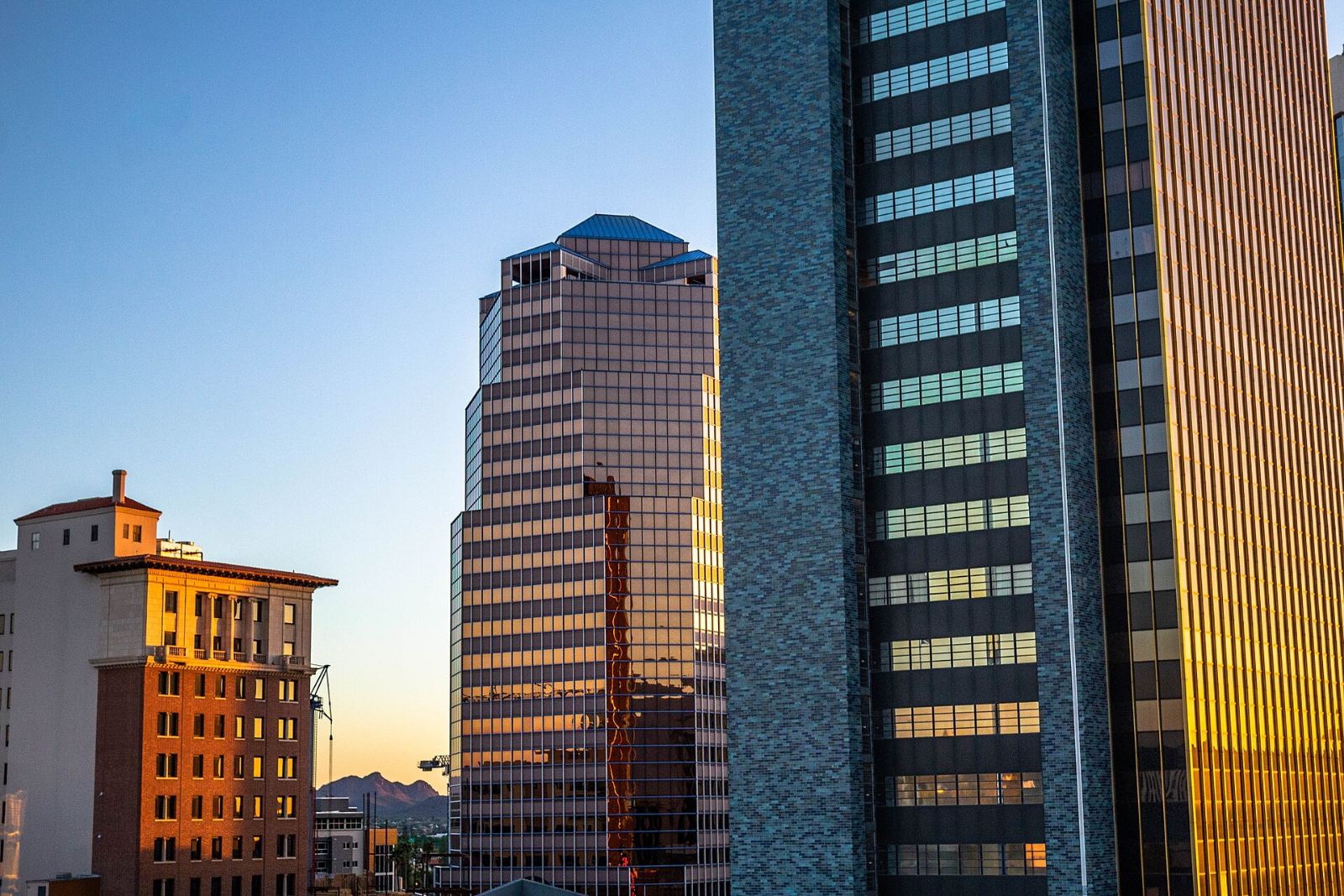
Downtown holds Tucson's tallest office towers along with government offices, courts and renovated historic buildings around Congress Street and Broadway. High-rises mean shared docks and reserved freight elevators. Historic buildings can have small elevators, tight stairwells and no dock at all. The Sun Link streetcar runs through downtown on Congress Street and Broadway, which limits where trucks can stop, so confirm legal loading zones before move day. See the Downtown Tucson liquidation page.
Northwest Tucson and Oro Valley
The Oracle Road corridor and the Ina Road area into Oro Valley and Marana have a mix of low-rise professional office, medical office and corporate campus space. Many buildings are one or two stories with surface parking, which usually means liftgate loading instead of a dock. Medical office closures often add clinical equipment and patient-record concerns. See the Northwest Tucson and Oro Valley page.
Catalina Foothills
Offices along River Road, Campbell Avenue and Skyline Drive in the Foothills tend to be smaller professional buildings: law firms, wealth management, medical and design practices. Sites can be terraced with long walks from suite to truck, and parking lots are sometimes tight for a full-size box truck. These details affect labor more than square footage does. See the Catalina Foothills page.
Midtown, the east side and the southeast
Midtown and the east side along Broadway Boulevard include older mid-rise and low-rise office buildings, including the Williams Centre area near Broadway and Craycroft. To the southeast, the UA Tech Park on Rita Road holds large-floor-plate buildings where a single tenant might have hundreds of workstations. Large sites need security coordination and multi-day schedules.
Heat, monsoon and seasonal scheduling
Tucson heat peaks in early summer, when highs regularly pass 100 degrees before monsoon humidity arrives. Box trucks and unconditioned docks get far hotter than the outdoor air. That affects crew safety, productivity and the condition of furniture headed for resale.
- Schedule early. From roughly May through September, plan loading for early morning, night or weekends.
- Keep the building cool. Confirm HVAC stays on in your suite through the final day, including after hours.
- Protect resale value. Heat stresses edge banding, laminates and chair materials. Less time in a hot truck protects the furniture and your net offer.
The National Weather Service defines Arizona's monsoon season as June 15 through September 30, and storms usually ramp up in July. Afternoon thunderstorms can bring dust, lightning, strong winds and flash flooding. Tucson has many low-water crossings and washes that flood quickly during heavy rain, which can reroute trucks. Morning loading and a weather buffer day are the practical answer.
October through April is the easiest season for a Tucson move out, with one major exception covered below: the Gem Show.
Traffic and event constraints
Tucson traffic is lighter than Phoenix, but a few recurring events change the picture:
- Tucson gem, mineral and fossil shows. From late January into mid-February, dozens of separate shows run across the city, including the Tucson Gem and Mineral Show at the Tucson Convention Center. Venues along the I-10 frontage roads and downtown get very busy, and hotels fill. Avoid downtown and freeway-adjacent move outs during these weeks when possible.
- La Fiesta de los Vaqueros. The Tucson Rodeo and its parade in late February affect traffic on the south side near the rodeo grounds.
- Tucson Festival of Books. This March festival on the University of Arizona Mall draws large crowds to the campus area and nearby midtown streets.
- El Tour de Tucson. The November cycling event closes and delays roads across the city for most of a Saturday, including downtown streets.
- University of Arizona calendar. Student move-in in August and home football games at Arizona Stadium add congestion around campus, Speedway Boulevard and Campbell Avenue.
For offices in Oro Valley or Marana, Oracle Road and Ina Road traffic at rush hour is the main daily constraint. Early starts help there too.
E-waste, data and disposal in Arizona
Most Tucson decommissioning projects include computers, monitors, phones, copiers and network equipment. What to know:
- No statewide e-waste law. Arizona is generally listed among the states without a statewide electronics recycling law. Responsible recycling is still the right call, and it is what makes a diversion summary meaningful.
- Federal requirements. EPA universal waste rules apply to items like batteries and certain lamps, and CRT monitors have separate federal rules.
- Records disposal. A.R.S. 44-7601 prohibits knowingly discarding records that pair a person's name with items such as a full Social Security number or a financial account number without redacting or destroying them. HIPAA-covered medical practices and financial institutions have their own federal requirements.
- Local programs. The City of Tucson, Pima County, Oro Valley and Marana manage their own solid waste services. Check with your hauler and jurisdiction before disposal.
Building management norms
Tucson property managers commonly ask for the same things you would see in any metro, scaled to the building:
- Certificates of insurance with the landlord and management company named as additional insured.
- Freight elevator reservations in downtown and mid-rise buildings, with padding and a building contact on site.
- After-hours or weekend windows for work in multi-tenant buildings.
- Loading instructions for buildings without docks, including where trucks may park.
- Lease return conditions, such as broom-clean, cabling removal or patching wall anchors.
Estimate your Tucson liquidation
A Tucson move-out timeline
Use this as a starting point and adjust for the size of your space.
| When | What to do | Tucson note |
|---|---|---|
| 12+ weeks out | Confirm lease return terms and request building move-out rules | Check for Gem Show, rodeo or El Tour dates near your move window |
| 10 weeks out | Schedule a walkthrough and gather an inventory | Walkthroughs typically within 2-3 business days |
| 8-9 weeks out | Review the written net offer and decide what sells, moves or recycles | Offers arrive within 5 business days of the walkthrough |
| 6 weeks out | Plan IT decommissioning, records and drive destruction | Medical and legal offices: finish records work first |
| 4 weeks out | Send COIs, book freight elevator, dock or parking access | Downtown: confirm loading zones near the streetcar line |
| 2 weeks out | Confirm crews, hours and HVAC | May through September, lock in early-morning or night slots |
| Move-out week | Removal, e-waste pickup, final sweep | Monsoon season: build in a weather buffer day |
| After | Final walk with property management; file documents | Keep inventory, destruction certificates and diversion summary |
For a deeper look at deadlines, see the lease-end office liquidation timeline and the office decommissioning checklist.
What Office Station provides in Tucson
Office Station liquidates, decommissions and relocates corporate offices across the Southwest, including Tucson. Services include:
- A written net offer based on resale value minus removal cost, so you know exactly where you stand.
- Walkthroughs typically within 2-3 business days in Tucson, with offers within 5 business days.
- Night and weekend crews for after-hours building rules and summer heat.
- Coordination with your building, including certificates of insurance, freight elevators and docks.
- An itemized inventory of everything removed.
- E-waste recycling with certificates of data destruction.
- Diversion summaries for your sustainability and compliance records.
Moving instead of closing? Office Station also sells pre-owned designer furniture. Liquidation-grade furniture can be ready in as little as 72 hours when in stock, remanufactured usually takes 7-14 days and new runs 4-6 weeks. A 6'x6' workstation is $615, $1,245 or $1,920 furniture-only by grade, excluding electrical, delivery and professional installation. Space planning is free, and cubicle delivery is available nationwide when needed.
Visit the Tucson office furniture liquidation page, read about office decommissioning, or contact Office Station to get started.
Average market rate Prices subject to availability and project pricing.
Frequently asked questions
How quickly can Office Station walk through a Tucson office?
Outside Greater Phoenix, walkthroughs are typically scheduled within 2-3 business days, and that includes Tucson. You receive a written net offer within 5 business days after the walkthrough. The offer equals the resale value of your furniture minus the cost of removal.
When is the Tucson Gem Show, and does it affect office moves?
The Tucson gem, mineral and fossil shows run as dozens of separate events from late January into mid-February, including the Tucson Gem and Mineral Show at the Tucson Convention Center. Hotels, venues along the I-10 frontage roads and downtown streets get busy. If your office is downtown or near the freeway, avoid scheduling a move out during those weeks if you can.
What time of day should a Tucson office be cleared in summer?
Early morning, night or weekend work is best from roughly May through September. Tucson highs regularly pass 100 degrees in early summer, and monsoon storms tend to build in the afternoon from July into September. Morning loading protects crews, keeps furniture out of hot trucks and avoids storm delays.
Do I need certificates of data destruction for a Tucson office closure?
They are strongly recommended. Arizona's A.R.S. 44-7601 requires entities to redact or destroy records containing certain personal identifying information before discarding them, and HIPAA or financial privacy rules may also apply to your business. Certificates of data destruction document that drives and storage devices were handled properly.
Does Tucson have special rules for electronics disposal?
Arizona is generally listed among the states without a statewide electronics recycling law, but federal universal waste rules still cover items like batteries and certain lamps. The City of Tucson, Pima County and surrounding towns run their own solid waste programs, so check with your hauler and local jurisdiction before disposing of anything.
Can Office Station furnish a new Tucson office too?
Yes. Office Station sells liquidation-grade, remanufactured and new furniture with free space planning. A 6'x6' workstation is $615, $1,245 or $1,920 furniture-only, and cubicles can be delivered nationwide when needed. Prices exclude electrical, delivery and professional installation.
Average market rate Prices subject to availability and project pricing.