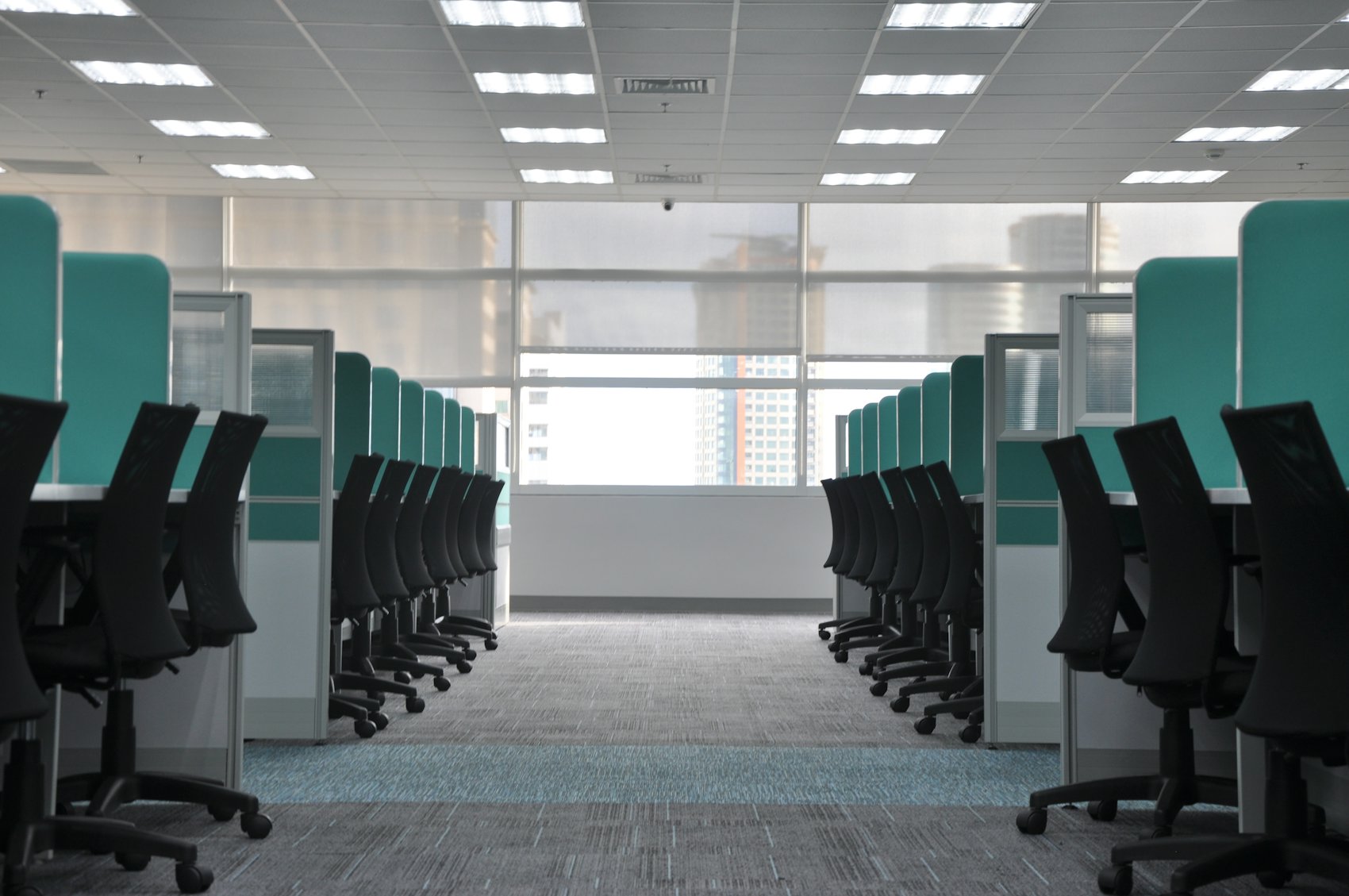
Your cubicles look tired. Panels are dingy, worksurface edges are chipped, and the layout was built for a headcount you no longer have. Before you price a replacement, find out what you own. Systems furniture comes apart and goes back together, and the expensive part of a cubicle is the part that almost never wears out. Here is how to assess your floor, what each refresh step changes, and where refreshing stops making financial sense.
- Assess what you have
- The refresh ladder, cheapest to most involved
- What each step changes about how the floor looks
- When reconfiguring is the best money you can spend
- When parts scarcity kills the idea
- The honest DIY boundary
- Refresh vs replace: the comparison
- When to liquidate and buy remanufactured instead
- How a refresh gets quoted
Assess what you have
Walk the floor with a notepad first. Six things decide whether a refresh is worth doing, and you can check them all in an afternoon.
- Frames and connectors. Look at the steel inside the panel, not the fabric on it. Straight, unrusted, unbent frames are the whole reason refreshing works. Then count connectors: two-way, three-way and four-way posts, end caps, top caps. They vanish during moves, and a floor that has relocated twice is usually missing a dozen.
- Panel squareness. Sight down a run at eye level. It should read as one straight line with consistent gaps. Panels racked out of square during a bad teardown will not seal against each other, and that gap shows in every photo. A few can be swapped; a whole floor of them means the system was taken apart badly.
- Raceway and electrical. Open a base raceway cover. Check the powered base, infeeds or power poles, the jumpers between panels, and receptacle count per station. Older floors were wired for a lamp and one computer, not two monitors and a dock per seat. Electrical is where a refresh budget quietly doubles.
- Worksurface edges. Chipped laminate, delaminated banding and swollen particleboard at the grommet are the most visible signs of age and the cheapest to fix, because worksurfaces are consumable. Sagging underneath means missing cantilever brackets, a hardware problem.
- Fabric staining and wear. Check sun fading on window runs and staining at hand height. Then determine whether panels are tile-based, where tiles pop off individually, or monolithic, where fabric is stretched over the frame. Tiles swap in place; monolithic panels come down and get reupholstered. That distinction drives cost and schedule more than anything else.
- Whether the parts still exist. Find the manufacturer and line on the frame label or inside the raceway. Current production means parts are orderable. Discontinued but high-volume usually means findable secondhand. Discontinued and low-volume means a costly hunt.
The refresh ladder, cheapest to most involved
Each rung costs more, takes longer and changes more. Most floors should stop somewhere in the middle.
- Deep clean. Hot water extraction on fabric, degreasing worksurfaces, cleaning tracks and glides, replacing keys and pulls. The only step needing no parts.
- Replace fabric tiles. On a tile-based system, swap visible tiles for new fabric in a current color. Frames, raceways and worksurfaces stay put. The highest-impact dollar on the ladder.
- New worksurfaces and edge banding. Fresh laminate tops in a current finish with new banding and grommets.
- Re-tile with markerboard, glass or stack-ons. Swap selected fabric tiles for markerboard, or add glass or acrylic toppers to raise sight lines without raising panels.
- Reconfigure the same parts. Rebuild the floor in a footprint that matches how the company works now. No new furniture, just labor plus whatever connectors the layout needs.
- Full remanufacture. Stations come apart to components. Fabric, worksurfaces, edge banding and hardware are replaced and frames repainted or powder coated. Your steel, everything else new.
- Full replacement. The old floor leaves and a different one arrives. See used vs remanufactured vs new.
Steps one through four can run in phases while the floor stays occupied. Five and six need it empty. That scheduling difference matters as much as price.
What each step changes about how the floor looks
Be honest about what you are buying. A deep clean makes a floor look cared for, not new.
| Step | What it changes | What it does not fix | Floor occupied? |
|---|---|---|---|
| Deep clean | Removes grime; reads as maintained | Fading, dated colors, chipped edges, layout | Yes, in phases |
| New fabric tiles | Biggest visual change; panels match again | Worn worksurfaces, scratched frames, layout | Usually yes |
| New worksurfaces | Fixes what people touch and photograph most | Panel color and condition, layout | Usually yes |
| Markerboard or glass | Changes character; more light and collaboration | Wear on untouched components | Partly |
| Reconfigure | Density, sight lines, how the team works | Condition; it comes back the same | No |
| Full remanufacture | Everything visible; reads as new | Nothing visible; frames are still yours | No |
Fabric and worksurfaces control how new a floor looks. Reconfiguration controls how well it works. Those are separate problems, and plenty of floors only have one of them.
When reconfiguring is the best money you can spend
Reconfiguration is the most underrated line item in facilities. You own the furniture already; you pay for a space plan and an install crew. The right call when:
- Headcount changed. Going from 8x8 stations to 6x6 or to benching adds seats without adding rent.
- The work changed. Tall private stations make no sense for a team that now works in pods, and an open bullpen makes no sense for phone-heavy work. Our cubicle configurations page shows the footprints side by side.
- The condition is fine. If fabric and surfaces still look acceptable, you buy pure functional improvement at zero material cost.
- You have surplus parts. Downsized floors often have panels in storage, and those spares are what make an ambitious reconfiguration affordable.
- You are moving anyway. The furniture comes apart regardless, so the extra cost is just the space plan and the install-hour difference.
Combine rungs where you can. If the floor is coming down anyway, that is the cheapest moment to swap fabric tiles and worksurfaces.
When parts scarcity kills the idea
Reconfiguration fails on parts, not labor. A new layout almost always needs pieces the old one did not: different connector angles, more end and top caps, extra cantilever brackets, and above all more powered base panels and jumpers, because denser layouts need power at more seats in the same run. Warning signs:
- The line was discontinued long enough ago that the secondary market has thinned out.
- Your panels are a nonstandard height or width that never sold in volume.
- The electrical is a superseded proprietary generation, so jumpers and infeeds are not interchangeable with the current version of the brand.
- You need more than a handful of any one specialty part. Two connectors is easy. Forty is a project.
- Panel finishes are a discontinued color and replacement tiles will not match.
When parts hunting dominates the schedule, the real comparison is no longer refresh versus replace. It is refresh versus replace-and-be-done.
The honest DIY boundary
An in-house team can do real work here and save real money. The line is not skill. It is what carries load and what carries current.
Reasonable in-house
- Cleaning: fabric extraction, surface degreasing, tracks and glides
- Swapping fabric tiles on tile-based panels at low and mid heights
- Replacing worksurfaces on short, stable runs where panels stay standing
- Accessories: keyboard trays, monitor arms, task lights, tack boards
- Pedestal locks, keys, pulls and glides
Needs an install crew
- Panel electrical. Powered bases, jumpers, infeeds, power poles, receptacles. Licensed work in most jurisdictions, and modular furniture power is not ordinary building wiring.
- Tall panel runs. Panels at 65 inches and up are unstable until braced and connected. A tall run mid-disassembly is the most dangerous object on a facilities floor.
- Load-bearing connections. Any panel carrying overhead bins, shelves or a cantilevered worksurface. Pull the wrong one and everything on it comes down.
- Full teardown and reconfiguration. Crews take a floor down in an order that keeps runs stable and label components so the rebuild is possible.
- Anything needing a lift, a permit or after-hours access.
A station reassembled wrong shows up later as out-of-square panels and stripped fasteners. A DIY teardown can quietly cost you the furniture's reusability.
Refresh vs replace: the comparison
Refresh scopes are quoted per project after a walkthrough, because the price depends on what you own, how many of each part you need, whether panels are tile-based or monolithic, and how much can happen with the floor occupied. There is no honest rate card for it.
Replacement pricing is fixed, so that is what to measure against. Furniture only, excluding electrical, delivery and professional installation, quoted separately. Space planning is free.
| Station | Liquidation grade | Remanufactured | New |
|---|---|---|---|
| 6' x 6' | $615 | $1,245 | $1,920 |
| 6' x 8' | $725 | $1,410 | $2,170 |
| 8' x 8' manager | $850 | $1,615 | $2,470 |
| Open bench seat | $460 | $875 | $1,235 |
Average market rate Prices subject to availability and project pricing.
Panel height adjusts those figures: low 42 inch at 0.95, mid 53 inch at 1.00, tall 65 inch at 1.08. Lead times run as little as 72 hours for in-stock liquidation grade, 7 to 14 days remanufactured, 4 to 6 weeks new. Price a floor with the instant quote builder.
Use those numbers as your ceiling. A refresh landing well under the liquidation column is easy to justify. One creeping toward the remanufactured column deserves a hard look: you would pay remanufacture prices for a floor that keeps its old layout and old electrical capacity.
When to liquidate and buy remanufactured instead
If two or more of these are true, get pricing on both paths before you commit:
- The system is discontinued and the parts you need are scarce.
- Electrical capacity is wrong for how people work now, so rewiring is in scope regardless.
- The layout does not match headcount, so a teardown happens either way.
- Panel heights are wrong and stack-ons will not close the gap.
- Your lease deadline is tight. Remanufactured arrives in 7 to 14 days; a parts hunt has no reliable end date.
- More than one rung applies at once. Fabric plus worksurfaces plus reconfiguration plus electrical is a remanufacture with extra steps.
The old floor has value. Liquidation recovers some of it, and that recovery comes off the replacement cost. Steel frames, worksurfaces and pedestals from major manufacturers have a real secondary market, and a clean, documented floor is worth more than one partly disassembled by an untrained crew, so get the valuation before anyone starts pulling things apart. Running both sides as one project also solves scheduling: one access window, one certificate of insurance, one point of contact. For electronics and fixtures needing documented handling, see decommissioning.
How a refresh gets quoted
We count stations, identify the manufacturer and line, check whether panels are tile-based or monolithic, open a raceway, inventory your spares, and note what is worth reusing. From that you get a scoped refresh price and a comparable replacement price from the rate card above, so the decision is a comparison rather than a guess. Office Station is an independent reseller, not an authorized dealer; manufacturer warranties generally do not transfer to pre-owned furniture.
Space planning is free, including a reconfiguration plan for furniture you already own. Send photos of a panel frame, a connector and the manufacturer label to hello@officestation.com, or use the contact page, and we will tell you what you have and what it is worth refreshing.
Frequently asked questions
Is it cheaper to refresh existing cubicles or buy used ones?
It depends on how much of the station you have to touch. A deep clean and a few replacement parts is almost always cheaper than buying anything. Once you are replacing fabric, worksurfaces and edge banding across a whole floor and paying an install crew, the cost starts to approach liquidation-grade stations, which start at $615 for a 6x6 workstation, furniture only. Price both before deciding.
Can you replace the fabric on cubicle panels?
Usually yes, but how depends on the system. Tile-based panels let you swap individual fabric tiles, which is straightforward and gives a clean result. Monolithic panels with fabric stretched over the frame have to be reupholstered, which means taking panels down and sending them out. Reupholstery costs more per panel and takes longer, so confirm which type you have before budgeting.
How do I know if my cubicles can be reconfigured?
Two things decide it: whether the parts are still made or available on the secondary market, and whether the new layout needs parts you do not own. Reconfiguring the same panels into a different footprint is cheap. Needing twenty extra connectors, end caps or powered base panels for a discontinued system is what kills the idea, because those pieces can be harder to find than whole stations.
Can my maintenance team take down and move cubicles themselves?
They can handle cleaning, swapping fabric tiles, replacing worksurfaces on short runs and installing accessories. They should not touch panel electrical, tall panel runs or load-bearing connections. Systems furniture gets its stability from how panels brace each other, and a partly disassembled run can fall. Electrical components inside panels are a licensed trade in most jurisdictions.
What does remanufacturing a cubicle involve?
A full remanufacture means the station comes apart to its components. Wear surfaces are replaced, including fabric, worksurfaces, edge banding and hardware, and frames are repainted or powder coated. The result looks new on everything people see and touch, on frames that have already proven themselves. At Office Station, remanufactured stations run $1,245 for a 6x6 and usually take 7-14 days.
Should I liquidate my old cubicles instead of refreshing them?
Consider it when the system is discontinued, the parts are scarce, or the layout is wrong for how the office works now. Liquidating recovers some value and clears the floor, and remanufactured stations at $1,245 for a 6x6 arrive in 7-14 days with fresh surfaces. Office Station handles both sides, so the removal and the replacement can be scheduled as one project.
Average market rate Prices subject to availability and project pricing.