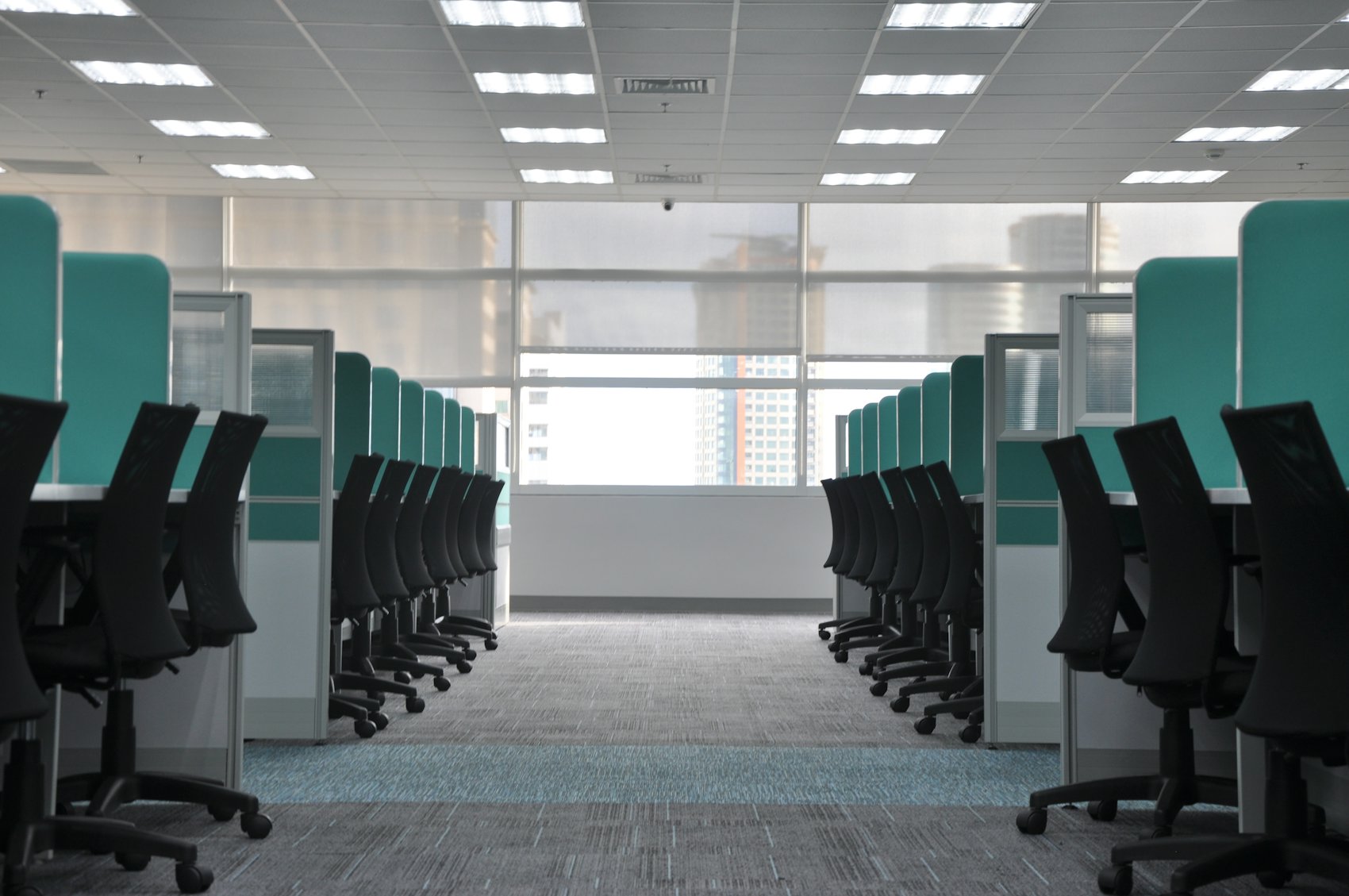
Photo: DPPed, CC BY-SA 3.0, via Wikimedia Commons
A Phoenix office move out is rarely just a furniture problem. You are working against a lease end date, a property manager with a move-out checklist, a Valley that sprawls across dozens of cities, and a climate that shuts down afternoon work for a third of the year. This guide covers the local details that decide whether your space is returned on time: corridors and building types, heat and monsoon scheduling, event traffic, e-waste and data rules, and a week-by-week timeline.
- Phoenix office corridors and what they mean for removal
- Summer heat and monsoon scheduling
- Traffic, light rail and event constraints
- E-waste, data and disposal in Arizona
- Building management norms
- A Phoenix move-out timeline
- What Office Station provides in Phoenix
Phoenix office corridors and what they mean for removal
The Phoenix office market is not one downtown. It is a set of corridors spread across Phoenix, Scottsdale, Tempe and Chandler, and each one has its own building stock and logistics. Knowing which kind of building you are leaving tells you most of what you need to plan.
Downtown Phoenix
Downtown mixes high-rise towers, government buildings and renovated older structures. Towers usually mean a shared loading dock, a single freight elevator for the whole building and strict reservation windows. Older buildings can have narrow corridors and small elevators that slow down removal of large conference tables and panel systems. Street loading is limited, so dock time is valuable. See the Downtown Phoenix liquidation page for more.
Camelback Corridor
The Camelback Corridor, running along Camelback Road through the Biltmore area, is dense with mid-rise and high-rise Class A office buildings. Expect certificate of insurance requirements with specific additional insured wording, freight elevator bookings and after-hours move windows so tenants who are staying are not disrupted. Details on the Camelback Corridor page.
Scottsdale Airpark
The Airpark area around Scottsdale Airport is mostly low-rise professional office and flex space. Ground-floor suites are easier to clear, but many buildings have no dock, so trucks load from a parking lot with a liftgate. That changes crew size and timing. See the Scottsdale Airpark page.
Tempe and Rio Salado
Tempe's office stock along Rio Salado Parkway and near Tempe Town Lake includes newer mid-rise buildings and corporate campuses. Parking structures often have height limits that keep box trucks out, so loading plans need to be confirmed early. More on the Tempe Rio Salado page.
Chandler Price Corridor
The Price Corridor along the Loop 101 in Chandler is home to large corporate campuses with big floor plates. Projects here tend to be large: hundreds of workstations, security check-in for every crew member and campus-wide schedules. See the Chandler Price Corridor page.
Desert Ridge and CityNorth
Office buildings near the Loop 101 and Tatum Boulevard in north Phoenix sit inside mixed-use districts with retail and hotels. Daytime loading can be restricted and retail traffic peaks on weekends and holidays. See the Desert Ridge and CityNorth page.
Summer heat and monsoon scheduling
Phoenix summers are the single biggest scheduling factor for a local move out. Highs routinely pass 100 degrees for months, and the inside of a box truck or an unconditioned loading dock gets much hotter than the air. That affects crew safety, productivity and the furniture itself.
- Start early. From roughly May through September, plan loading for early morning, night or weekend hours. Afternoon loading on an exposed dock is slow and hard on people.
- Keep the HVAC running. Confirm the building will keep cooling on in your suite through the last day of the move out. Some buildings reduce after-hours HVAC unless you request it.
- Protect resale value. Heat can loosen edge banding and stress laminates and chair materials. Furniture that will be resold should not sit in a hot trailer or on a dock longer than necessary, which protects your offer.
Then there is monsoon. The National Weather Service defines Arizona's monsoon season as June 15 through September 30, with storms usually building from early July. Afternoon and evening storms can bring dust storms, sudden heavy rain and strong winds. ADOT's "Pull Aside, Stay Alive" guidance tells drivers to get off the road in a dust storm, which can stall trucks on the freeways for a while. Morning loading and covered docks are the practical defense.
October through April is the easiest window. If your lease end date gives you any flexibility, a cool-season move out is simpler to schedule.
Traffic, light rail and event constraints
Distance in the Valley matters less than freeway timing. Trucks moving on the I-10, I-17, Loop 101 or Loop 202 during rush hour burn labor hours. Night and early-morning schedules help with traffic as much as they help with heat.
A few recurring local constraints to plan around:
- Valley Metro Rail. Light rail runs along Central Avenue, through downtown and into Tempe and Mesa. Streets along the line can limit where trucks stop, so confirm legal loading locations for buildings on the alignment.
- Downtown sports and conventions. Games and events at Chase Field and Footprint Center, and large shows at the Phoenix Convention Center, bring crowds and street closures downtown. Check the calendars before booking a downtown move.
- Barrett-Jackson. The collector car auction takes over WestWorld of Scottsdale for more than a week each January, adding traffic near the Loop 101 and the Airpark area.
- WM Phoenix Open. The PGA TOUR event at TPC Scottsdale in early February draws very large crowds near Scottsdale Road and the Loop 101, close to the Airpark and Desert Ridge.
- Cactus League spring training. February and March games at stadiums across the Valley add traffic around Scottsdale, Tempe and the West Valley.
- ASU events in Tempe. Football games and university events around Mountain America Stadium affect traffic near Mill Avenue and Rio Salado Parkway.
E-waste, data and disposal in Arizona
An office decommissioning in Phoenix almost always includes electronics: computers, monitors, phones, printers, servers and networking gear. Here is what you can count on and what you should verify.
- No statewide e-waste mandate. Arizona is generally listed among the states without a statewide electronics recycling law. That is not a license to landfill electronics. Recycling responsibly protects your company and keeps your diversion numbers honest.
- Federal rules still apply. EPA universal waste rules cover items such as batteries and certain lamps, and older CRT monitors have their own federal requirements.
- Arizona's records disposal law. A.R.S. 44-7601 says an entity may not knowingly discard records containing a person's name combined with items such as a full Social Security number or a financial account number without redacting or destroying them. It exempts entities already covered by HIPAA, Gramm-Leach-Bliley or the Fair Credit Reporting Act, which have their own federal duties.
- Local rules vary. Phoenix, Scottsdale, Tempe and Chandler each set their own solid waste and recycling programs. Check with your city and your hauler before anything goes in a dumpster.
For a full walk-through of retiring IT assets, see the office decommissioning checklist.
Building management norms
Valley property managers generally expect the same basics, even if the details differ:
- Certificates of insurance naming the landlord and property manager as additional insured, delivered before the first truck arrives.
- Freight elevator reservations, often in blocks, with pads installed and a building engineer on call.
- After-hours or weekend work for large removals in multi-tenant buildings.
- Dock scheduling so your trucks do not block deliveries for other tenants.
- Floor and wall protection in lobbies, corridors and elevators.
- Broom-clean or restoration condition as defined in your lease, sometimes including removal of cabling and wall-mounted items.
Estimate your Phoenix liquidation
A Phoenix move-out timeline
Work backward from the date you must return the space. This sequence fits most Valley projects; larger campuses need more lead time.
| When | What to do | Phoenix note |
|---|---|---|
| 12+ weeks out | Confirm lease return conditions and get building move-out rules | Check the event calendar if you are near downtown, Scottsdale or Tempe |
| 10 weeks out | Schedule a walkthrough and pull an inventory list | Walkthroughs typically within 48 hours in Greater Phoenix |
| 8-9 weeks out | Review the written net offer and decide what stays, sells or recycles | Offers arrive within 5 business days of the walkthrough |
| 6 weeks out | Plan IT decommissioning and data destruction | Sweep file cabinets for records covered by A.R.S. 44-7601 |
| 4 weeks out | Book freight elevator, dock and after-hours windows; send COIs | May through September, request early-morning or night slots |
| 2 weeks out | Confirm crew schedule and HVAC for move-out days | In monsoon season, plan morning loading and a weather buffer |
| Move-out week | Removal, e-waste pickup, final sweep | Avoid rush-hour freeway runs on the I-10 and Loop 101 |
| After | Walk the space with the property manager; file documentation | Keep inventory, destruction certificates and diversion summary |
If you are short on time, read the lease-end office liquidation timeline for ways to compress the schedule.
What Office Station provides in Phoenix
Office Station liquidates, decommissions and relocates corporate offices across the Southwest. In Greater Phoenix, that includes:
- A written net offer equal to the resale value of your furniture minus the cost of removal, so you see one clear number.
- Fast walkthroughs, typically within 48 hours in Greater Phoenix, and offers within 5 business days.
- Night and weekend crews for buildings that require after-hours work or summer schedules that avoid the heat.
- Building coordination, including certificates of insurance, freight elevator bookings and dock scheduling.
- An itemized inventory of what was removed.
- E-waste recycling with certificates of data destruction for drives and storage devices.
- Diversion summaries showing what was resold, recycled or otherwise kept out of landfill.
If you are moving rather than closing, Office Station also sells pre-owned designer furniture for the new space. Liquidation-grade furniture can be ready in as little as 72 hours when in stock, remanufactured usually takes 7-14 days and new takes 4-6 weeks. A 6'x6' workstation is $615 liquidation-grade, $1,245 remanufactured or $1,920 new, furniture-only. Prices exclude electrical, delivery and professional installation. Space planning is free, and cubicle delivery covers the Phoenix Valley and goes nationwide when needed.
Start with the Phoenix office furniture liquidation page, learn more about office decommissioning, or contact Office Station to schedule a walkthrough.
Schedule a Phoenix walkthrough
Average market rate Prices subject to availability and project pricing.
Frequently asked questions
How fast can Office Station walk through a Phoenix office?
Walkthroughs are typically scheduled within 48 hours in Greater Phoenix. After the walkthrough, you receive a written net offer within 5 business days. The offer is the resale value of your furniture minus the cost of removing it.
What is the best time of year to liquidate an office in Phoenix?
October through April is the easiest window because heat is not a factor for crews, trucks or loading docks. Summer projects work fine with early-morning, night or weekend schedules. Watch for big-event weeks such as Barrett-Jackson in January and the WM Phoenix Open in early February if your office is in Scottsdale or north Phoenix.
Does monsoon season affect an office move out in Phoenix?
It can. The National Weather Service defines Arizona's monsoon season as June 15 through September 30, and afternoon dust storms and downpours are most common from July into September. Morning loading windows and covered docks reduce the risk of weather delays and wet furniture.
Is there an e-waste law for businesses in Arizona?
Arizona is not generally listed among the states with a statewide electronics recycling law, but that does not mean anything goes. Federal universal waste rules still apply to items like batteries and certain lamps, and A.R.S. 44-7601 requires that records containing certain personal identifying information be redacted or destroyed before disposal. Check with your city and hauler for local rules.
Will a Phoenix building let movers work after hours?
Most Class A buildings in the Valley expect large moves to happen after hours or on weekends, with the freight elevator and dock reserved in advance. Office Station runs night and weekend crews and coordinates certificates of insurance, elevator bookings and dock times with property management.
Can I buy furniture for my new Phoenix office from the same company?
Yes. Office Station sells liquidation-grade, remanufactured and new furniture, with cubicle delivery across the Phoenix Valley. A 6'x6' workstation is $615, $1,245 or $1,920 furniture-only depending on grade, and space planning is free.
Average market rate Prices subject to availability and project pricing.