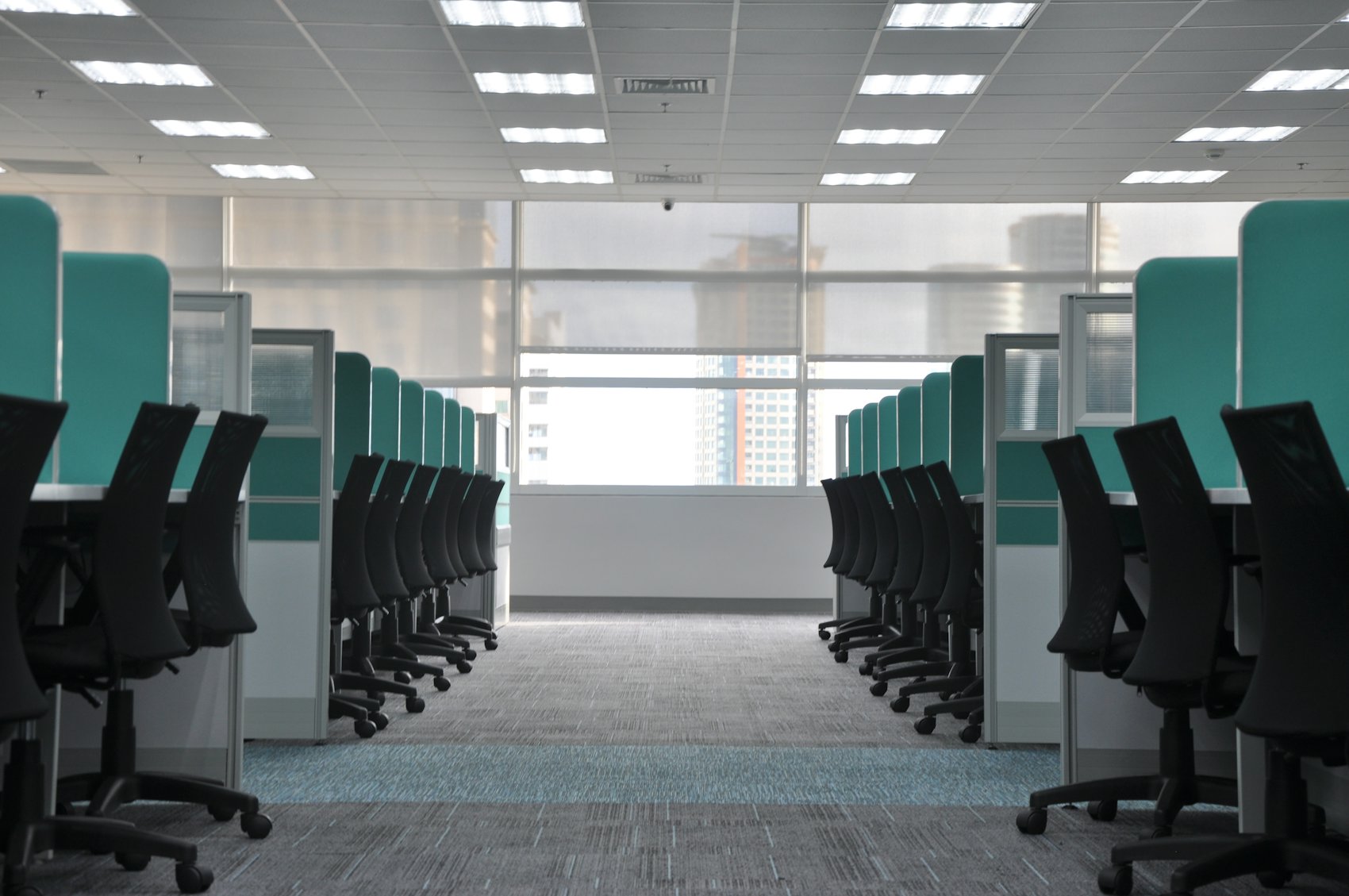
Photo: Jeff Turner, CC BY 2.0, via Wikimedia Commons
The Denver metro has a compact downtown core, a large suburban office market along I-25, and a separate tech and research market in Boulder. Add a snow season that can stretch across half the year and a statewide ban on landfilling electronics, and a move-out needs a real plan. This guide covers office furniture liquidation in Denver, office decommissioning and planning an office move-out across the Front Range.
- Denver office districts and building types
- Downtown tower rules
- Colorado and Denver disposal rules
- Snow season and traffic
- What shapes your net offer in Denver
- A Denver move-out timeline
- What Office Station provides in Denver
Denver office districts and building types
- Downtown Denver. High-rises in the central business district along 17th Street and the 16th Street area, historic and loft offices in LoDo, and newer buildings around Union Station, the Central Platte Valley and RiNo.
- Denver Tech Center. The DTC along I-25 in Greenwood Village and Centennial, with mid-rise and high-rise office towers, corporate headquarters and large surface or structured parking.
- Cherry Creek. Boutique and mid-rise office buildings mixed with retail, often housing financial, investment and professional firms with private-office-heavy layouts.
- Boulder. Downtown Boulder offices, the Flatiron Park area, Gunbarrel and research-oriented buildings, plus nearby Interlocken in Broomfield along US-36. Mostly low- and mid-rise buildings, with some lab and R&D space.
Loft offices in LoDo can be charming and hard to access, with narrow stairwells and small elevators. DTC towers are easier for trucks but still run move-outs through property management. Boulder buildings are often low-rise but may have limited dock access.
Downtown tower rules
Downtown Denver and DTC towers usually have written contractor and move rules. Common requirements include:
- Certificates of insurance naming the building owner and property manager as additional insureds, submitted before crews arrive.
- Freight elevator reservations with fixed windows, often shared with other tenants.
- Loading dock schedules and truck size limits. Some downtown docks are accessed from alleys with tight turns.
- After-hours or weekend removal so business-hours tenants are not disrupted.
- Protection for floors, walls, doors and elevator cabs.
- Return condition defined in your lease, which may include removing cabling and anchored items.
Research and lab space in Boulder
If your Boulder or Broomfield space includes labs, keep the lab scope separate. Chemicals, biological materials, regulated equipment and anything under a license belong with your EHS team and licensed specialty vendors. Office furniture and general equipment can be liquidated once lab areas are released.
Colorado and Denver disposal rules
Colorado's electronics landfill ban
Colorado's Electronic Recycling Jobs Act (SB12-133) banned landfill disposal of covered electronic devices as of July 1, 2013. Covered devices include computers, monitors, laptops, printers, fax machines, tablets, e-readers, televisions, peripherals and devices with screens larger than four inches. For an office move-out, that means old monitors, computers and printers must be recycled, not tossed.
Personal information
Colorado Revised Statutes section 6-1-713 requires covered entities that keep documents with personal identifying information to maintain a written policy for destroying them by shredding, erasing or otherwise making the information unreadable. A certificate of data destruction documents what happened to each data-bearing device.
Denver recycling and composting
Denver voters approved the Waste No More measure in 2022, and the city's Universal Recycling and Composting Ordinance has requirements taking effect beginning September 1, 2026, including recycling access at non-residential buildings. Check with the City and County of Denver and your building's hauler for current requirements. Boulder and other cities have their own programs. For what resells and what recycles, see the office furniture disposal and e-waste guide.
Estimate your Denver liquidation
Snow season and traffic
Plan for snow from November through April
Snow can fall along the Front Range from roughly November through April, and sometimes earlier or later. March and April storms can be heavy and wet. For move-outs in that window:
- Build in buffer days between planned removal dates and your lease end.
- Confirm snow removal for docks, alleys, ramps and parking areas with the property manager.
- Protect floors and furniture from wet, salty boots and slush in lobbies and elevators.
- Stay flexible on truck routes when storms close lanes or slow the metro.
Freeways and the I-70 corridor
I-25 through downtown and the DTC, I-70 across the north side of the city, US-36 between Denver and Boulder, and C-470 and E-470 carry most truck routes, and I-25 in particular backs up at commute peaks. If any furniture is headed west into the mountains, Colorado requires commercial vehicles over 16,000 pounds to carry chains on I-70 between Dotsero and Morrison from September 1 through May 31, and the Traction Law can be activated during storms.
Event traffic
- Coors Field in LoDo during Rockies season.
- Ball Arena in the Central Platte Valley for Nuggets, Avalanche and concerts.
- Empower Field at Mile High for Broncos games and stadium events.
- Colorado Convention Center for large conventions downtown.
- Folsom Field in Boulder on University of Colorado game days.
What shapes your net offer in Denver
A written net offer has two sides: what your furniture and equipment can resell for, and what it costs to remove everything the lease says must go. Both sides move with local conditions.
Resale value
- Matched quantity. Fifty identical workstations from a DTC floor are easier to resell than a mix of styles collected over years.
- Brand and age. Recent commercial lines from major manufacturers usually hold value better than older or unbranded pieces.
- Condition. Clean fabric, intact edges and working chair mechanisms matter. Winter moisture tracked into lobbies and elevators is one more reason to protect furniture on the way out.
- Private office and conference furniture. Cherry Creek and downtown professional offices often hold desks, credenzas and conference tables with steady demand.
Removal cost
- Access. A DTC tower with a dock and a large freight elevator is a faster job than a LoDo loft with a small elevator and no dock.
- Hours. After-hours and weekend windows, and any snow delays, affect labor.
- Scope. Cabling, anchored items and e-waste volume all add work.
If you are relocating and keeping part of your furniture, the net offer can cover only what stays behind. To test numbers before a walkthrough, try the liquidation estimator, and for help moving the rest, see office decommissioning services.
A Denver move-out timeline
Work backward from the date your space must be returned. The lease-end office liquidation timeline has the general sequence.
| Time before lease end | What to do | Denver notes |
|---|---|---|
| 120-90 days | Read the lease return clause, get building move rules, schedule a walkthrough | LoDo lofts: measure stairs, doors and elevators |
| 90-75 days | Review the written net offer, decide what moves, sells, recycles or is removed | Tag furniture headed to a new office |
| 75-45 days | Submit COIs, reserve freight elevator and dock, choose after-hours dates | Check Coors Field, Ball Arena and convention calendars |
| 45-30 days | Plan IT decommissioning and data-bearing devices, arrange recycling | Colorado bans covered electronics from landfills |
| 30-7 days | Confirm inventory, crew, trucks and building access | November to April: hold backup dates for snow |
| Removal days | Furniture, equipment and e-waste removed, cabling handled per lease | Confirm docks and ramps are cleared of snow and ice |
| After removal | Final walkthrough, collect certificates and diversion summary | Keep records for compliance and ESG reporting |
What Office Station provides in Denver
Office Station liquidates, decommissions and relocates corporate offices across the Southwest, including the Denver metro and Boulder. On a project here, you get:
- A written net offer: resale value minus removal cost, shown as one number.
- Prompt scheduling, with walkthroughs outside Greater Phoenix typically within 2-3 business days and written offers typically within 5 business days.
- Building coordination for COIs, freight elevators and loading docks.
- Nights and weekends removal when building rules require it.
- Itemized inventory of everything assessed, resold, recycled or removed.
- E-waste handling with certificates of data destruction for data-bearing devices.
- Diversion summaries documenting where materials went.
What to have ready for a Denver walkthrough
- Your lease end date and the return condition clause, so the scope matches what the landlord expects.
- The building's move or contractor rules, including allowed hours, COI requirements, dock details and elevator dimensions.
- A floor plan or headcount by floor, which speeds up the itemized inventory.
- A list of anything staying with you, such as furniture headed to a new office or equipment going back to a leasing company.
- An IT contact who can confirm which devices hold data and how they should be documented.
With those details in hand, the written net offer reflects the actual job rather than assumptions, and your removal dates can be planned around the building from the start.
For full space return including cabling and infrastructure, see office decommissioning. For the metro overview and area pages, visit Denver office furniture liquidation.
Frequently asked questions
How does office furniture liquidation work in Denver?
A liquidation partner walks the space, inventories furniture and equipment, and gives you a written offer. Office Station's offer is a net number: estimated resale value minus removal cost. If the resale value is higher, you are paid the difference; if it is lower, the offer shows the net cost to clear the space.
Can old computers and monitors go to a Colorado landfill?
No. Colorado's Electronic Recycling Jobs Act banned the landfill disposal of covered electronic devices as of July 1, 2013. The ban covers items such as computers, monitors, laptops, printers, fax machines, tablets and televisions, so an office move-out needs a plan to recycle them.
Does snow affect office move-outs in Denver?
It can. The Denver area can see snow from roughly November through April, sometimes earlier or later, and spring storms can be heavy. Build a weather buffer into your schedule, and confirm snow removal at the dock and parking areas before removal days.
How quickly can Office Station walk through a Denver or Boulder office?
Walkthroughs outside Greater Phoenix are typically scheduled within 2-3 business days, and written offers typically follow within 5 business days. Share your lease end date and building rules when you reach out so the plan fits your deadline.
What does Colorado law say about disposing of records with personal information?
Colorado Revised Statutes section 6-1-713 requires covered entities that keep paper or electronic documents with personal identifying information to have a written policy for destroying them when no longer needed, by shredding, erasing or otherwise making the information unreadable. Computers, servers and copiers with drives are part of that plan.
When should I avoid scheduling a downtown Denver move-out?
Check the calendars for Coors Field, Ball Arena, Empower Field at Mile High and the Colorado Convention Center. Game days and large events tighten streets and parking in LoDo, Union Station and the Central Platte Valley, which slows truck access.