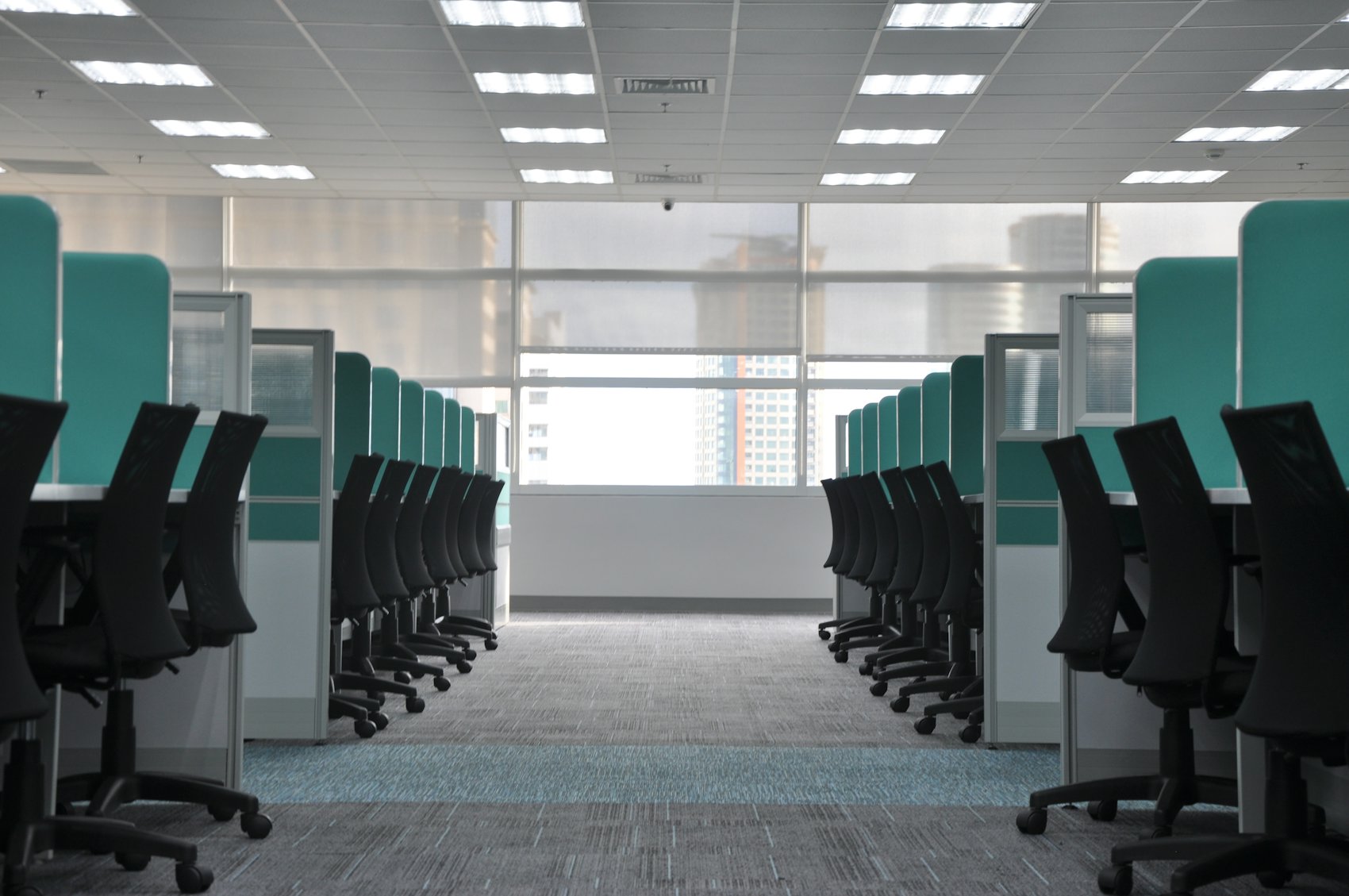
A broom-swept office move-out usually means the space is completely empty and the floors are swept or vacuumed: no furniture, equipment, personal property, trash or debris left behind. It usually does not require painting, patching or professional cleaning, but your lease may add those, along with cabling removal or restoration to original condition. Read the surrender clause first, confirm anything unclear with the property manager in writing, then work through the room-by-room list below and hold a pre-inspection walkthrough about a week before your keys are due.
This checklist is for the person who has to hand the keys back: facilities managers, office managers, and the tenant-rep brokers who advise them. If you still need a full schedule, start with how to decommission an office by your lease end date.
- Broom-swept vs. the stricter standards
- Six lease questions to answer first
- Room-by-room checklist
- The grey areas that cause deductions
- Inspection and handback
Broom-swept vs. the stricter standards
Leases use a handful of phrases for surrender condition. They are not interchangeable, and the work and cost rise sharply as you move down this table.
| Lease language | What it usually requires | Trades involved |
|---|---|---|
| Broom-swept or broom-clean | All contents and debris out, floors swept or vacuumed | Removal crew |
| Broom-swept plus repair of damage | The above, plus fixing damage beyond normal wear and tear | Removal crew, handyman or painter |
| Remove tenant cabling | Low-voltage data and phone cable pulled back to the telecom room | Low-voltage contractor |
| Remove tenant improvements | Specific alterations taken out, such as added walls, glass fronts or millwork | General contractor |
| Restore to original condition | Space returned to how it was delivered at lease start | General contractor and several trades |
Most office exits fall in the first two or three rows. If your lease reaches the bottom two, book a general contractor early, because that work takes longer than the furniture removal.
Six lease questions to answer first
- What exact words does the surrender clause use, and is there a definition section?
- Must tenant-installed cabling be removed, left in place, or is it the landlord's choice?
- Are any alterations listed for removal, and were any approved to stay?
- What does the lease say about holes, anchors and mounting damage?
- Is there a required notice of intent to vacate, and has it been sent?
- What are the holdover terms if you are not out on time?
Your broker can usually get the landlord's position on the unclear ones in a single email. Ask for the answer in writing and keep it with the lease.
Room-by-room checklist
Open office and workstations
- Workstations disassembled and removed, including panels, worksurfaces, brackets, connectors and power harnesses
- Pedestals emptied and removed; keys located or locks drilled
- Task chairs and side chairs out
- Floor-mounted power and data monuments capped if the lease requires it
- Carpet checked for staples, zip ties and leveling glides left behind
Private offices and conference rooms
- Desks, credenzas, bookcases and conference tables removed
- Wall-mounted screens, brackets and whiteboards taken down if in scope
- Room signage and scheduling panels removed
- Window coverings left in place unless you installed them and must remove them
Break room and kitchen
- Refrigerator, microwave and small appliances you own removed and emptied first
- Cabinets and drawers emptied
- Food and liquids disposed of before the crew arrives
- Water lines to ice makers or coffee machines shut off and capped by the right trade
Storage, mail and file rooms
- Filing cabinets emptied and records shredded or moved
- Shelving units removed unless they are building property
- Supplies, paper and boxes cleared
Server and telecom rooms
- Servers, switches and storage removed and logged by serial number
- Racks removed if tenant-owned
- Cabling handled as the lease requires
- Supplemental cooling units addressed per the lease
Reception and common areas
- Reception desk, lounge seating and tables removed
- Company signage, logos and lobby directory listings removed
- Plants, artwork and decor out
Final sweep
- All trash and debris removed from the suite and loading areas
- Floors swept or vacuumed throughout
- Lights left working, doors and locks operating
The grey areas that cause deductions
Mounting holes. Screens and whiteboards leave anchor holes. Some landlords treat small holes as normal wear; others want them patched. Ask before the crew leaves so the decision does not land in the deposit statement.
Cabling above the ceiling. Cable you cannot see is easy to forget. If removal is required, it is usually a separate trade, and it should be scheduled after the furniture is out.
Items the landlord wants to keep. The next tenant may want the conference table or the kitchen cabinets. Get that in writing, or the item is still your responsibility.
Carpet and floors. Broom-swept does not usually include shampooing or replacing carpet, but heavy damage from furniture or rolling chairs can be argued as beyond normal wear.
Common-area damage. Elevator cabs, corridors and lobbies take a beating during removal. Use the building's required protection, and walk those areas before and after.
Inspection and handback
Book a pre-inspection walkthrough with the property manager about seven days before the surrender date. Bring the lease, a printed checklist and a camera. Write down every item they flag, agree who fixes it, and schedule the fixes that week.
On the final day, photograph and video every room, including ceilings, walls and floors, then return keys, fobs and access cards. Ask for written acceptance of the space. Keep the photos and the acceptance until the deposit is settled.
Office Station handles the furniture side of a lease surrender from start to finish: disassembly, removal, debris and the final sweep, scheduled after hours and coordinated with building management. See our office decommissioning service, and the office furniture liquidation page for how furniture is routed to resale, donation or recycling case by case. The full decommissioning checklist covers IT and administrative shutdown in more depth.
Need the space empty by a date? Request a free walkthrough. If you are furnishing a new space at the same time, space planning is free; write to hello@officestation.com.
Frequently asked questions
What does broom-swept condition mean in a commercial lease?
Broom-swept, or broom-clean, generally means the space is empty of furniture, equipment, personal property and debris, and the floors have been swept or vacuumed. It usually does not mean professionally cleaned, patched or painted. The exact meaning is whatever your lease says, so read the surrender clause and any definitions section before you plan the work.
Do I have to patch holes and paint when I move out of an office?
Only if your lease requires it. Many leases ask for broom-swept condition plus repair of damage beyond normal wear, and some require restoration to original condition. Holes from wall-mounted screens and whiteboards are a common grey area. Ask the property manager in writing what they expect and get the answer before the removal crew leaves.
Do I have to remove network cabling when I leave an office?
Some leases require the tenant to remove low-voltage cabling it installed, back to the telecom room. Others ask you to leave it in place for the next tenant. The lease controls, and the landlord may also be willing to waive removal if you ask early. Cabling removal is often missed until the final walkthrough, so settle it at the start.
What happens if furniture is left behind at lease end?
Leftover furniture, equipment or debris is usually treated as abandoned property, and the landlord can charge the cost of removal against your security deposit. If removal pushes past the surrender date, holdover terms may also apply. Some landlords will agree to keep specific items for the next tenant, but only with a written agreement.
How do I prove the office was left in good condition?
Photograph and video every room, ceiling, wall and floor on the final day, with timestamps. Hold a pre-inspection walkthrough with the property manager about a week before handback, fix the punch list, then get written acceptance of the space when you return keys and access cards. Keep the photos until the deposit is fully settled.