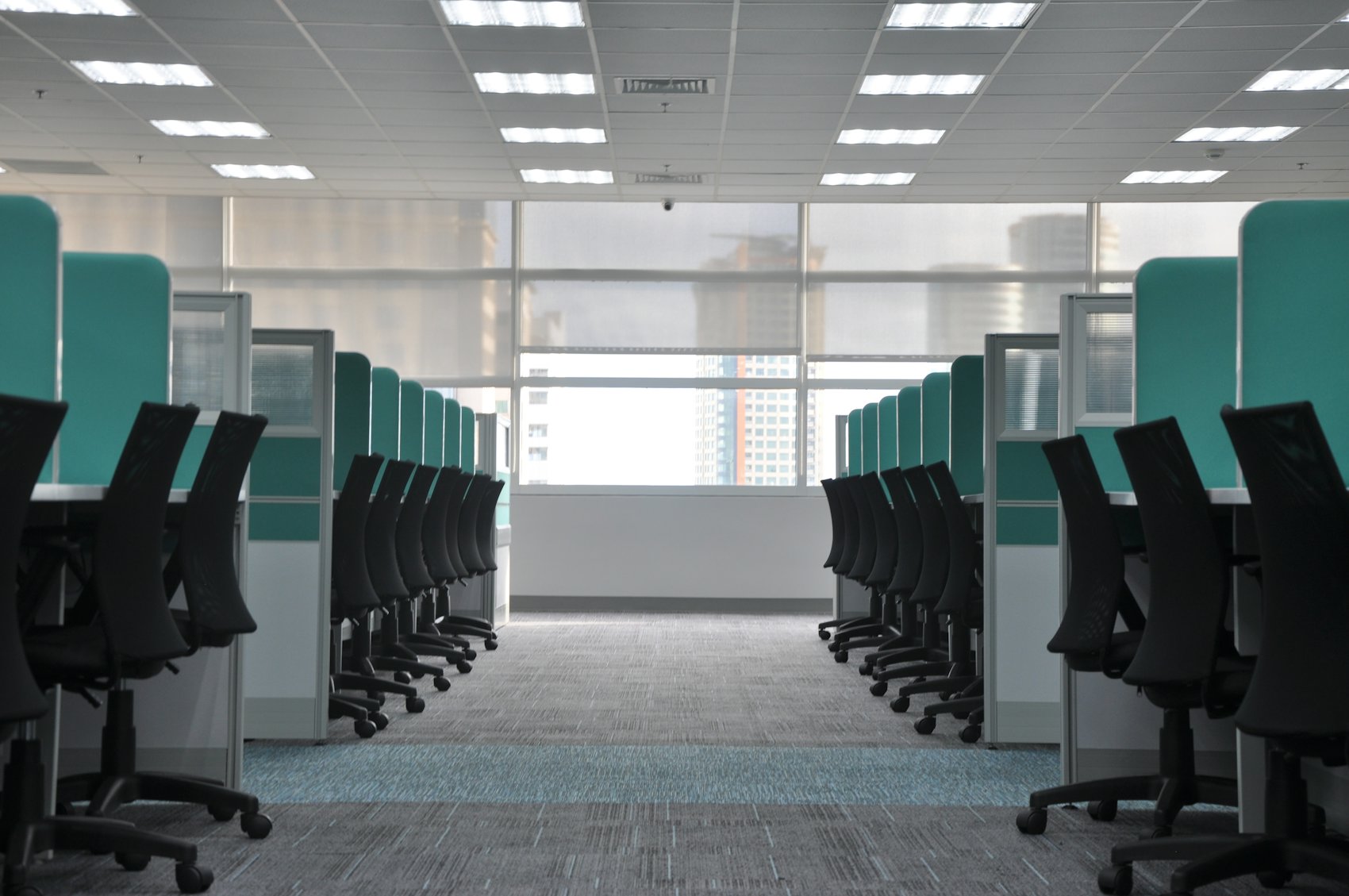
Open offices are good at collaboration and bad at focus. Office privacy panels and dividers are the most direct way to fix that without construction. The trick is choosing the right height and material for each role, rather than putting the same tall wall everywhere.
This guide walks through panel heights, divider types, materials and layout tips, then shows how to price a pre-owned cubicle layout so you can act on your plan.
Panel heights and what each one does
Panel height is the biggest single decision. Exact dimensions vary by manufacturer and product line, but these ranges are common across contract panel systems:
| Height range | Seated privacy | Standing privacy | Light and openness | Best for |
|---|---|---|---|---|
| About 42 inches | Low | None | Very open | Collaborative teams, benching, touchdown desks |
| About 53 inches | Good | Low | Open | Most general office teams |
| About 65 to 67 inches | High | Good | Moderate | Phone-heavy roles, analysts, focus work |
| 72 inches and up | Very high | High | Closed | HR, finance, confidential work |
A useful rule: if people mostly sit, a panel near 53 inches blocks eye contact across a seated neighbor while keeping the room bright. If people stand, pace or take frequent calls, step up to the 65 inch range.
Divider options compared
Panel-based workstations
Freestanding panels connected into cubicles are the most complete privacy solution. They support worksurfaces, storage and power, and they absorb some sound when fabric-wrapped. They take more planning and installation than other options.
Glass or acrylic stackers
Translucent toppers add height to an existing panel while letting light through. They improve visual separation for seated and standing workers and keep the space from feeling boxed in. They do little for sound.
Desk-mounted screens
Screens clamp or sit on a worksurface. They are affordable and fast to deploy on benching and open desks. Expect light visual separation only and limited acoustic benefit.
Freestanding and mobile dividers
Rolling or freestanding screens can zone off a meeting corner or create temporary separation. They are flexible but less stable than connected panels and do not carry power or worksurfaces.
Materials and acoustics
- Fabric-wrapped panels soften sound near the desk and are the most common choice for general office privacy.
- Laminate or painted panels are durable and easy to clean but reflect more sound.
- Glass and acrylic preserve daylight and sightlines, useful near windows or in interior zones that feel dark.
- Tackable surfaces give workers a place to pin documents, which adds function to the privacy panel.
Keep expectations realistic. Dividers reduce distraction; they do not create soundproof rooms. For confidential conversations, plan a few enclosed spaces in addition to panels.
Common privacy mistakes to avoid
- Going tall everywhere. Uniform high panels make an office feel dim and isolated, and they can make collaboration harder for teams that need it.
- Ignoring orientation. Two workers facing each other across a low panel feel less private than two workers back to back, even at the same height. Rotate desks before adding height.
- Forgetting the entry side. A station open to a busy aisle feels exposed. A slightly taller panel or stacker on the aisle edge can help more than raising every side.
- Treating screens as sound control. Thin desk screens and glass toppers help sightlines, not noise. Budget for acoustic solutions separately if noise is the real complaint.
- Mixing incompatible parts. Stackers and panels from different product lines may not connect. Confirm compatibility before ordering add-ons.
Privacy planning checklist
- List each team and how they work: seated focus, frequent calls, collaboration or confidential tasks.
- Assign a target panel height to each group using the table above.
- Mark windows and light sources so tall panels do not block daylight for everyone else.
- Decide where power and data run, since panels often carry them. Electrical work is priced separately.
- Check aisle widths and accessibility clearances with your floor plan.
- If adding to existing cubicles, confirm the product line and connector compatibility first.
- Choose condition grades by zone: A like new, B very good, C good.
What a pre-owned privacy layout costs
Once you know the heights and station count, pricing is straightforward. For a 6'x6' workstation, furniture-only:
| Option | Per station | Lead time |
|---|---|---|
| Liquidation-grade | $615 | As little as 72 hours in stock |
| Remanufactured | $1,245 | Usually 7 to 14 days |
| New | $1,920 | 4 to 6 weeks |
Average market rate Prices subject to availability and project pricing.
Prices exclude electrical, delivery and professional installation. Volume pricing is 5% at 20 or more stations, 8% at 50 or more, and 12% at 100 or more. Installation is $95 per workstation with a $495 minimum. In Greater Phoenix, delivery is $195 central or $295 metro; elsewhere nationwide, freight is quoted per project. Space planning is free, which is the easiest way to test panel heights on your actual floor plan.
Example: a 30-person team in remanufactured 6'x6' stations costs 30 x $1,245 = $37,350, minus 5%, for $35,482.50 in furniture, plus $2,850 installation.
Next steps
Browse used cubicles to see workstation options, or look at pre-owned office furniture for storage and desks that complete the layout. If your privacy upgrade means replacing old furniture, office furniture liquidation can turn what you are removing into a written net offer. More planning advice is in the guides.
Frequently asked questions
What panel height gives the most privacy?
Panels in the 65 to 67 inch range block the view of most people who are seated and many who are standing. Full-height panels around 72 inches or taller add more visual and some acoustic separation. Taller panels also block daylight and make the floor feel more closed, so reserve them for roles that need focus or confidentiality.
Do office dividers reduce noise?
Fabric-wrapped and acoustic panels absorb some sound, especially at the desk level, but no open-office divider replaces a closed room. Height helps, and so do soft surfaces elsewhere in the space. For confidential calls, pair panels with a few enclosed rooms.
Are desk-mounted screens a good alternative to cubicles?
They work well on benching and open desks where you want light separation and a low cost. They do little for acoustic privacy and are less stable than a panel system. If your team needs real focus space, a panel-based workstation is usually the better choice.
How much do pre-owned cubicles with privacy panels cost?
A 6'x6' liquidation-grade workstation is $615 furniture-only, remanufactured is $1,245, and new is $1,920. Prices exclude electrical, delivery and installation. Volume discounts start at 5% for 20 or more stations.
Can I add taller panels to cubicles I already own?
Sometimes. It depends on the panel system, connectors and whether stackers or glass toppers are available for that line. Share product details and photos before ordering so compatibility can be checked.
Average market rate Prices subject to availability and project pricing.