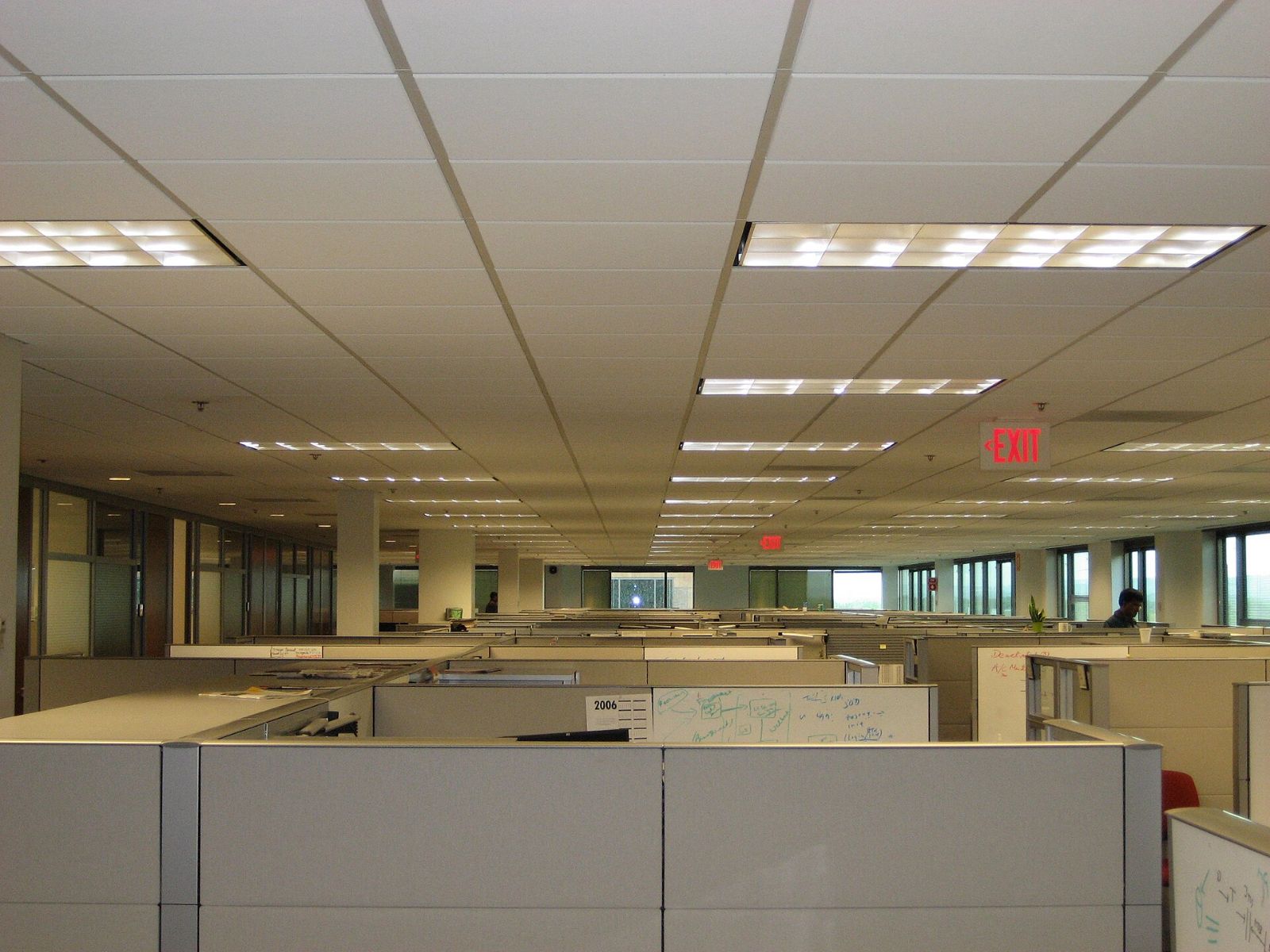
Plan storage with the desks, not after them
Most office projects follow the same pattern. The team picks workstations and chairs, signs off on a layout, and treats storage as a later decision. Then move-in week arrives, files have nowhere to go, and someone orders whatever cabinets can ship fastest in whatever finish is left.
Buying used office filing cabinets as part of your workstation order avoids that. Storage gets drawn into the floor plan from the start, arrives on the same truck, and matches the rest of the furniture. Free space planning includes it, so you can see where every pedestal and lateral file sits before anything is delivered.
The easiest pairing is storage with used cubicles. Pedestals tuck under work surfaces, lateral files can line the ends of rows, and the whole package moves on one schedule. You can also browse the wider range of pre-owned office furniture if your project includes more than workstations.
Storage types compared
Each storage type solves a different problem. Here is how the common options stack up.
| Type | Footprint | Best use | Watch for |
|---|---|---|---|
| Mobile pedestal | Fits under a work surface | Personal storage at each workstation | Caster condition, drawer height fits under the surface |
| Lateral file | Wide and shallow | Shared team files, space dividers, a surface for printers | Anti-tip interlock, counterweight needs, level floor |
| Vertical file | Narrow and deep | Tight wall space, archive rooms | Clearance in front for full drawer extension |
| Storage tower | Tall and narrow | Coats, bags and supplies at benching or open-plan desks | Door hinges, shelf pins, height near overhead fixtures |
| Bookcase or open shelving | Varies | Binders, reference material, display | Shelf sag, missing shelves or pins |
How much storage do you actually need?
Many companies buy storage based on what the old office had. That usually means paying to move and furnish files nobody opens. Work through these steps instead:
- Count personal storage. Decide whether each person gets a pedestal, a shared locker or tower, or nothing. Hybrid teams often need less than they think.
- Audit shared files. Measure the linear feet of paper you truly need to keep on site after your retention policy is applied.
- Separate active from archive. Active files belong near the team. Archive files can live in a dedicated room or off site.
- Note security needs. List which records require locking storage so those cabinets can be confirmed with keys or new lock cores.
- Send the counts with your workstation request. One list lets storage be planned and priced with everything else.
Condition grades for filing and storage
Storage takes more abuse than most furniture. Drawers get slammed, casters roll over cords and cabinets get dragged across carpet. Grading tells you how much of that shows.
| Grade | Condition | Where to use it |
|---|---|---|
| A, like new | Clean finish, straight fronts, smooth slides | Reception areas, client-facing zones, executive offices |
| B, very good | Light scuffs or marks, full function | Open-plan team areas |
| C, good | Visible cosmetic wear, drawers and locks work | File rooms, storage rooms, warehouse offices |
Storage is a good place to save by mixing grades. A C-grade vertical file in an archive room does the same job as an A-grade one, and nobody sees it.
What to check before you buy
- Drawer slides. Full extension, no grinding, no sagging when a drawer is loaded.
- Locks and keys. Confirm keys are included or budget for a lock core replacement.
- Fronts and sides. Dents in steel fronts can keep drawers from closing flush.
- Hanging file rails. Make sure rails are present and set for letter or legal size as you need.
- Finish match. If storage sits next to workstations, ask about matching the paint or laminate color.
- Brand and model. Pre-owned storage from Steelcase, Haworth, Knoll, Herman Miller, Allsteel and others is sold by an independent reseller, not an authorized dealer, and manufacturer warranties generally do not transfer.
Add storage to a workstation quote
Pricing, bundling and delivery
Storage is easiest to price when it rides along with a workstation order. Volume pricing on workstations works like this:
- 20 or more stations: 5% off.
- 50 or more stations: 8% off.
- 100 or more stations: 12% off.
Bundling also saves on logistics. Greater Phoenix delivery is $195 in the central zone and $295 across the metro, and freight elsewhere in the country is quoted per project, so one shipment beats two. Installation is $95 per workstation with a $495 minimum, and furniture prices exclude electrical, delivery and installation.
Lead times follow the same tiers as other furniture. In-stock liquidation-grade pieces can be ready in as little as 72 hours, remanufactured usually takes 7 to 14 days, and new typically takes 4 to 6 weeks.
What to do with your old cabinets
If you are replacing storage because you are moving or downsizing, your existing cabinets may have resale value. Office Station provides a written net offer, which is the resale value of the furniture minus the removal cost. Empty every drawer and apply your own records retention and destruction policy first. If the project includes computers or drives, office decommissioning covers e-waste with certificates of data destruction.
To see what your current furniture might be worth, start with the liquidation estimator.
Request filing and storage pricing
Average market rate Prices subject to availability and project pricing.
Frequently asked questions
What types of used filing cabinets and storage can I buy?
Stock changes as offices are liquidated, but pre-owned storage commonly includes lateral files, vertical files, mobile pedestals, storage towers, wardrobe cabinets and bookcases. Brands can include Steelcase, Herman Miller, Haworth, Knoll, Allsteel, Teknion, Kimball and others. Send us your list and we will check what is currently available.
Do used filing cabinets come with keys?
Not always. Keys often go missing when an office is decommissioned. Ask whether a specific cabinet includes keys, and if it does not, plan for a replacement lock core or rekeying before you store anything sensitive.
Is there volume pricing if I add storage to a cubicle order?
Volume pricing on workstation orders is 5% at 20 or more stations, 8% at 50 or more and 12% at 100 or more. Adding pedestals, lateral files and towers to that same order keeps storage on one quote and one delivery schedule. Ask how the storage lines in your order are priced when you request the quote.
Should I choose lateral or vertical files?
Lateral files are wide and shallow, so they sit along walls, divide spaces and give you a usable top surface. Vertical files are narrow and deep, which saves wall length but needs more clearance in front for the drawer to open. Your floor plan and aisle widths usually decide it.
How are used filing cabinets graded?
Grade A is like new with little or no visible wear. Grade B is very good with light cosmetic signs of use. Grade C is good, with noticeable cosmetic wear but drawers, slides and locks that function.