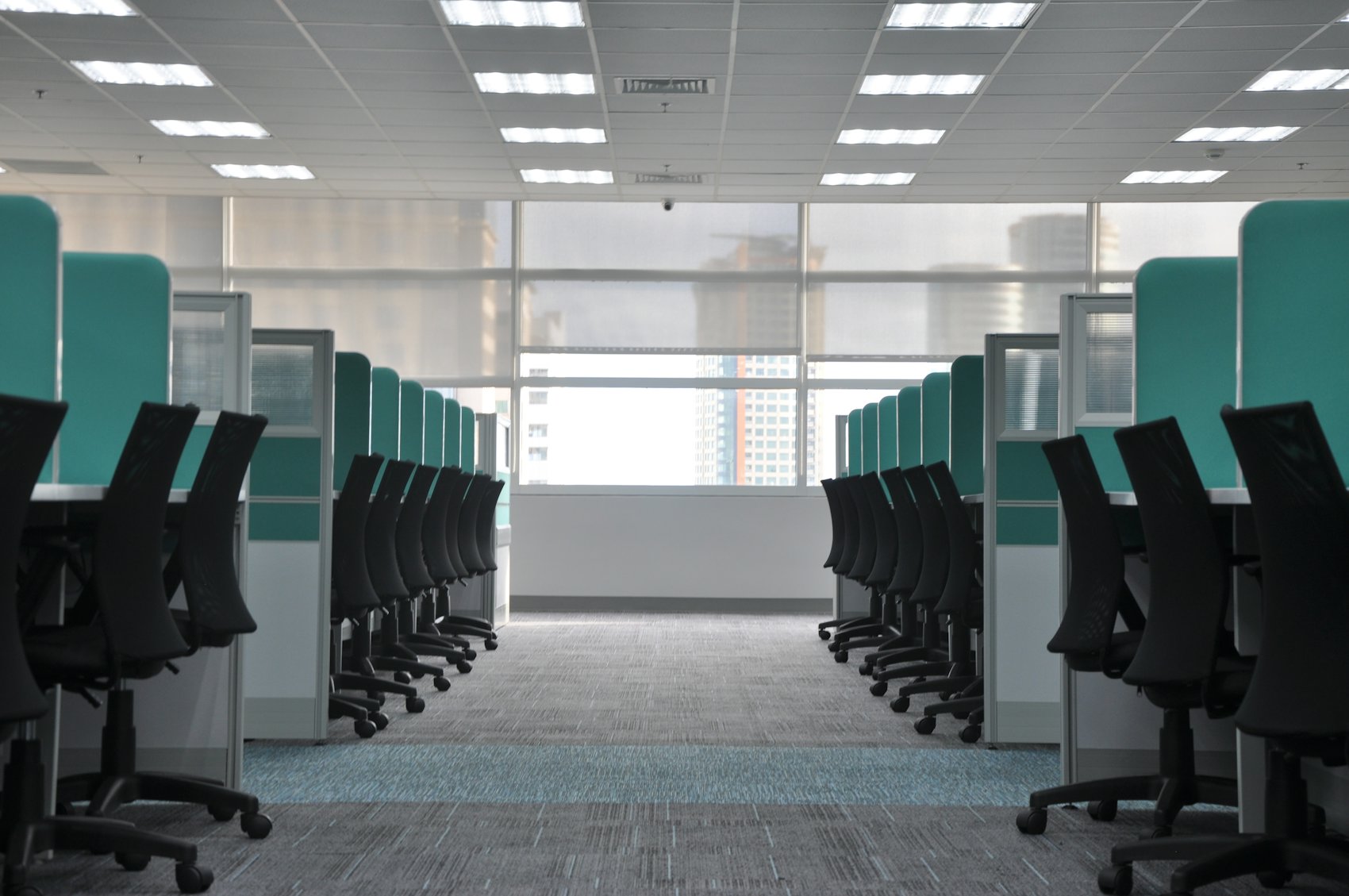
An open office trades walls for flexibility. Cubicles trade some flexibility for privacy and sound control. Neither is right for every team, and the best choice often depends less on culture talk and more on three practical questions: what each seat costs, how much quiet your people need, and how soon you have to be up and running.
Below you will find a straight comparison, what drives the per-seat cost of panel workstations, and a checklist to help you pick.
Open office vs cubicles at a glance
| Factor | Open office | Cubicles |
|---|---|---|
| Visual privacy | Low. Everyone sees everyone. | Moderate to high, depending on panel height. |
| Noise control | Low. Conversations carry across the floor. | Better. Fabric panels absorb some sound. |
| Collaboration | Easy, spontaneous. | Needs meeting space or lower panels. |
| Seat density | Usually higher. | Slightly lower per square foot. |
| Power and data | Floor boxes, poke-throughs or ceiling drops. | Often routed through powered panels. |
| Storage | Limited at the desk. | Overheads, pedestals and panel-hung shelves. |
| Reconfiguration | Move desks. | Modular, but takes a crew. |
What drives the cost of each seat
Cubicles tend to lose the cost argument when buyers compare them to new desks. That comparison ignores the pre-owned market, where panel systems are one of the best values in office furniture. Here is how the three tiers of a standard 6x6 workstation compare:
| 6x6 workstation tier | Typical lead time |
|---|---|
| Liquidation-grade | As little as 72 hours, in stock |
| Remanufactured | Usually 7 to 14 days |
| New | 4 to 6 weeks |
Liquidation-grade stations cost well below new, and remanufactured sits in between. Beyond grade, a cubicle budget moves with:
- Quantity. Larger orders are quoted together, and your quantity is reflected in the written quote.
- Station size and panel height. Taller panels and bigger footprints use more material.
- Power. Powered panels add components, and the building connection is a separate electrical trade.
- Finishes and matching. A specific fabric or a perfectly matched floor narrows the options.
- Delivery and installation. These depend on your address, building access, the size of the order and the complexity of the layout. Freight outside Greater Phoenix is quoted per project.
For a pre-owned panel system, the per-seat difference from an open desk is often smaller than buyers expect. Every project is quoted individually, so the quickest way to compare both layouts is to price your actual seat count.
Hidden costs in an open office
Open layouts look cheap on a furniture invoice, but a few costs show up later:
- Power to the middle of the room. Without panels to carry wiring, you may need floor boxes or ceiling drops.
- Acoustic fixes. Many open offices end up buying phone booths, sound panels or extra meeting rooms after move-in.
- Lost focus time. Hard to price, but real for roles that need concentration.
Privacy and noise: choosing panel height
If you go with cubicles, panel height is the biggest privacy lever you have. Lower panels keep sightlines open while defining personal space. Taller panels block seated views and most standing views, which helps for phone-heavy roles and anyone handling sensitive information.
A common approach is to mix heights: lower panels where team members need to talk, taller panels where calls and confidential work happen. Glass or open-top panels can bring light into the interior without giving up the structure of a cubicle.
Lead time: how soon can you move in?
Timelines decide more layout questions than people admit. If your lease starts in two weeks, a 6-week new furniture order is not an option. Here is how the tiers line up against real deadlines:
- Under a week: liquidation-grade stations, which can be ready in as little as 72 hours when in stock.
- Two to three weeks: remanufactured stations, which usually take 7 to 14 days.
- A month or more: new furniture, which typically takes 4 to 6 weeks.
Condition matters too. Pre-owned furniture is graded A for like new, B for very good and C for good, so you can match appearance to where the stations will sit. Keep in mind that Office Station sells pre-owned brands like Herman Miller, Steelcase, Knoll and Haworth as an independent reseller, not an authorized dealer, and manufacturer warranties generally do not transfer to pre-owned furniture.
Checklist: which layout fits your team?
Lean toward cubicles if most of these are true:
- Your people spend much of the day on calls or doing focused work.
- Staff handle confidential records, payroll or client information.
- You need built-in storage at each seat.
- Your floor has limited power in the center of the room.
Lean toward an open office if most of these are true:
- Teams work together constantly and move around often.
- You expect your headcount or team makeup to change quarterly.
- You already have good acoustics and plenty of meeting rooms.
- Maximum seat count per square foot is your top priority.
If you are split down the middle, plan a hybrid and let the floor plan guide the ratio.
Replacing an old layout
Switching layouts often means your current furniture has to go. Office Station walks the space for free and recommends the best route for it: resale, a buy, a quote to clear, donation or recycling, or a mix.
For more planning help, browse our office furniture guides or see the full range of pre-owned office furniture.
Frequently asked questions
Are cubicles more expensive than an open office?
Per seat, panel walls add cost compared with a simple desk, but the difference shrinks fast when you buy pre-owned. Cubicle cost depends on grade (liquidation-grade, remanufactured or new), station size, panel height, finishes and quantity, and every project is quoted individually. Electrical, delivery and installation are extra in either layout.
Which layout is better for focus work?
Cubicles win for heads-down work because panels block sightlines and absorb some sound. Open layouts work better for teams that talk all day and share screens. Many offices mix both, with panel stations for focused roles and open tables for collaborative ones.
How fast can I get cubicles installed?
Liquidation-grade stations can be ready in as little as 72 hours when in stock. Remanufactured stations usually take 7 to 14 days, and new furniture typically takes 4 to 6 weeks. Installation is quoted with your project, based on the number of stations, building access and the complexity of the layout.
Can I switch from open office to cubicles later?
Yes. Panel systems are modular, so you can add stations as headcount grows or convert an open area in phases. Planning power and data paths up front makes a later switch much easier.
Does Office Station help plan the layout?
Yes. Space planning is free. Send your floor plan or measurements to hello@officestation.com and we will map seat counts for both layouts so you can compare them side by side.