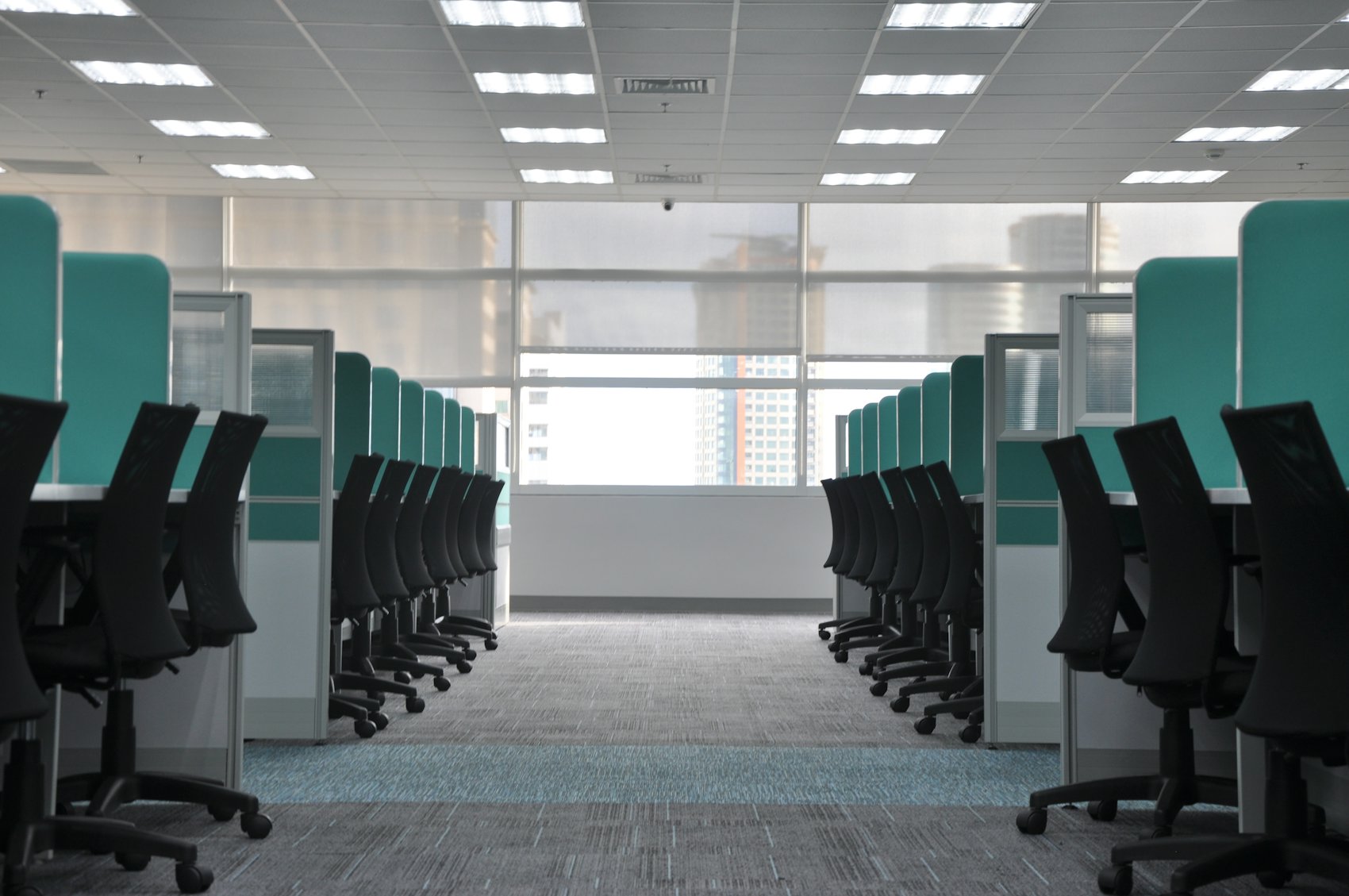
Managing distractions in the workplace usually starts with rules: quiet hours, status lights, meeting-free afternoons. Those help, but they fight the room. If a desk faces the break room door and the nearest divider is waist high, no policy will keep that person focused for long. The physical office decides much of how often people get interrupted.
This guide covers the furniture and layout side of the problem, and how to address it without a new-furniture budget.
The three kinds of distraction furniture can fix
Visual distraction
Movement in your peripheral vision pulls attention. People walking past, a coworker's screen across the aisle and anyone standing up nearby all count. This is the easiest type to fix with furniture, because blocking the line of sight works.
Auditory distraction
Conversations are harder to tune out than steady background noise, because the brain tries to follow speech. Panels, soft surfaces and distance all reduce how clearly nearby talk carries.
Interruptions
A coworker who can see you is more likely to stop by. Desks placed right along main walkways invite quick questions that break concentration for much longer than the question takes.
How panel heights change what people see and hear
Workstation panel height is one of the most powerful and least expensive levers you have. Each height involves a trade-off between focus and connection.
| Panel height | What seated staff can see | Distraction effect | Best for |
|---|---|---|---|
| Low, around desk height | Everyone nearby, fully | High visual and auditory exposure | Short-stay desks, highly collaborative teams |
| Mid, roughly seated shoulder to eye level | Heads of people standing, little of those seated | Blocks most seated movement, some sound softening | Mixed teams that need quick conversations |
| Tall, above seated eye level | Very little while seated | Strong visual privacy, noticeable sound reduction | Focus work, phone-heavy roles, sensitive tasks |
Many offices mix heights. A sales team that thrives on energy can sit at lower panels, while finance, engineering or anyone on calls all day gets taller ones. You do not need a single standard for the whole floor.
Price workstations by panel height
Layout moves that cost little or nothing
Before buying anything, see how much rearranging solves. These changes use the furniture you already own.
- Stop face-to-face seating. Rotate desks so people sit back to back or side by side. Direct eye contact across a desk is a constant invitation to chat.
- Turn desks away from traffic. Nobody should face the kitchen, the restrooms or the front door.
- Create a buffer zone. Put storage, filing or a printer station between loud areas and focus rows.
- Group by noise level. Seat phone-heavy roles together and away from people who need quiet.
- Move meeting spaces to the edges. Conversations spilling out of a meeting area should not land on someone's desk.
- Widen the walkways past focus rows. A little more distance lowers the chance of drive-by interruptions.
Privacy furniture worth adding
When rearranging is not enough, add furniture targeted at the specific problem.
- Taller workstations: replace low benching in focus areas with panel-based stations.
- Panel extensions or screens: raise the height of existing dividers where supported.
- Storage as a divider: tall cabinets or lockers create visual separation and add storage.
- High-back lounge seating: gives people a semi-private spot for calls and quick meetings away from desks. See lounge and specialty seating.
- Soft surfaces: fabric panels, upholstered seating and rugs absorb some of the sound hard surfaces reflect.
Doing it without a new-furniture budget
New furniture is where distraction projects usually stall. Pre-owned workstations change the math. Office Station prices a 6'x6' workstation, furniture only, in three tiers:
| Tier | Price per 6'x6' station | Lead time |
|---|---|---|
| Liquidation-grade | $615 | As little as 72 hours in stock |
| Remanufactured | $1,245 | Usually 7 to 14 days |
| New | $1,920 | 4 to 6 weeks |
Average market rate Prices subject to availability and project pricing.
Prices exclude electrical, delivery and professional installation. Installation is $95 per workstation ($495 minimum). Volume pricing takes 5% off at 20 or more stations, 8% at 50 or more and 12% at 100 or more.
Say a 12-person focus team needs taller stations. Liquidation-grade furniture would run $7,380 before installation, compared with $23,040 for new. You also avoid waiting over a month, which matters when a team is losing productive hours every week.
You do not have to convert the whole floor. Upgrading only the rows where focus matters most is often enough. Space planning is free, so you can test a layout on paper before you commit. If the change leaves you with surplus low panels or benching, estimate what that furniture could bring through liquidation.
Pair the room with a few simple norms
Once the space supports focus, light guidelines stick better:
- Take calls longer than a few minutes to lounge seating or a meeting room
- Use a visible signal, like headphones on, to mean do not interrupt
- Keep group conversations out of focus rows
- Revisit the survey after a month to see what changed
Quick distraction audit checklist
- Which desks face walkways, doors or break areas?
- Where are panels lower than seated eye level in focus teams?
- Are phone-heavy roles seated next to people who need quiet?
- Is there somewhere to take a call away from a desk?
- Do meeting areas open directly onto workstations?
For more planning ideas, browse the Office Station guides.
Get a free focus-friendly layout
Frequently asked questions
What is the biggest source of distraction in an open office?
It varies by team, but nearby conversation and visual movement in a person's line of sight are common culprits. Both are strongly shaped by how desks face each other and how tall the dividers are. That is why layout changes often help more than policy changes alone.
What panel height reduces distractions best?
Panels that block the view of a seated coworker help the most with visual distraction for focus work. Lower panels keep a team connected but let more movement and sound through. Many offices mix heights by team, putting taller panels where concentration matters most.
Can I reduce distractions without buying new furniture?
Yes. Start by rearranging desks so people do not face each other or high-traffic paths, and move noisy functions away from focus rows. Where you need more privacy, pre-owned workstations and panels cost far less than new, with liquidation-grade 6'x6' stations starting at $615 for furniture only.
Do headphones solve workplace distractions?
They help with some noise but not with visual interruptions or people stopping by. Relying only on headphones can also make staff feel isolated. They work best alongside a layout that already reduces the problem.
How do I know which distractions to fix first?
Ask staff. A short, anonymous survey about when and where they lose focus usually reveals two or three clear patterns. Fix those first, then check back after a few weeks.
Average market rate Prices subject to availability and project pricing.