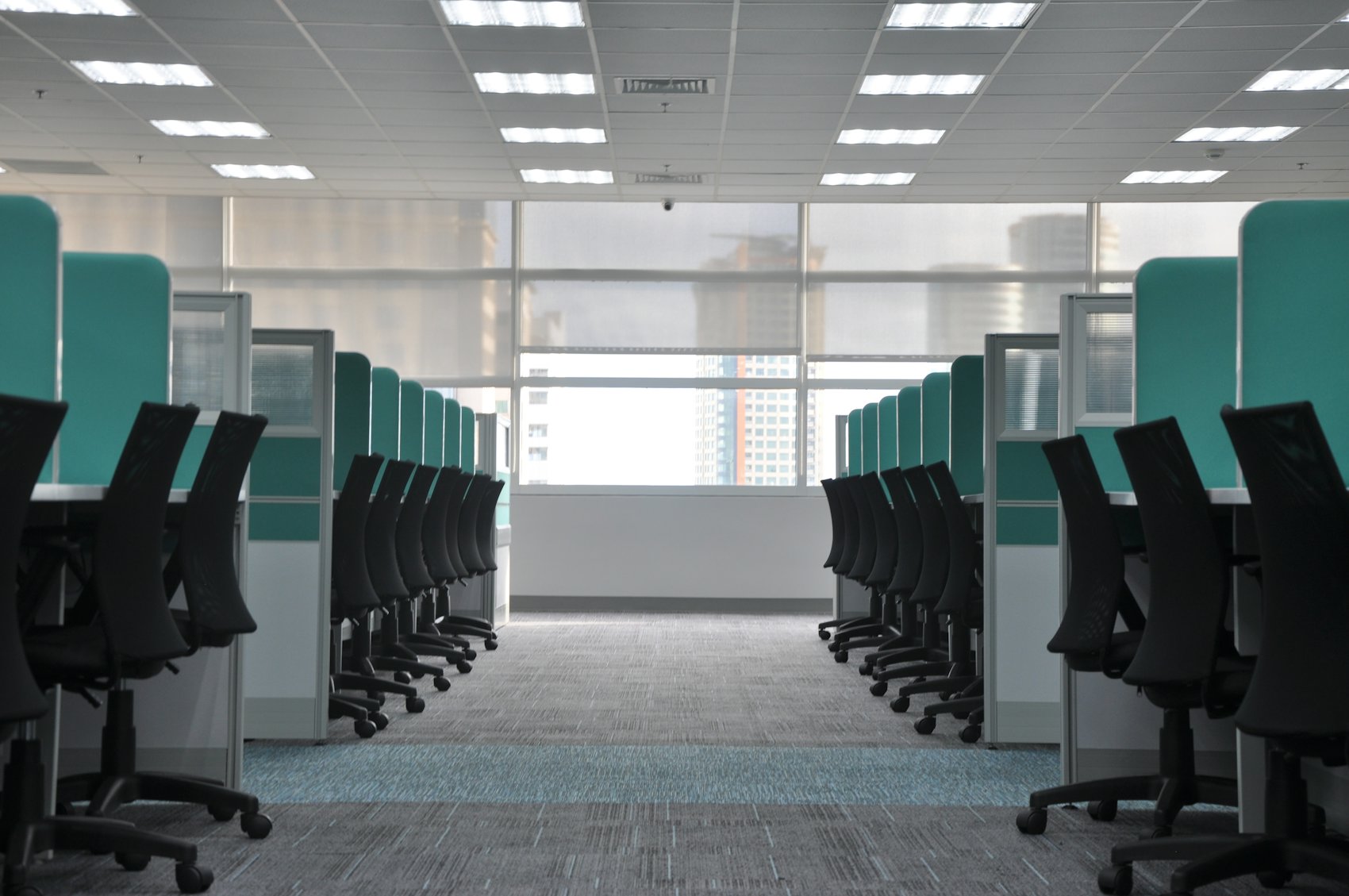
People notice bad lighting long before they can name it. Eyes feel tired by 2 p.m. Someone tapes paper over part of a window. A monitor gets dimmed until it is barely readable. Half the team brings a lamp from home.
The usual response is to call about replacing fixtures. But in many offices, the ceiling lights are fine. The trouble is where the desks, panels and screens sit relative to those lights and the windows. This guide focuses on the practical fixes you control through layout and furniture.
Think in three layers
Good office lighting combines three sources, each with a different job.
| Layer | Job | Common problem | Layout-based fix |
|---|---|---|---|
| Ambient | General visibility for moving around and seeing faces | Desks placed between fixtures sit in dim bands | Align workstation rows with fixture rows during space planning |
| Task | Focused light on paper, keyboard and close work | Overhead storage shadows the worksurface | Under-cabinet or desk task lights at each station |
| Daylight | Mood, alertness and reduced reliance on fixtures | Glare on screens, heat, uneven brightness | Orient monitors perpendicular to windows; lower panels near glass |
Office lighting ideas that cost nothing but a plan
Turn monitors sideways to the windows
A monitor that faces a window forces the user to look into bright daylight behind the screen. A monitor with its back to a window reflects the window in the glass. The comfortable position has windows off to the side, with sightlines running parallel to the glass.
Keep low panels on the window wall
Tall panels closest to the windows capture all the daylight for a few stations and shade everyone behind them. Stepping panel heights down toward the glass, or using glass stackers on top of shorter panels, carries light deeper into the floor.
Line up workstation rows with ceiling fixtures
If fixtures run in rows, place workstation runs so worksurfaces sit under or slightly offset from them, not in the gap between. A small layout shift can make a noticeable difference.
Watch what overhead storage does
Overhead bins and shelves are convenient, but they block ceiling light and throw a shadow right where people write and type. Skip overheads at stations that do not need them, or plan a task light underneath.
Give dim interior zones a different job
The darkest part of the floor may not suit all-day screen work. Consider it for storage, lockers, printers or short-stay touchdown seats, and put focused work nearer the light.
Task lighting on pre-owned workstations
Pre-owned panel systems and desks work well with task lighting added. What you are looking for is a light source close to the work that the person can control.
Options compared
- Freestanding desk lamps. Work at any station, move with the user and need only a plug. Look for an adjustable arm and a shade that keeps the bulb out of the eyes.
- Clamp or grommet-mount lights. Save desk space by attaching to the worksurface edge or through a cable grommet.
- Under-cabinet lights. Mount beneath overhead storage and light the whole surface evenly. Many panel systems were designed with these in mind.
- Monitor-mounted light bars. Sit on top of the screen and cast light down onto the keyboard without reflecting off the display.
What to check at a used station
- Whether the panels are powered and where the receptacles are located
- If the overhead storage has existing light mounting points or wiring channels
- Cable management paths so lamp cords do not drape across the surface
- The condition grade of surfaces and overheads, rated A like new, B very good or C good
- Whether any lighting accessory relies on hardwiring, which needs a licensed electrician
Keep in mind that workstation prices exclude electrical. A 6'x6' station runs $615 liquidation-grade, $1,245 remanufactured or $1,920 new, furniture only. Budget for electrical separately if you are connecting powered panels to building power.
A quick lighting audit you can run this week
- Walk the floor mid-morning and mid-afternoon. Note where sun hits screens.
- Sit at five or six stations and look at the monitor. Can you see a window or fixture reflected?
- Put a sheet of paper on the worksurface under each overhead bin. Is it shadowed?
- Ask who brought their own lamp and why.
- Mark dim zones, glare zones and good zones on a copy of the floor plan.
- Decide which fixes are layout, which are task lights and which truly need a fixture change.
When a move or reconfiguration is the moment to fix it
Lighting is easiest to get right when furniture is already moving. If you are reconfiguring the floor, relocating to a new suite or replacing old stations, build lighting into the plan from the start. Office Station supports corporate relocation, installation at $95 per workstation with a $495 minimum, and nights and weekends crews.
If old furniture is part of the lighting problem, such as tall panels and heavy overheads you no longer want, liquidation can turn it into a written net offer toward the new layout. Pair the new arrangement with seating from pre-owned office chairs and you have addressed comfort from two directions at once.
Average market rate Prices subject to availability and project pricing.
Frequently asked questions
What is the best lighting for an office?
A layered approach works best: ambient ceiling light for general visibility, task lighting at each desk for close work, and daylight managed so it does not create glare. The right mix depends on panel heights, window positions and how screen-heavy the work is.
How do I reduce glare on computer screens?
Position monitors so windows are to the side of the screen rather than directly behind or in front of it. Keep bright ceiling fixtures out of the reflection angle, use blinds or shades on direct sun, and tilt the screen slightly if reflections remain.
Do cubicle panels make lighting worse?
Tall panels block both daylight and ceiling light, which can leave the inside of a workstation dim and shadowed, especially under overhead storage. Lower panels or glass stackers let more light through. Where panels must stay tall, a task light at each station fills the gap.
Can I add task lights to used cubicles?
Yes. Freestanding desk lamps work at any station, and many panel systems accept under-cabinet lights beneath overhead storage. Check that the station has an accessible outlet or powered panel, and remember that hardwired electrical work requires a licensed electrician.