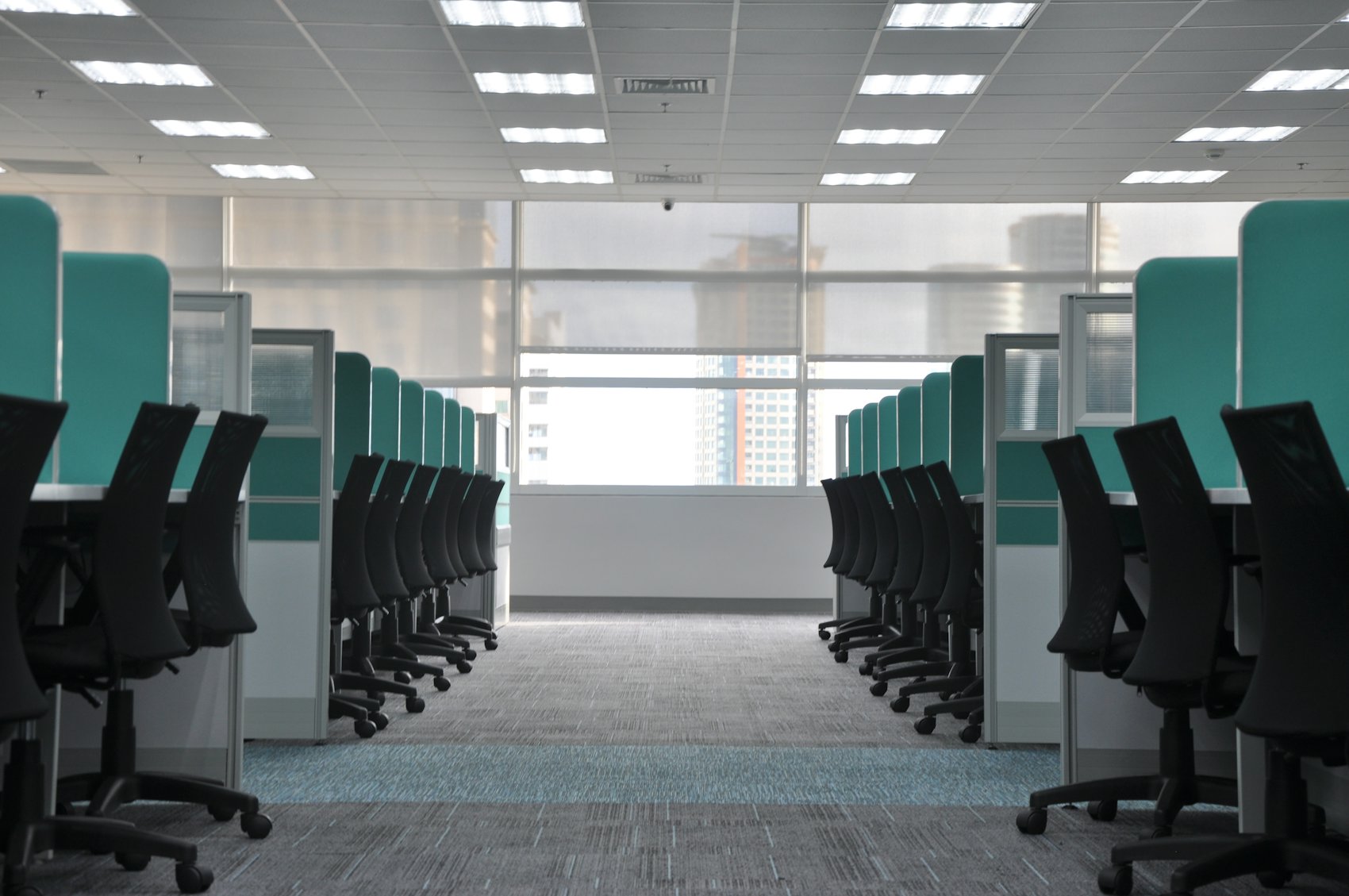
Growth is a good problem, until a new hire starts and there is nowhere to put them. Most offices are furnished for the headcount on move-in day. Then every hiring wave means a scramble: squeezing desks into aisles, turning a meeting room into a bullpen, or buying a mismatched batch of furniture in a hurry. Office space planning for growth avoids that by deciding, before you buy, where the next 10, 25 or 50 people will sit.
Start with a headcount forecast, not a floor plan
The layout follows the numbers. Sit down with leadership and write out a realistic plan.
- Current headcount by team, including part-time and contract staff who need a seat.
- Expected hires at 12, 24 and 36 months, by team.
- Attendance pattern. If some people are in the office only part of the week, decide whether you will assign seats or share them.
- Lease term. There is little sense planning five years of growth into a space you will leave in three.
Use a conservative case and an optimistic case. Plan the layout to handle the optimistic case, and buy furniture for the conservative one.
Layout principles that scale
A scalable plan is less about how many desks you place now and more about what the floor can become.
- Reserve expansion zones. Mark open areas on the plan where future workstation runs will go. Use them temporarily for lounge seating or project tables that move easily.
- Keep workstation runs extendable. Place clusters so they can grow along a wall or aisle without blocking circulation or exits.
- Plan power and data for the final layout. Running electrical and data to future zones during initial buildout is usually easier than coming back later.
- Standardize station sizes. One or two standard footprints make it simple to add, swap and reassign seats.
- Put shared spaces in the middle. Meeting rooms and break areas that sit between teams stay useful as teams grow on either side.
- Stay with one product line where you can. Components from the same system are much easier to add to than a mix of brands.
Why modular workstations fit a growing company
Modular workstations are built from panels, work surfaces, connectors and storage that bolt together in many configurations. For a growing office, that flexibility is the whole point.
- A four-pack of stations can become a six-pack by adding components.
- Panel heights can change as teams shift from heads-down to collaborative work.
- Stations can be reconfigured into a different shape if a team moves.
- When you outgrow the space entirely, standard systems are easier to resell.
Office Station sells pre-owned systems from manufacturers such as Herman Miller, Steelcase, Knoll, Haworth, Teknion and Allsteel, as an independent reseller rather than an authorized dealer.
Phase your purchases by condition tier and lead time
Different phases have different pressures. Your first phase may be tied to a move-in date, while later phases can wait for a hiring plan to firm up. Use lead times to your advantage.
| Tier | 6'x6' station, furniture only | Typical lead time | Good fit for |
|---|---|---|---|
| Liquidation-grade | $615 | As little as 72 hours in stock | Sudden hiring waves, overflow zones |
| Remanufactured | $1,245 | Usually 7 to 14 days | Planned phases with a consistent look |
| New | $1,920 | 4 to 6 weeks | Signature areas with a fixed move-in date |
Average market rate Prices subject to availability and project pricing.
Prices exclude electrical, delivery and professional installation. Installation is $95 per workstation with a $495 minimum.
How volume pricing changes the math
Workstation orders qualify for volume discounts as they get larger.
| Stations in the order | Discount | Example: remanufactured 6'x6' |
|---|---|---|
| 1 to 19 | None | 18 stations: $22,410 |
| 20 to 49 | 5% | 20 stations: $24,900 less 5% = $23,655 |
| 50 to 99 | 8% | 50 stations: $62,250 less 8% = $57,270 |
| 100 or more | 12% | 100 stations: $124,500 less 12% = $109,560 |
Average market rate Prices subject to availability and project pricing.
Look closely at the thresholds. Eighteen stations cost $22,410, while twenty cost $23,655. You get two extra stations for $1,245 more in total, the price of a single station at full rate. If your 12-month forecast already includes those hires, buying them in the same order can make sense. Weigh that against storage space and the cash you tie up early.
Build a phased workstation quote
Growth planning checklist
- Write a headcount forecast with conservative and optimistic cases.
- Confirm how many years remain on your lease.
- Request a space plan showing current seats and future expansion zones.
- Run power and data to future zones during initial buildout if possible.
- Choose a standard station size and a single product line.
- Pick a condition tier for each phase based on budget and lead time.
- Check whether nearby volume thresholds justify adding stations now.
- Revisit the plan every time the hiring forecast changes.
When you outgrow the space anyway
Even good plans run out of room. When that happens, the furniture you bought can help fund the next step. The office furniture liquidation service provides a written net offer based on resale value minus removal cost, and corporate relocation covers the move itself. For more on layouts and furniture choices, visit the guides library or browse pre-owned office furniture.
Frequently asked questions
How much extra space should I plan for growth?
It depends on your hiring plan and lease term. A practical approach is to map realistic headcount at 12, 24 and 36 months, then plan the full layout for the longest horizon you are confident in. Leave the future zones empty or lightly used until you need them.
Why are modular workstations better for a growing office?
Modular panel and desking systems are built from standard components. You can add stations to an existing run, change panel heights or reconfigure a cluster instead of replacing it. Staying with one product line also keeps new stations compatible with the ones you already have.
Does Office Station offer volume pricing?
Yes. Workstation orders get 5% off at 20 or more stations, 8% at 50 or more and 12% at 100 or more. If you are close to a threshold, it can be worth ordering a few future stations in the same round.
Is space planning really free?
Yes, Office Station offers free space planning. A plan helps you confirm station counts, aisle widths and future expansion zones before you buy anything.
Can I mix pre-owned and new workstations?
You can, though matching finishes and component compatibility take some planning. Many offices use one condition tier per zone so each area looks consistent. Talk through your phases before ordering so later additions match.