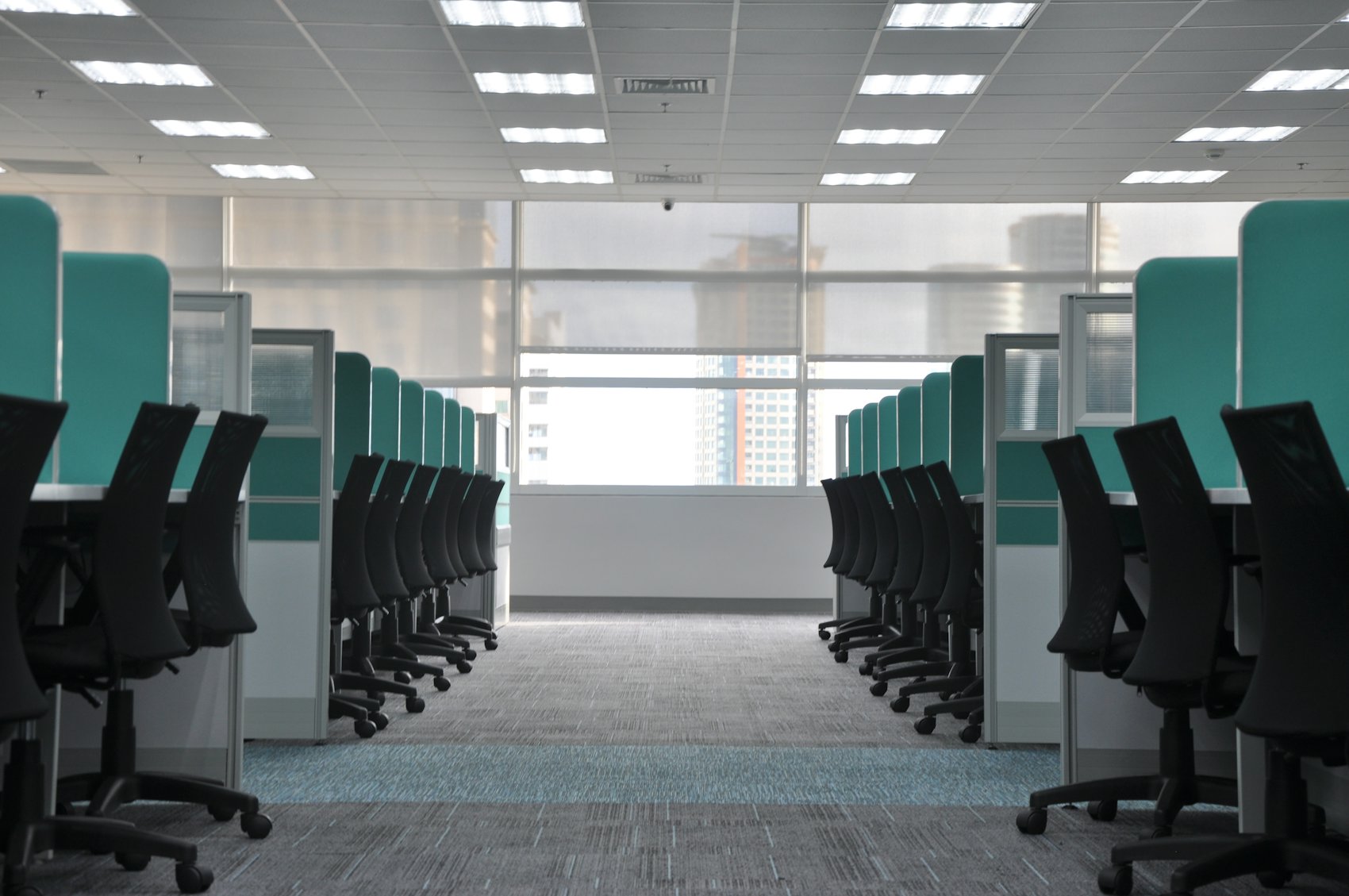
Open offices were supposed to spark collaboration. For many teams, they also created constant interruptions, overheard calls and the feeling of being watched. If you are figuring out how to create privacy in an open office, the good news is that you rarely need a renovation. You need the right mix of layout, panel height and furniture, matched to how each group actually works.
The three kinds of privacy you are solving for
Before you buy anything, name the problem. Most complaints fall into one of three buckets, and each has a different fix.
- Visual privacy. People feel exposed when a screen faces an aisle or when they sit directly across from a colleague. Blocking sight lines at seated eye level solves most of this.
- Acoustic privacy. Voices carry across open floors. Fabric panels, distance and separate places for calls matter more here than walls alone.
- Territorial privacy. Some people simply want a defined space that is theirs, with storage they can lock. This is about boundaries, not height.
Survey your team or walk the floor at a busy hour. You may find that one department needs acoustic relief while another just needs desks turned away from the break room.
Start with layout, which is free
Rearranging what you already have is the fastest privacy upgrade.
- Turn monitors so they face a wall or panel, not the main walkway.
- Avoid face-to-face desk rows for roles that spend the day on calls.
- Move high-traffic points like printers, coffee and entries away from focus seating.
- Use storage cabinets and tall files as dividers between teams.
- Separate loud and quiet groups by distance rather than by walls.
Choosing panel heights
Panel height is the main dial on a workstation system. Exact heights vary by manufacturer and product line, so treat the ranges below as general bands rather than specifications.
| Panel height band | What it blocks | Best for | Tradeoff |
|---|---|---|---|
| Low, around desk height | Clutter and leg areas only | Collaborative teams, benching | Little visual or sound privacy |
| Mid, near seated eye level | Seated sight lines to neighbors | Most general office roles | Standing people can still see over |
| Tall, above seated head height | Seated views and more voice spill | Heavy phone work, focused tasks | Less daylight and casual contact |
| Full height with or without glass tops | Most views, including standing | HR, finance, confidential roles | Feels closed in without glass or good lighting |
A common approach is to keep lower panels on the aisle side, so the floor still feels open, and taller panels between neighbors, where privacy matters most. Glass or translucent stackers on top of a panel let light through while still breaking up sight lines.
When to move from benching to cubicles
If panels on existing desks are not enough, full workstations are the next step. Cubicles give each person a defined footprint, a work surface sized for their job and a place for storage. They are the most direct way to address all three kinds of privacy at once.
Cubicles make sense when:
- Most of the day is spent on calls or video meetings.
- People handle confidential information on screen or on paper.
- Complaints about noise and interruptions keep coming back after layout fixes.
- Your team wants assigned seats rather than hot desks.
Benching still has a place for teams that work together all day. Many offices end up with both, and that is usually cheaper than converting the whole floor.
What privacy costs per workstation
Here is what a 6'x6' workstation costs at Office Station, furniture only, in three condition tiers.
| Tier | Price per 6'x6' station | Lead time |
|---|---|---|
| Liquidation-grade | $615 | As little as 72 hours when in stock |
| Remanufactured | $1,245 | Usually 7 to 14 days |
| New | $1,920 | 4 to 6 weeks |
Average market rate Prices subject to availability and project pricing.
Prices exclude electrical, delivery and professional installation. Installation is $95 per workstation with a $495 minimum. Greater Phoenix delivery is $195 for central zones and $295 for the wider metro, and freight elsewhere in the country is quoted per project. Volume pricing takes 5% off at 20 or more stations, 8% at 50 or more and 12% at 100 or more.
For example, 24 liquidation-grade stations come to $14,760 before the volume discount. At 5% off, that is $14,022 for the furniture, plus $2,280 for installation. The same 24 stations new would be $46,080 before discount. If privacy is the goal and the look does not have to be brand new, pre-owned tiers stretch the budget a long way.
Add a few places to escape
Even the best workstation will not host a sensitive conversation. Plan for a small number of enclosed spaces that anyone can grab: a converted office, a small meeting room or a corner with full-height partitions. Set simple norms, such as taking calls longer than a few minutes to one of these spaces. Pair that with higher panels at desks and most offices see a real change.
A quick privacy planning checklist
- List which teams need visual, acoustic or territorial privacy.
- Fix sight lines and traffic paths with the furniture you already own.
- Decide panel heights by role, not one height for the whole floor.
- Check electrical and data needs before changing panel layouts.
- Choose a condition tier for each zone based on budget and visibility.
- Get a space plan to confirm station counts and aisle widths.
- Designate a few enclosed rooms for calls and private conversations.
Office Station offers free space planning, so you can see the layout before you commit. If your current furniture is no longer a fit, the office furniture liquidation service can offset part of the cost of the change. Browse pre-owned office furniture for storage and tables that help define zones, and read more planning advice in the guides library.
Frequently asked questions
What is the cheapest way to add privacy to an open office?
Start with layout. Turning desks so people do not face each other or a busy aisle costs nothing. After that, adding or raising panels on existing workstations is usually cheaper than replacing furniture. Liquidation-grade workstations are the lowest-cost way to add full cubicles.
What panel height gives the most privacy?
Panels that reach above seated eye level block sight lines for people sitting down, and full-height panels block standing views as well. Taller panels also absorb more sound when they have fabric faces. The tradeoff is less daylight and less casual collaboration, so many offices mix heights by role.
How much does a cubicle cost?
At Office Station, a 6'x6' workstation, furniture only, is $615 liquidation-grade, $1,245 remanufactured and $1,920 new. Prices exclude electrical, delivery and professional installation. Volume pricing starts at 20 stations.
Do cubicles solve noise problems?
They help, especially with fabric panels at or above seated head height, but they do not make a space quiet on their own. Pair them with a few enclosed rooms for calls and a clear policy about where meetings happen. Hard ceilings and floors will still reflect sound.
Can I mix cubicles and open desks in one office?
Yes, and it is often the best answer. Put focused and confidential roles in higher-panel stations and keep collaborative teams on lower panels or benching. A free space plan can show how the two zones fit on your floor.
Average market rate Prices subject to availability and project pricing.