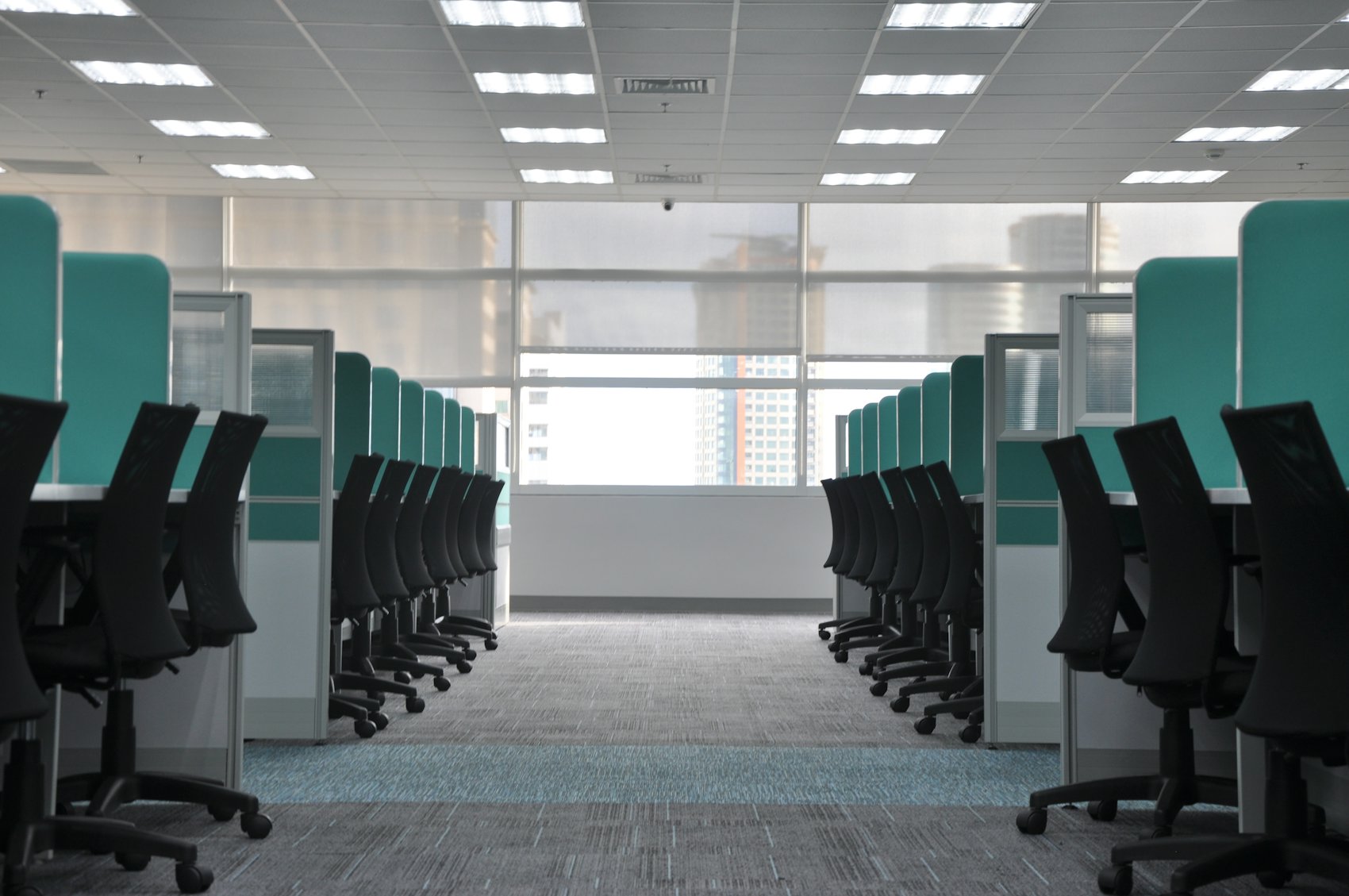
When you are furnishing a clinic, it is tempting to treat every room the same way. Either you buy everything from a healthcare catalog and pay specialty prices for a billing office, or you buy everything as standard office furniture and end up with fabric chairs in a room that gets wiped down with disinfectant ten times a day. Neither approach serves the practice well.
The better approach is to sort your space by what actually happens in each room. This guide walks through the real differences between healthcare furniture and office furniture, and shows you where pre-owned office furniture is a smart, budget-friendly fit.
The core differences
Standard office furniture is designed for healthy adults doing seated work for long stretches. Healthcare furnishings are designed for a different set of users and a different cleaning routine. The gap shows up in five areas.
- Cleanability. Healthcare pieces often use non-porous surfaces, sealed seams and moisture-resistant upholstery so fluids cannot soak in. Many office chairs use woven fabric or mesh with gaps that are hard to disinfect thoroughly.
- Chemical resistance. Clinical cleaners can dull, crack or discolor finishes that were never meant for them. Healthcare materials are typically selected to stand up to repeated disinfection.
- Patient support. Patient seating often includes arms positioned to help people stand up, higher seat heights, and wider or higher weight-rated options. Office task chairs swivel and roll, which is great for staff and less ideal for a patient who is unsteady.
- Stability and mobility. In care areas, casters, locking mechanisms and tip resistance matter in ways they do not at a desk.
- Clinical function. Exam tables, procedure chairs, medication carts and patient recliners do jobs that no office furniture is designed to do.
Room by room: what fits where
Use this table as a starting point. Your infection control policies, your specialty and your local requirements should make the final call on any patient-facing space.
| Space | Standard pre-owned office furniture | Specialty healthcare furnishings |
|---|---|---|
| Administrative and billing offices | Strong fit | Rarely needed |
| Call center and scheduling | Strong fit | Rarely needed |
| Provider offices and charting stations away from patients | Strong fit | Rarely needed |
| Conference and training rooms | Strong fit | Rarely needed |
| Staff break room | Good fit | Rarely needed |
| Waiting room | Possible, with cleanable finishes | Often preferred |
| Exam rooms | Limited, such as a clinician stool or small desk | Usually needed |
| Procedure, infusion and recovery areas | Not recommended | Needed |
Notice the pattern. The further a room is from direct patient contact, the more likely standard office furniture is the right call. For many practices, that back-of-house area is a large share of the total square footage.
Where pre-owned office furniture saves the most
Your staff areas are where quality office furniture earns its keep. Coders, billers, schedulers and managers spend full days at a desk, and a good ergonomic chair and a well-sized workstation matter as much for them as for any corporate team.
Office Station sells pre-owned designer furniture from brands such as Herman Miller, Steelcase, Knoll, Haworth, Humanscale, Teknion, Allsteel, Kimball, AIS and Friant. As a reference point, a 6'x6' workstation, furniture only, is priced like this:
| Option | Price per 6'x6' workstation | Typical lead time |
|---|---|---|
| Liquidation-grade | $615 | As little as 72 hours when in stock |
| Remanufactured | $1,245 | Usually 7 to 14 days |
| New | $1,920 | 4 to 6 weeks |
Average market rate Prices subject to availability and project pricing.
Prices exclude electrical, delivery and professional installation. Installation runs $95 per workstation with a $495 minimum. Volume pricing applies at 5% for 20 or more stations, 8% at 50 or more and 12% at 100 or more. If you are opening a new clinic on a tight timeline, the short lead time on in-stock liquidation-grade stations can help you get your front office working while specialty clinical pieces are still on order.
The gray areas: waiting rooms and exam rooms
Waiting rooms
Waiting rooms sit in between. Patients use the seating, so you want arms that help people stand, stable frames and upholstery that can be cleaned between visitors. Some commercial reception seating meets those needs, and some does not. If you are considering office-style reception seating, check the upholstery type, look at how seams and gaps collect debris, and confirm the finishes can handle your cleaning products. Our guide on how to choose reception seating covers what to look for.
Exam rooms
The exam table and any procedure equipment belong in the specialty category. A small writing surface or storage for the clinician may be fine as standard furniture, as long as it meets your cleaning protocol. Avoid fabric-upholstered chairs in any room where you disinfect between patients.
A quick checklist before you buy
- Map every room as patient-facing, staff-only or mixed.
- List the disinfectants used in each room and check finish compatibility.
- Note any patient weight capacity or mobility needs for seating.
- Price staff areas using pre-owned office furniture and compare against a specialty catalog.
- Review condition grades on pre-owned pieces: A is like new, B is very good and C is good.
- Remember that manufacturer warranties generally do not transfer to pre-owned furniture.
- Get a layout for the administrative side through free space planning.
If you are closing or consolidating a location
Practices merge, relocate and outgrow buildings. When that happens, the office furniture in your administrative areas may have resale value. Office Station provides a written net offer, which is the resale value of the furniture minus the cost of removal. When that number is positive, you are paid. E-waste can be handled with certificates of data destruction, which matters for any workstation that touched patient records. See how office decommissioning works, or estimate your furniture with the liquidation estimator.
Browse Pre-Owned Office Furniture
Frequently asked questions
Can a medical clinic use standard office furniture?
Yes, in many rooms. Administrative offices, billing, call centers, break rooms, conference rooms and staff workstations usually do not face patient-care demands. Exam rooms, procedure areas and spaces with heavy disinfection or patient transfer needs typically call for specialty healthcare pieces.
What makes healthcare furniture different?
Healthcare furnishings are usually designed around cleanability, infection control, patient weight capacity, stability for people who are ill or have limited mobility, and compatibility with hospital-grade disinfectants. Standard office furniture is built for seated desk work by staff, so its materials and seams are not chosen for those demands.
Does Office Station sell exam tables or medical carts?
No. Office Station sells pre-owned designer office furniture as an independent reseller, such as workstations, chairs and related office pieces. For exam tables, clinical carts, patient recliners and similar items, you should work with a specialty healthcare supplier.
Do manufacturer warranties apply to pre-owned office furniture in a clinic?
Manufacturer warranties generally do not transfer to pre-owned furniture. Office Station is an independent reseller, not an authorized dealer, so review condition grades carefully and ask about the specific pieces you are considering.
Can you help plan the administrative side of a clinic?
Yes. Office Station offers free space planning for workstation and office layouts. You can share your floor plan and headcount and get a layout for the staff areas of your practice.