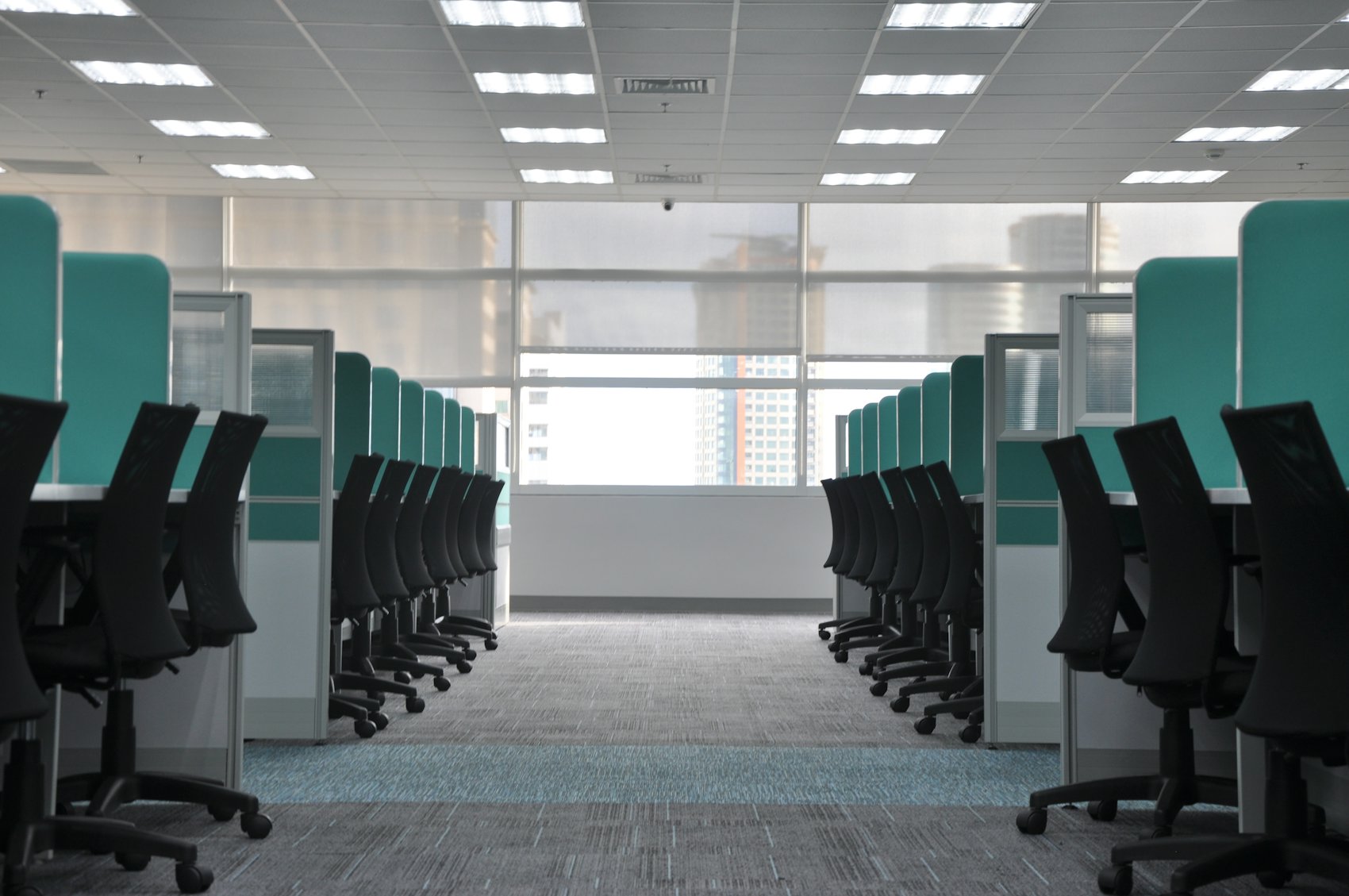
Most offices no longer have the same number of people at their desks every day. Some days the floor is quiet and needs privacy. Other days a whole department comes in to plan, and the room needs to open up. Flex office space design answers that by treating your floor as a set of zones rather than rows of identical desks.
The furniture you choose decides how flexible the plan really is. Panel-based workstations can be reconfigured, re-heighted and re-counted as needs shift, and buying them pre-owned keeps enough budget free to adjust later.
The four zones of a flexible office
Nearly every flex plan combines some version of these zones. The right mix depends on how your people work, not on a template.
1. Focus zone
Assigned or bookable workstations with taller panels for visual and acoustic privacy. Place this zone away from kitchens, entrances and high-traffic paths. It suits finance, engineering, legal and anyone who spends long stretches on calls or deep work.
2. Collaboration zone
Low-panel or benching-style stations grouped in pods of four to eight so teams can see and talk to each other. Add a shared table or whiteboard wall at the end of each pod. Keep this zone close to the areas it serves so teams do not walk across the floor to meet.
3. Hoteling or drop-in zone
Unassigned stations for hybrid staff and visitors. Keep them simple and identical so anyone can sit down and work without adjusting anything. A self-adjusting task chair helps here. See pre-owned office chairs for options.
4. Buffer and support zone
Storage, printers, lockers and quiet rooms. This zone separates loud and quiet areas and gives hybrid staff a place to keep belongings when they do not have an assigned desk.
Why reconfigurable workstations suit flex space
Fixed millwork and built-in desks look sharp but lock you into one plan. Panel systems do not. With a reconfigurable system you can:
- Swap tall panels for short ones to turn a focus area into a team pod
- Split a large station into two smaller ones as headcount grows
- Add or remove stations in a zone without replacing the whole floor
- Move a pod closer to a department that now needs it
- Reuse the same components if you relocate
Before you buy, confirm that the panels, work surfaces and connectors are from the same system family so parts stay compatible when you reconfigure.
What a flex office costs
Pricing for a 6'x6' workstation, furniture only, comes in three tiers. Prices exclude electrical, delivery and professional installation.
| Tier | Per station | 40 stations before discount | Typical lead time |
|---|---|---|---|
| Liquidation grade | $615 | $24,600 | As little as 72 hours in stock |
| Remanufactured | $1,245 | $49,800 | Usually 7 to 14 days |
| New | $1,920 | $76,800 | 4 to 6 weeks |
Average market rate Prices subject to availability and project pricing.
Volume pricing applies at 5% for 20 or more stations, 8% for 50 or more and 12% for 100 or more. At 40 stations, the 5% tier would bring a remanufactured order from $49,800 to $47,310. Confirm the final figure on your quote.
Add-ons to budget for:
- Installation: $95 per workstation with a $495 minimum. For 40 stations, that is $3,800.
- Delivery: $195 central or $295 metro within Greater Phoenix. Freight elsewhere nationwide is quoted per project.
- Electrical: Not included. Coordinate power and data with your electrician and building early.
A common flex strategy is mixing tiers: remanufactured stations in the collaboration zone where the look matters most, and liquidation-grade stations in hoteling areas where durability and speed matter more than finish.
Build a flex workstation quote
Step-by-step planning checklist
- Count real attendance. Note how many people are in the office on your busiest day and your quietest day.
- Group people by work style. Separate heads-down roles from team-based roles.
- Assign square footage to each zone. Start with focus and collaboration, then fit hoteling and support around them.
- Map power and data. Workstation locations should follow available power, or you will pay to move it.
- Choose panel heights per zone. Taller for focus, lower for collaboration.
- Match components. Keep one system family so zones can be reconfigured later.
- Request free space planning. Confirm counts and fit before you order.
- Schedule around the building. Plan delivery and installation windows with property management.
What about the furniture you already have?
If your current layout is rows of tall cubicles that no longer fit how you work, you may not need to keep them. In Office Station's liquidation markets, a walkthrough produces a written net offer: the resale value of your furniture minus removal cost. A positive offer means you are paid, which can offset part of your new flex layout. Learn more on the office furniture liquidation page, or see corporate relocation if the flex redesign comes with a move.
Browse workstation options on the used cubicles page, or contact Office Station to start a free layout.
Frequently asked questions
What is flex office space design?
Flex office space design plans a floor as a set of zones that can change as your team's needs change. Instead of one fixed layout, you mix focus, collaboration and shared areas and choose furniture that can be moved or reconfigured.
Are used cubicles flexible enough for a flex office?
Panel-based workstations are built to be taken apart and reconfigured, so pre-owned systems adapt well. You can lower panel heights for collaboration areas, keep taller panels for privacy and change station counts later.
How much does a flex office workstation cost?
A 6'x6' workstation, furniture only, is $615 liquidation grade, $1,245 remanufactured or $1,920 new. Prices exclude electrical, delivery and installation. Volume pricing is 5% at 20+, 8% at 50+ and 12% at 100+ stations.
Does Office Station charge for space planning?
No. Space planning is free, which helps you test zone layouts and station counts before you order.
How quickly can I set up a flex space?
Liquidation-grade workstations can be available in as little as 72 hours when in stock. Remanufactured stations usually take 7 to 14 days and new stations take 4 to 6 weeks.
Average market rate Prices subject to availability and project pricing.