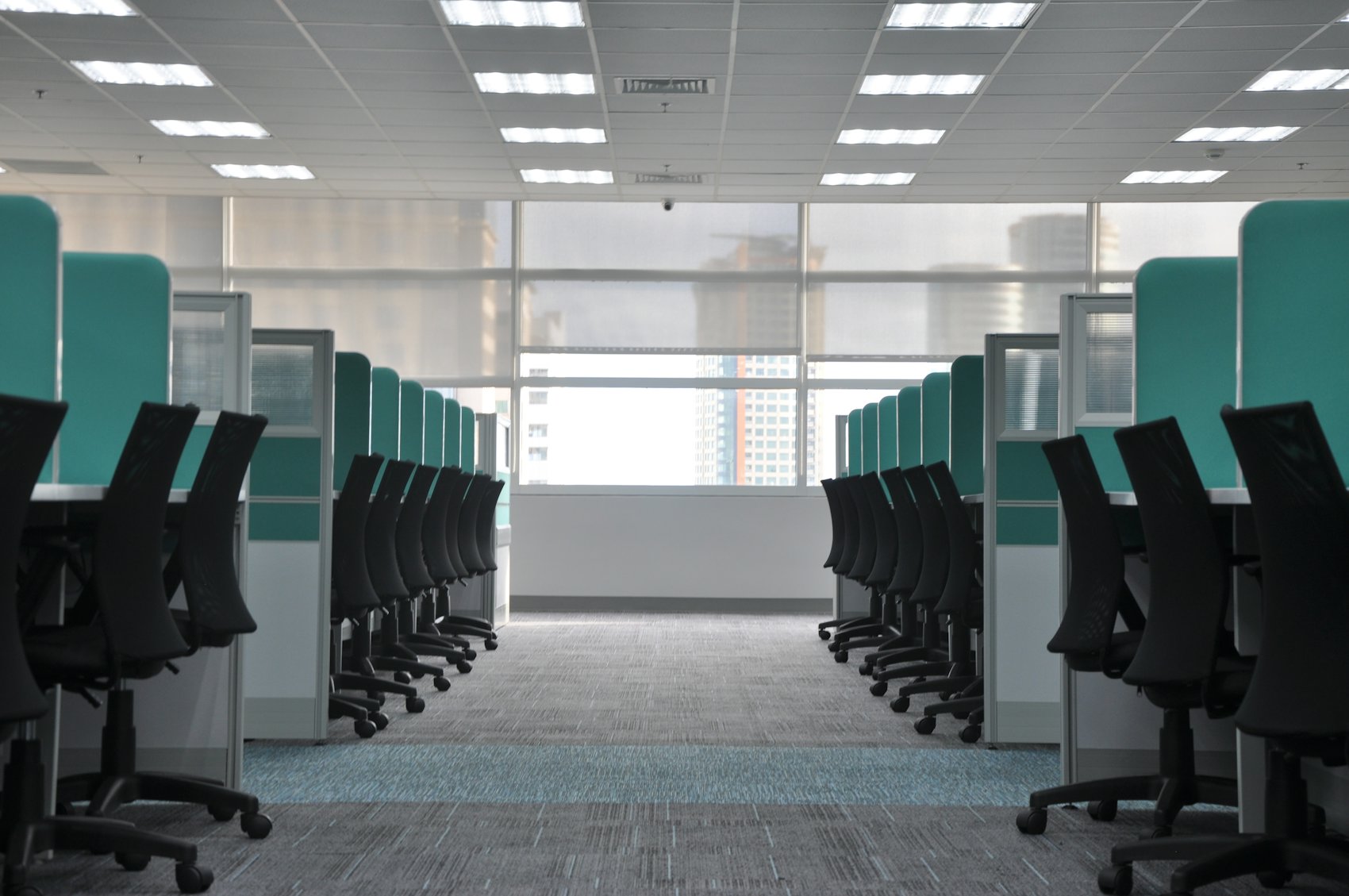
When people decide whether to stay with an employer, the office is rarely the main reason. But it is a daily reminder, good or bad, of how the company values their work. A broken chair, a desk that is too small for two monitors or a floor where every phone call is public sends a message no perks email can undo.
Office design to retain employees does not require a new build-out. It requires putting money where people feel it most. This guide shows how to prioritize, what to specify and how designer pre-owned furniture makes a real upgrade possible on a remanufactured budget.
What people actually notice
Design trends come and go, but a few fundamentals shape how a workplace feels to the people in it every day.
- Physical comfort. An adjustable task chair and a work surface at the right height.
- Room to work. Enough surface for monitors, documents and whatever else the job requires.
- Control over noise. Somewhere to take a call or concentrate without broadcasting to the floor.
- Choice. The ability to move between focused work, collaboration and a real break.
- Quality signals. Furniture that matches, works properly and looks cared for.
Notice that none of these depend on furniture being brand new. They depend on it being well chosen and in good condition.
Prioritize upgrades by daily impact
Budgets are finite, so rank upgrades by how many hours each one touches. Survey your team first. Their answers will often surprise you.
| Upgrade | Who feels it | How often | Where to look |
|---|---|---|---|
| Ergonomic task chairs | Everyone at a desk | All day | Pre-owned office chairs |
| Workstations sized for the work | Desk-based staff | All day | Used cubicles |
| Panel height and acoustic separation | Call-heavy and focus roles | Many times a day | Workstation configuration |
| Focus rooms and small meeting spaces | Anyone needing privacy | Daily | Pre-owned tables and seating |
| Break and lounge areas | Everyone | Once or twice a day | Pre-owned tables and lounge seating |
| Reception and client areas | Visitors and recruits | First impressions | Grade A pre-owned pieces |
Chairs and workstations sit at the top for a reason. They are what a new hire sits in on day one and what a long-tenured employee has sat in for years.
Why designer pre-owned furniture fits this job
High-end office furniture from manufacturers such as Herman Miller, Steelcase, Knoll, Haworth, Humanscale, Teknion, Allsteel, Kimball, AIS and Friant is built for years of commercial use. When offices downsize or relocate, much of it still has plenty of life left. That is the furniture Office Station resells.
A few honest points before you buy:
- Office Station is an independent reseller, not an authorized dealer for these brands.
- Manufacturer warranties generally do not transfer to pre-owned furniture.
- Every piece carries a condition grade: A like new, B very good, or C good.
Budgeting a 50-person floor
On a floor of 50 6'x6' workstations, the tier you choose is the biggest lever on the budget. Liquidation-grade is the lowest-cost route, remanufactured costs well below new, and new costs the most and takes the longest.
| Tier | Typical lead time |
|---|---|
| Liquidation-grade | As little as 72 hours in stock |
| Remanufactured | Usually 7 to 14 days |
| New | 4 to 6 weeks |
Choosing remanufactured instead of new for the workstations frees up money for the upgrades further down the priority list, such as better task chairs, focus rooms or a break room people want to use. Beyond the tier, station size, panel height, finishes and quantity shape the furniture cost, and a 50-station order is quoted as one project. Electrical, delivery and professional installation are separate lines on the quote. Every project is quoted individually, and space planning is free.
Design moves that make pre-owned look intentional
- Match product lines. Consistent systems across a department look planned. Mixed lines look assembled.
- Pick a restrained palette. Neutral work surfaces and panels let accent seating carry color.
- Mix tiers by zone. Remanufactured workstations with grade A lounge pieces in shared areas stretch the budget while keeping a premium feel.
- Vary panel heights. Lower panels near windows share daylight; taller panels near call-heavy teams add privacy.
- Plan before you buy. Space planning is free, and a layout prevents buying the wrong quantities.
Rolling out the upgrade without disruption
Phase the work by department so part of the office always stays productive. Use in-stock liquidation-grade pieces for anything urgent and schedule remanufactured orders around them. If the upgrade is part of a move, the corporate relocation service can coordinate the timeline.
Your existing furniture may have resale value. Office Station's office furniture liquidation service walks it for free and recommends the best route, case by case. Removal comes with an itemized inventory, e-waste handling with certificates of data destruction, and a diversion summary you can share internally.
Explore designer pre-owned furniture
Questions about your space? Email hello@officestation.com or browse more workplace planning guides.
Frequently asked questions
What office design changes help retain employees?
Start with the things people experience every hour: a comfortable, adjustable chair, a work surface that fits their tasks, reasonable acoustic privacy and access to daylight. Then add choice, such as focus rooms, collaboration areas and a break space people actually want to use. Ask your staff which of these matter most before you spend.
Is pre-owned office furniture good enough for a workplace upgrade?
It can be. Office Station sells pre-owned designer furniture from brands such as Herman Miller, Steelcase, Knoll and Haworth, graded A like new, B very good or C good. We are an independent reseller, not an authorized dealer, and manufacturer warranties generally do not transfer to pre-owned pieces.
How much does a remanufactured workstation cost compared with new?
Workstation pricing depends on grade (liquidation-grade, remanufactured or new), station size, panel height, finishes and quantity, so every project is quoted individually. Remanufactured costs well below new and gives a refreshed, uniform look. Electrical, delivery and professional installation are quoted as separate lines.
How long does an office furniture upgrade take?
Liquidation-grade items can be in stock in as little as 72 hours. Remanufactured furniture usually takes 7 to 14 days, and new furniture typically takes 4 to 6 weeks. Phasing by department keeps the office working during the change.
What happens to the old furniture?
Office Station's liquidation service walks it for free and recommends the best route: resale, a buy, a quote to clear, donation or recycling, case by case. Removal includes an itemized inventory and a diversion summary.