Office furniture color and branding is often treated as an all-or-nothing decision: either you order new furniture in custom finishes, or you settle for whatever gray was left behind. There is a much better middle path. Most of what makes a space feel on-brand comes from a handful of visible surfaces, and those are the easiest and least expensive parts to change.
This guide shows you where color belongs, how to layer it onto a pre-owned furniture plan, and what to check so the result looks designed rather than assembled.
Start with a neutral base
The largest pieces of furniture in an office are also the hardest to recolor: worksurfaces, frames, storage and table bases. In the pre-owned market these are overwhelmingly neutral, such as white, gray, black, silver and wood tones. Treat that as an advantage.
- Pick one or two structural neutrals and hold every workstation, file and table to them.
- Match finishes by type. Worksurfaces in one laminate, frames in one metal finish.
- Let neutrals do the heavy lifting so accent color reads as a choice, not an accident.
A neutral base also protects your investment. Brands evolve, and a gray workstation survives a logo refresh. A custom-colored one may not.
Where brand color has the most impact
People read a space from the entry and the aisles, not from overhead. Focus color on the surfaces they actually see.
| Surface | Visibility | Relative cost to change | Notes |
|---|---|---|---|
| Walls and feature walls | Very high | Low | Fastest route to brand color; easy to update later |
| Workstation end panels and aisle-facing panels | High | Low to moderate | Color only the panels seen from the aisle |
| Guest, lounge and collaboration seating | High | Moderate | Concentrate saturated color here |
| Task chair fabric | Moderate | Moderate | Use a brand color by department or zone |
| Desktop screens and accessories | Moderate | Low | Small doses of color at eye level |
| Worksurfaces and storage | High | High | Keep neutral in almost every plan |
Using panels and fabrics
Workstation panels
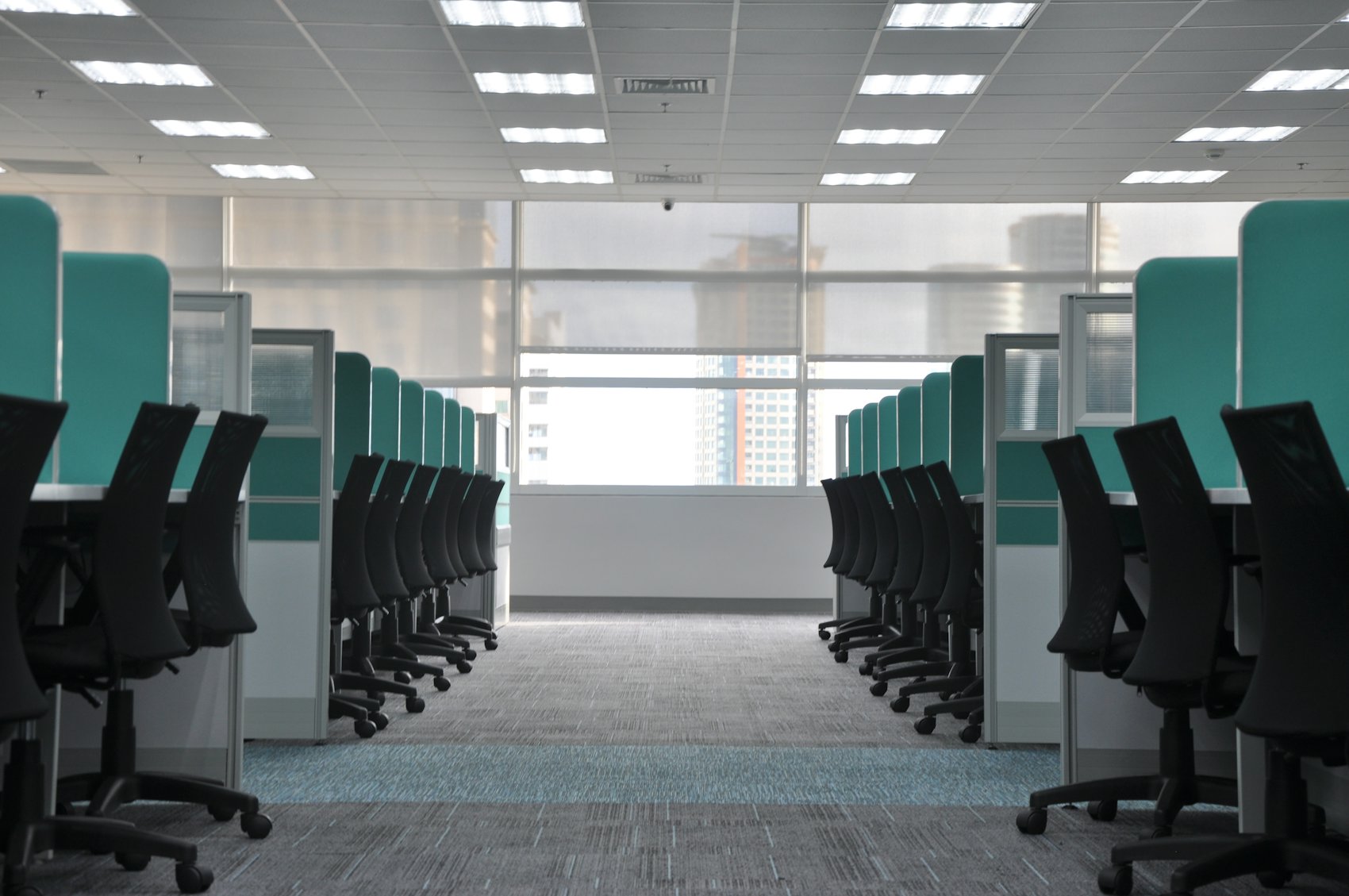
Panel fabric is where cubicles show their personality. You do not need to recolor every panel. A common approach is to keep interior panels neutral and use brand color on the end panels and aisle-facing sides of each cluster. From the walkway the floor reads as branded, while each person sits in a calm, neutral space.
When you configure used cubicles, ask what panel fabrics are available and whether a remanufactured option fits your palette better than what is in stock. For a 6'x6' workstation, furniture only, that is $615 liquidation-grade, $1,245 remanufactured and $1,920 new, excluding electrical, delivery and installation.
Seating fabrics
Chairs are the easiest way to add color in volume. Consider brand color in:
- Reception and lounge seating, where first impressions form.
- Collaboration areas, where energy helps.
- One department or neighborhood, to aid wayfinding.
Keep task chairs in heavy-use rooms dark or mid-tone, since light fabrics show wear faster. Browse pre-owned office chairs to see which colors are in stock.
Configure workstations with your colors
Accents that carry the brand
Accents are low cost and easy to swap, which makes them ideal for brand color.
- Desktop screens in a brand color on shared benching or hoteling desks.
- Area rugs that define a lounge or meeting zone.
- Planters, trays and organizers in a consistent accent.
- Wayfinding and wall graphics that tie colors to room names or teams.
- Whiteboard and tackboard frames in collaboration areas.
Mixing pre-owned lots without a patchwork look
Pre-owned furniture comes from different offices, so discipline matters. Use this checklist before you approve an order:
- Every worksurface in a zone shares one laminate color and edge profile.
- Frame and base metal finishes match within each furniture type.
- Each furniture type comes from a single lot where possible.
- Panel fabrics are consistent within a cluster, with color limited to planned panels.
- Condition grades are consistent in visible areas. Grade A is like new, B is very good and C is good.
- Accent colors match the brand palette under your actual office lighting, not just on screen.
Office Station sells pre-owned designer furniture from brands such as Herman Miller, Steelcase, Knoll, Haworth, Humanscale, Teknion and Allsteel as an independent reseller, not an authorized dealer. Manufacturer warranties generally do not transfer, so review condition as closely as color.
Plan color on the layout first
Color decisions are easier on a floor plan than on a showroom floor. Office Station offers free space planning, which lets you mark where branded panels, lounge seating and feature walls land before anything is ordered. Timing matters too: in-stock liquidation-grade furniture can be ready in as little as 72 hours, remanufactured usually takes 7 to 14 days, and new typically takes 4 to 6 weeks. If your color choices point you to remanufactured or new pieces, build that time into your move date.
If the rebrand comes with a relocation, corporate relocation services can coordinate the move, and old furniture that no longer fits your palette may be worth money through office furniture liquidation.
Average market rate Prices subject to availability and project pricing.
Frequently asked questions
Can I get pre-owned furniture in my brand colors?
Sometimes, but exact brand colors are rare in the pre-owned market because most corporate furniture is bought in neutrals. The more reliable approach is a neutral pre-owned base with brand color added through panel fabric, seating, accessories and walls. Ask whether a remanufactured option is available if in-stock colors do not fit.
What is the cheapest way to add brand color to an office?
Accent items and walls usually cost the least and change the most. A painted feature wall, colored task chairs in one zone, or branded screens on a cluster of workstations will read as intentional without recoloring the whole floor.
How do I keep mixed pre-owned lots from looking mismatched?
Set a strict palette of one or two neutrals for structural pieces like worksurfaces, frames and storage, and let color come only from accents. Buy each furniture type from a single lot where possible, and review finish consistency before delivery.
Should every workstation use brand color?
Usually not. Brand color works best concentrated in a few places, such as reception, collaboration areas and the end panels people see from the aisle. Saturated color at every desk can feel tiring over a full workday.