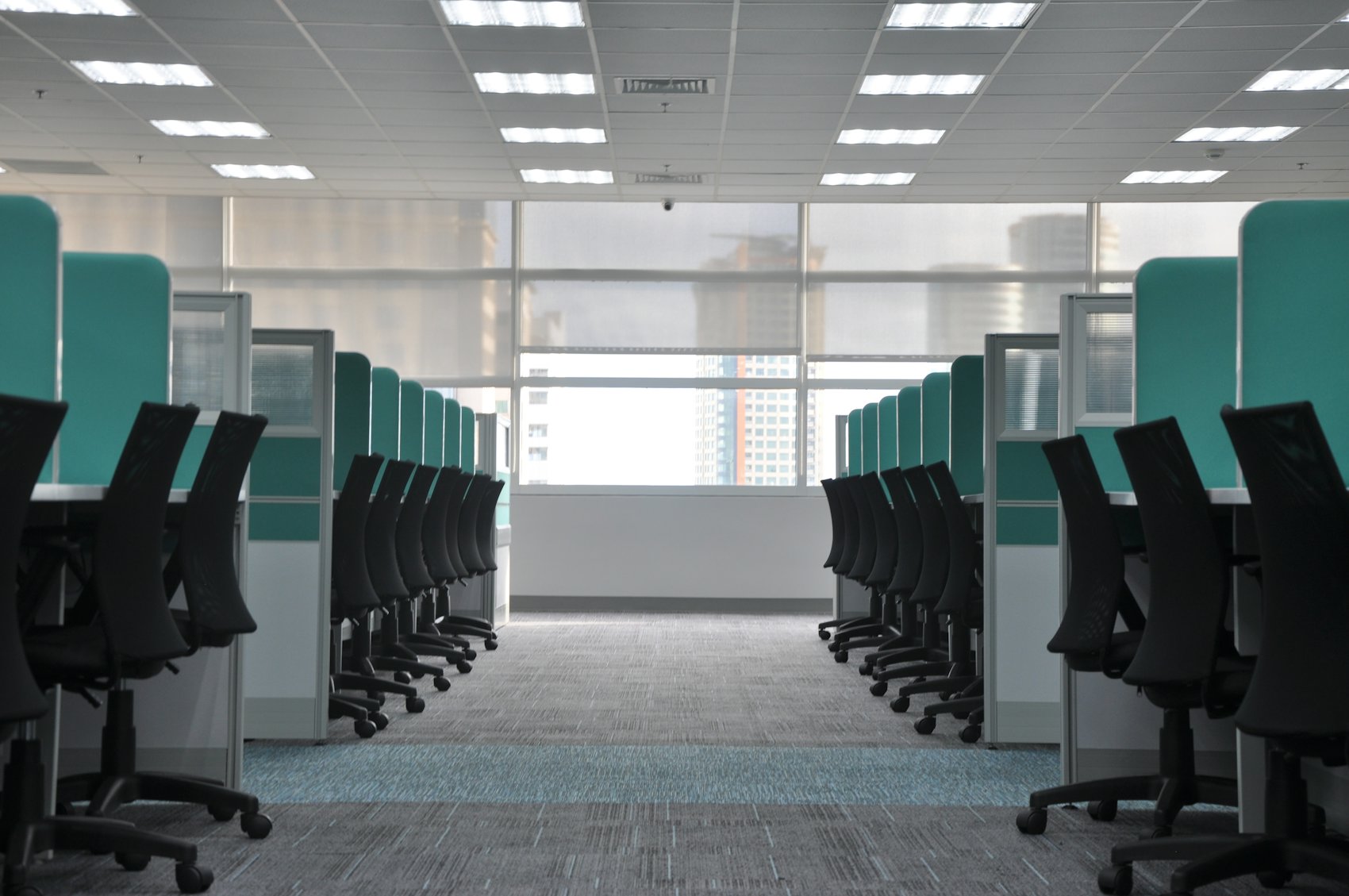
People notice their workplace most when it gets in the way. The phone call two desks over, the glare on a monitor, the chair that makes a back ache by 3 p.m., the feeling of being watched from the walkway. None of these seem dramatic alone. Together, they add up to a day that feels harder than it should.
Good workplace design for employee well-being is less about decor and more about reducing those small, constant stressors. Most of the tools are furniture decisions, and most of them are available pre-owned.
The three levers you control
You cannot redesign your building, but you can almost always change three things.
- Layout. Where people sit, which way they face and what is next to them.
- Privacy. How much visual and acoustic separation each person has.
- Ergonomics. Whether chairs, work surfaces and monitors fit the body using them.
A fourth lever sits across all three: choice. When people can move to a quieter spot for focused work or a table for a conversation, they manage their own energy better.
Layout: design for how the work actually happens
Start with an honest look at the work. A team that spends the day on calls needs something different than a team reviewing documents or collaborating at whiteboards.
Separate loud from quiet
Put collaboration areas, printers, kitchens and entry points away from focus seating. Circulation paths generate constant motion, so avoid lining workstations along the main walkway.
Watch desk orientation
Many people feel more settled when they are not seated with their back to a busy aisle. Turning a workstation or adding a panel on the walkway side can change how exposed someone feels without adding square footage.
Create a range of settings
A mix of assigned workstations, a few enclosed or semi-enclosed focus spots and some small tables gives people somewhere to go when the open area is too much. This is where a pre-owned furniture budget stretches: reclaimed conference tables, lounge pieces and side chairs cost far less than a new specification.
Privacy: find the right amount
Too little privacy creates distraction and a sense of being on display. Too much can isolate people and block the casual conversations that help teams work. Panel height is the main dial.
| Panel height (approx.) | Seated experience | Works well for |
|---|---|---|
| Low, desk height or just above | Open sightlines, easy conversation | Highly collaborative teams, short-stay seating |
| Mid, around seated eye level | Visual privacy while sitting, sightlines when standing | Most general office work |
| Tall, above standing eye level | Strong visual and some acoustic separation | Heavy phone work, sensitive tasks, deep focus roles |
You do not have to pick one height for everyone. Mixed-height systems let you give call-heavy roles taller panels while keeping lower panels for teams that talk constantly. If your team sits at open benches, see boundaries within benching for ways to add screens and dividers.
Ergonomics: fit the furniture to the person
Physical discomfort is draining, and it tends to show up as irritability and lost focus long before it shows up as a complaint. The fix is adjustability.
Chairs
Look for seat height, seat depth, adjustable arms, lumbar support and recline tension. Commercial task chairs from makers like Herman Miller, Steelcase, Haworth and Humanscale are built around this kind of adjustment, and many are available as pre-owned office chairs.
Work surfaces and monitors
The top of the monitor should sit near eye level, with the keyboard at a height that keeps shoulders relaxed. Keyboard trays and monitor arms solve many problems cheaply. Where budget allows, height-adjustable surfaces let people change posture through the day.
Light and glare
Orient screens perpendicular to windows where you can. Glare causes squinting and eye strain that people often do not connect to how tired they feel.
Doing it on a realistic budget
Well-being improvements often stall because new furniture looks unaffordable. Pre-owned commercial furniture changes the math. A 6'x6' workstation is $615 liquidation-grade, $1,245 remanufactured and $1,920 new, furniture only, excluding electrical, delivery and installation. Condition grades A like new, B very good and C good let you put your spend where people feel it most.
One practical approach is to buy liquidation-grade workstations and put the savings into better chairs and a couple of dedicated quiet spaces. Office Station sells pre-owned brand-name furniture as an independent reseller, not an authorized dealer, and manufacturer warranties generally do not transfer to pre-owned pieces.
Well-being design checklist
- Survey your team about noise, interruptions and comfort before you redesign.
- Map loud and quiet zones on the floor plan.
- Keep focus seating away from walkways, kitchens and printers.
- Match panel heights to each team's work.
- Provide at least a few places to step away for focused work or private calls.
- Give everyone a fully adjustable chair and show them how to adjust it.
- Fix monitor height and glare before buying anything bigger.
- Revisit the layout after a few months and adjust.
Price workstations for your plan
Average market rate Prices subject to availability and project pricing.
Frequently asked questions
How does office layout affect employee well-being?
Layout controls noise, interruptions, visual distraction and how much control people have over their surroundings. A plan that separates focus work from collaboration and gives people a choice of settings tends to reduce daily friction. Small changes like panel height and desk orientation can make a noticeable difference.
Can I improve workplace design with pre-owned furniture?
Yes. Pre-owned commercial workstations, panels and chairs offer the same kinds of adjustability and configuration options as new systems. A 6'x6' liquidation-grade workstation is $615 furniture only, compared with $1,920 new, which leaves budget for quiet rooms and better seating.
What ergonomic features matter most in an office chair?
Look for adjustable seat height, seat depth, armrests and lumbar support, plus a recline that locks or tensions to the person. A chair that fits the sitter matters more than a brand name. Grade A or B pre-owned task chairs are a common way to get that adjustability on a budget.
What does free space planning include?
Space planning maps how many workstations and which settings fit your floor plan, where focus and collaboration zones go, and how circulation paths flow. It helps you order the right quantities before you buy. You can request it through the contact page.
Average market rate Prices subject to availability and project pricing.