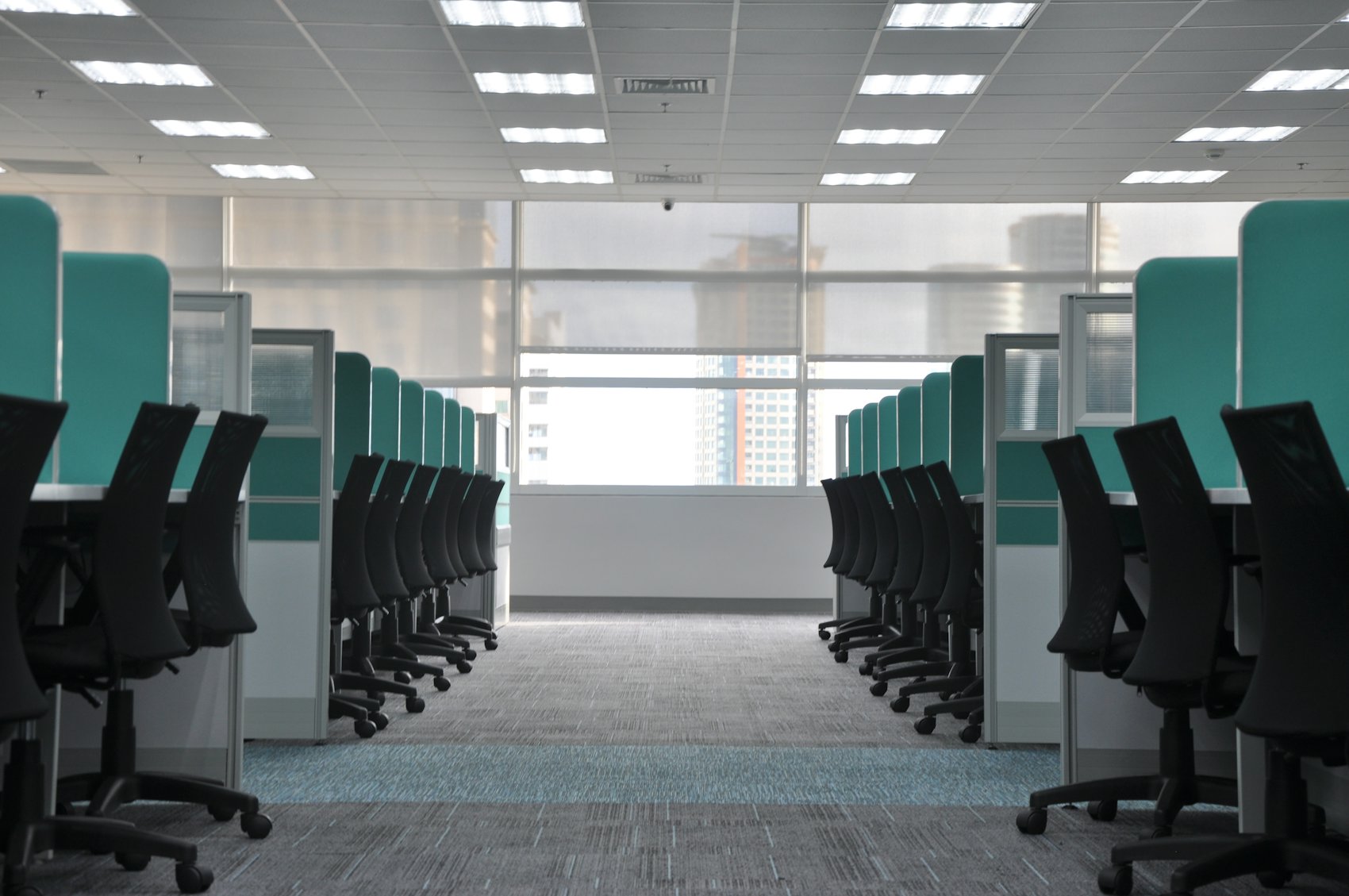
Many return-to-office plans start with a floor designed for a different era. Rows of assigned cubicles sized for full headcount, five days a week. Then people come back two or three days, and half the floor sits empty while conference rooms are booked solid.
Good return to office furniture planning fixes that mismatch before it becomes permanent. The approach is simple: measure, subtract, then add only what you need.
Step 1: Plan around attendance, not headcount
Your furniture count should reflect how many people are in the building on your busiest normal day. Before you order or remove anything, gather a few weeks of data.
- Badge swipes or desk reservations by day of week.
- Team anchor days when whole departments come in together.
- Roles that are on site daily, such as reception, operations or lab staff.
- Meeting room utilization, which often shows the real demand for shared space.
From there, set a target: dedicated stations for daily on-site roles, shared stations for hybrid staff sized to peak attendance, and a small buffer for growth and visitors.
Step 2: Do the station math
Here is a sample for a 120-person company returning on a hybrid schedule. Your numbers will differ, but the structure is the same.
| Line item | Count |
|---|---|
| Existing workstations on the floor | 120 |
| Daily on-site roles (dedicated stations) | 25 |
| Peak hybrid attendance (shared stations) | 55 |
| Buffer for growth and visitors | 10 |
| Stations needed | 90 |
| Surplus stations to liquidate | 30 |
Those 30 stations are not just clutter. The floor space they occupy can become collaboration zones, focus rooms or quiet areas that give people a reason to come in.
Before you finalize the count, sanity-check it against your meeting and team-day patterns. If three departments share the same anchor day, plan for that overlap rather than an average.
Step 3: Liquidate the surplus
Once you know your surplus, get it out of the way without disrupting the people who are back. Office Station provides a written net offer equal to the resale value of your furniture minus the removal cost. When the number is positive, you are paid for the furniture.
What to expect from the process:
- A walkthrough, typically within 48 hours in Greater Phoenix and 2-3 business days in other markets.
- A written offer within 5 business days.
- An itemized inventory of what is being removed.
- Nights and weekends crews, COIs and freight elevator and dock coordination.
- A photo-documented, broom-clean handback of the cleared area, plus a diversion summary.
If old computers or phones are part of the cleanup, e-waste can be handled with certificates of data destruction.
Estimate what your surplus is worth
Step 4: Fill the real gaps with pre-owned furniture
Right-sizing is not only about removal. Most hybrid floors need different furniture, not just less of it. Common gaps include smaller touchdown stations, better task chairs for shared desks, sit-stand options and pieces for team areas.
This is where lead time becomes a planning tool. Compare your options for a 6'x6' workstation, furniture only:
| Tier | Price | Lead time | Best for |
|---|---|---|---|
| Liquidation-grade | $615 | As little as 72 hours in stock | Fast gap fills, shared stations |
| Remanufactured | $1,245 | Usually 7-14 days | Consistent look in visible areas |
| New | $1,920 | 4-6 weeks | Specific finishes or configurations |
Average market rate Prices subject to availability and project pricing.
Prices exclude electrical, delivery and professional installation. Installation is $95 per workstation with a $495 minimum. Volume pricing applies at 5% for 20+ stations, 8% for 50+ and 12% for 100+.
Because liquidation-grade and remanufactured options arrive quickly, you can phase your return. Open with the right-sized plan, watch attendance for a month, then add what you actually need.
Do not forget chairs
Shared desks mean shared chairs, and a chair that adjusts well for one person may not fit the next. Prioritize fully adjustable task seating for hot-desking areas. See pre-owned office chairs for options at resale prices.
Return to office furniture planning checklist
- Collect at least a few weeks of attendance data.
- Separate dedicated roles from hybrid roles.
- Calculate stations needed and surplus stations.
- Request a liquidation walkthrough and written net offer.
- Use free space planning to lay out the new floor.
- Choose tiers by area: fast fills versus visible spaces.
- Schedule removal and installation outside business hours.
- Review attendance again after 30 days before adding more.
Getting started
Office Station handles liquidation across Phoenix, Tucson, Flagstaff, Las Vegas, Reno, San Diego, Orange County, Northern California, Denver, Salt Lake City and Albuquerque, and supports larger moves through corporate relocation. Greater Phoenix delivery is $195 central or $295 metro, and freight elsewhere is quoted per project.
Email hello@officestation.com or use the contact page to start with a walkthrough and a free space plan.
Frequently asked questions
How many workstations do I need for a hybrid return to office?
Base the count on peak in-office attendance, not total headcount. Track badge or reservation data for a few weeks, find your busiest regular day, and add a modest buffer for growth and visitors. Assigned roles that are in every day should still get dedicated stations.
What should I do with workstations we no longer need?
Get a written net offer before paying anyone to haul them away. Office Station's offer is the resale value of the furniture minus the removal cost, and a positive number means you are paid. Removal can be scheduled on nights or weekends so the office stays usable.
How fast can I get additional furniture if we come up short?
Liquidation-grade workstations can ship in as little as 72 hours when in stock. Remanufactured furniture usually takes 7-14 days, and new furniture typically takes 4-6 weeks. Short lead times let you order after you see real attendance instead of guessing months ahead.
Can I sell some furniture and buy other furniture in the same project?
Yes, and it is often the most efficient approach. You can liquidate surplus cubicles while adding pre-owned collaboration pieces, chairs or smaller stations that fit the new plan. Free space planning helps you see both sides before anything moves.
What does installation cost for added workstations?
Professional installation is $95 per workstation with a $495 minimum. Prices for furniture exclude electrical, delivery and installation. Greater Phoenix delivery is $195 central or $295 metro, and freight elsewhere is quoted per project.
Average market rate Prices subject to availability and project pricing.