Office furniture quotes read like a foreign language the first time you see one. A single line can mention panels, stackers, a powerbase, a worksurface and a condition grade, and two vendors may use the same word to mean different things. This glossary explains the terms you are most likely to see, in plain English, so you can compare options with confidence.
Workstation basics
Workstation
The catch-all term for an assembled place where one person works. It includes the worksurface, any panels or screens, storage and power. A quote for "40 workstations" tells you the count, not the design, so always ask for the footprint and component list.
Cubicle
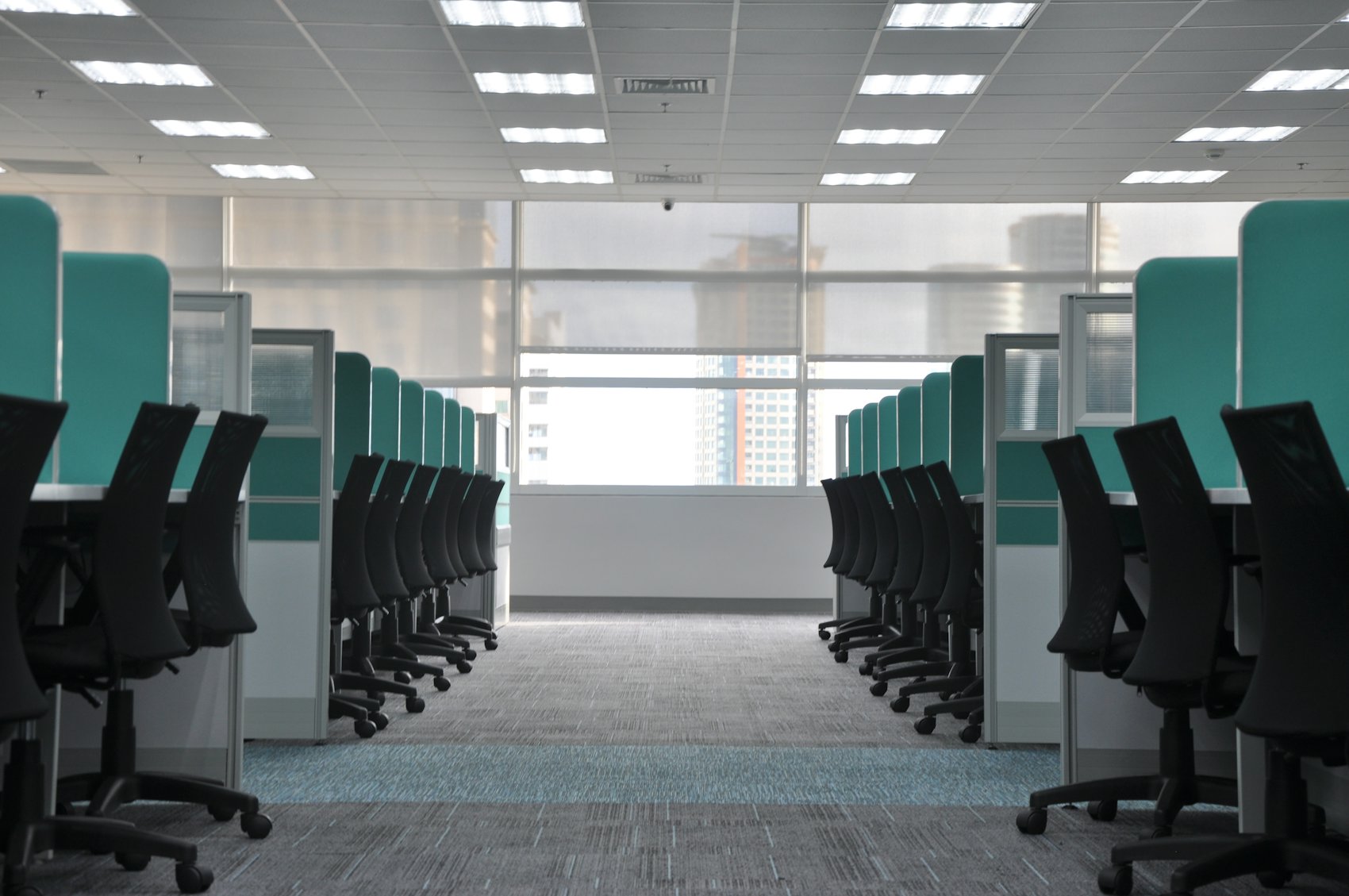
A workstation enclosed on two or three sides by panels. Cubicles are usually described by footprint, such as 6'x6' or 6'x8', and by panel height. If you are shopping for them, our used cubicles page shows the common configurations.
Footprint
The outside dimensions of a workstation, measured panel center to panel center in most systems. A 6'x6' footprint is a common size for individual contributors. Footprint drives how many stations fit in a room, so it matters more than the style name.
Benching
An open, table-style system where several people sit along a shared spine, often facing each other. Benching uses less floor area per person and costs less than tall cubicles, but it offers little visual or acoustic privacy. Low desktop screens are often added between seats.
Worksurface
The desktop itself. Worksurfaces come in rectangles, corners (often called L-shapes) and extended corners. Depth is usually 24 or 30 inches. Deeper surfaces help people using multiple monitors.
Panels, tiles and power
Panel
The upright wall section of a cubicle. Panels are specified by width and height. Low panels sit around seated eye level, which keeps sightlines open. Tall panels block views and some sound but make a floor feel closed in.
Tile
A removable face that attaches to a panel frame. Tiles can be fabric, laminate, glass, marker board or tackable surface. Tiled systems let you change the look without replacing the whole panel, which is useful when refreshing pre-owned stock.
Stacker
A shorter panel or glass section added on top of an existing panel to raise its height. Stackers are a common way to add privacy without replacing a system.
Powerbase and raceway
The channel at the bottom or waist of a panel that carries electrical and data cabling. When a quote says "powered panels," it means the system has this wiring path. Note that Office Station furniture prices exclude electrical work, which a licensed electrician must connect to your building.
Overhead and pedestal
An overhead is a storage bin mounted above the worksurface. A pedestal is the small drawer unit that sits under or beside the desk, either mobile on casters or fixed.
Condition grades A, B and C
Pre-owned furniture is sold with a condition grade so you know what to expect before it arrives. Office Station uses three grades:
| Grade | Meaning | Good fit for |
|---|---|---|
| A | Like new | Client-facing areas, executive offices, reception |
| B | Very good | Main open office floors and team areas |
| C | Good | Back offices, call centers, training rooms, storage areas |
Grades describe condition, not brand or quality level. A Grade C chair from a respected maker can outperform a brand-new budget chair. Mixing grades by zone is one of the simplest ways to stretch a budget.
Remanufactured vs liquidation-grade vs new
These three words describe how much work has gone into a piece and, as a result, what it costs and how fast you can get it.
- Liquidation-grade: Furniture recovered from an office and sold close to its removed condition after inspection. Lowest price, and in-stock items can ship in as little as 72 hours.
- Remanufactured: Pre-owned components that have been cleaned, repaired and often refinished or re-covered before sale. Usually 7 to 14 days.
- New: Built to order by the manufacturer. Usually 4 to 6 weeks.
| 6'x6' workstation, furniture only | Price | Typical lead time |
|---|---|---|
| Liquidation-grade | $615 | As little as 72 hours if in stock |
| Remanufactured | $1,245 | Usually 7-14 days |
| New | $1,920 | 4-6 weeks |
Average market rate Prices subject to availability and project pricing.
Prices exclude electrical, delivery and professional installation. Installation runs $95 per workstation with a $495 minimum, and volume pricing takes 5% off at 20 or more stations, 8% at 50 or more, and 12% at 100 or more.
Terms you will hear when selling furniture
Liquidation
Selling or removing an entire office's furniture, usually during a move, downsizing or lease end. See how it works on our office furniture liquidation page.
Net offer
The resale value of your furniture minus the cost of removing it. A positive net offer means you get paid. A negative one means removal costs more than the furniture is worth, and you pay the difference.
Decommissioning
Clearing a space completely so it can be returned to the landlord: furniture, e-waste, cabling and cleanup. Details are on our office decommissioning page.
COI, broom-clean and diversion summary
A COI is a certificate of insurance your building will ask for before any crew arrives. Broom-clean means the space is swept and empty at handback. A diversion summary reports how much material was resold or recycled instead of landfilled.
Still seeing a term you do not recognize? Send the quote line to hello@officestation.com or browse more guides.
Frequently asked questions
What is the difference between a cubicle and a workstation?
In everyday use the words overlap. Cubicle usually means a panel-enclosed space, while workstation is the broader industry term for any assembled work area, including open benching. When you get a quote, ask for the footprint, panel heights and component list rather than relying on the label.
What does Grade A, B or C mean on pre-owned furniture?
At Office Station, Grade A means like new, Grade B means very good, and Grade C means good. The grade describes cosmetic and functional condition, so a Grade C piece can still work well where appearance matters less, such as a back office or training room.
Is remanufactured furniture the same as refurbished?
Not always. Sellers use these words differently, so ask what was actually done. Remanufactured typically means components were cleaned, repaired and often refinished or re-covered, while liquidation-grade stock is sold closer to as-removed condition at a lower price.
Do manufacturer warranties come with pre-owned furniture?
Generally no. Manufacturer warranties usually do not transfer to pre-owned furniture. Office Station is an independent reseller, not an authorized dealer for any brand, so confirm condition and grade before you buy.
What is a typical price difference between liquidation-grade, remanufactured and new?
For a 6'x6' workstation, furniture only, Office Station prices run about $615 liquidation-grade, $1,245 remanufactured and $1,920 new. Those figures exclude electrical, delivery and professional installation.
Average market rate Prices subject to availability and project pricing.