Few office decisions spark more debate than cubicles versus an open plan. One side hears "cubicle" and pictures a gray maze. The other hears "open office" and pictures a noisy room full of headphones. Both layouts can work well. The right answer depends on three measurable things: how much privacy the work requires, how much you can spend per seat and how many people must fit on the floor.
What we mean by each layout
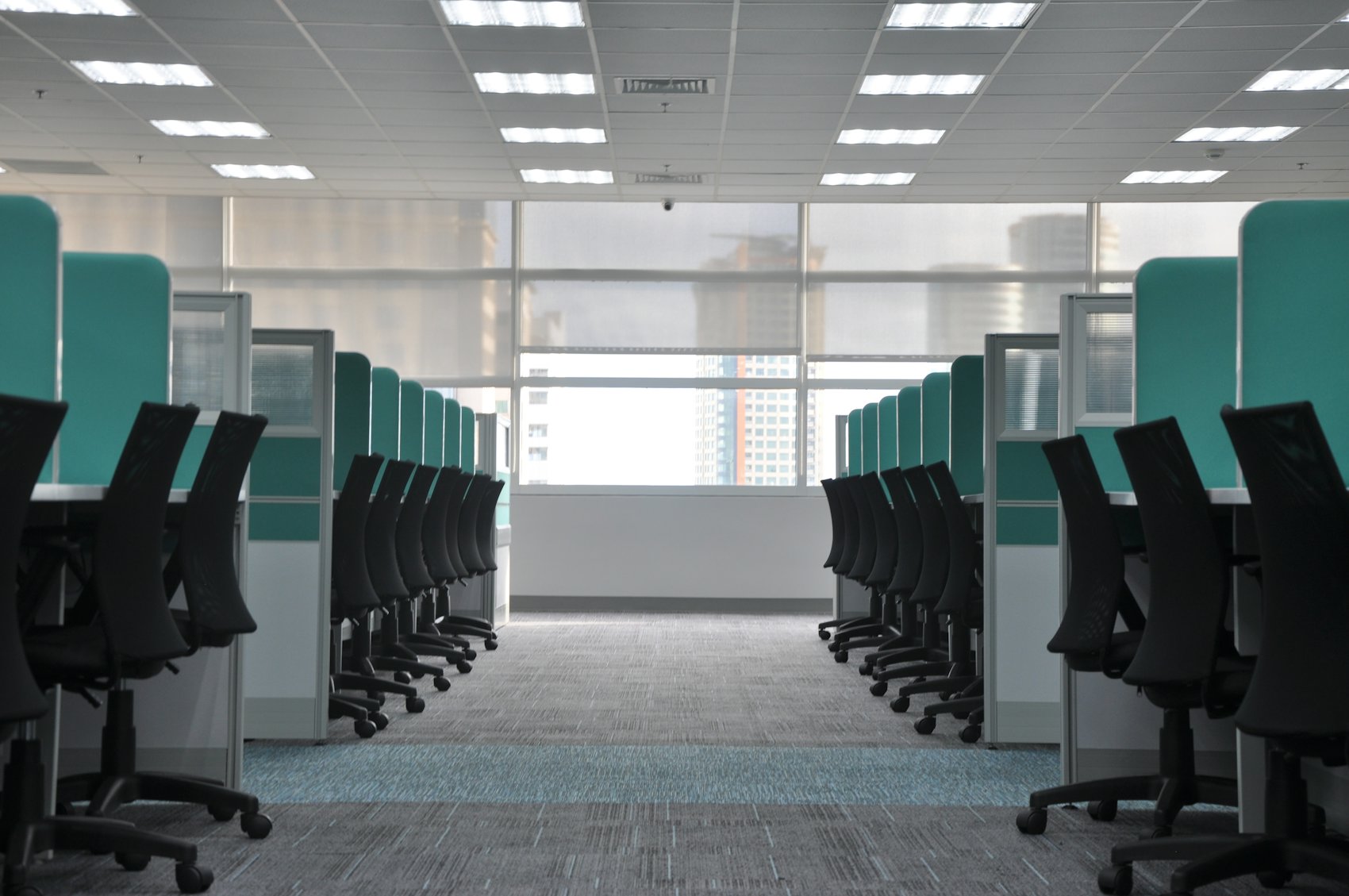
Cubicles are panel-based workstations. Each person has a defined space bounded by panels, usually with attached work surfaces and storage. Panel heights range from low dividers to walls above standing height.
Open office layouts use benching or freestanding desks with little or no separation. People sit side by side or face to face along shared runs, often with low screens between positions.
In practice most offices land somewhere between, and that middle ground is often the best answer.
Privacy: cubicles win, by degrees
Privacy is where cubicles earn their reputation. Panels block sightlines, absorb some sound and give people a space that feels their own. The taller the panel, the more privacy, though taller panels also cut daylight and can make a floor feel closed.
Open offices trade privacy for visibility. That suits teams that need to talk constantly, but it creates problems for roles that handle confidential information, spend hours on the phone or need long stretches of concentration.
- Choose cubicles for HR, finance, legal, support lines, analysts and supervisors.
- Choose open seating for project teams, creative groups and rotating hybrid seats.
- Consider mid-height panels as a compromise when a group does a bit of both.
Cost: compare per seat, then per project
Here is where real numbers help. Office Station prices a 6'x6' workstation, furniture only, at three tiers:
| Tier | Per 6'x6' station | 50 stations | After 8% volume pricing | Lead time |
|---|---|---|---|---|
| Liquidation-grade | $615 | $30,750 | $28,290 | As little as 72 hours in stock |
| Remanufactured | $1,245 | $62,250 | $57,270 | Usually 7 to 14 days |
| New | $1,920 | $96,000 | $88,320 | 4 to 6 weeks |
Average market rate Prices subject to availability and project pricing.
A few takeaways:
- Tier matters more than layout. Moving from new to liquidation-grade saves $1,305 per 6'x6' station. That difference is often larger than the component savings of choosing benching over cubicles.
- Open benching generally uses fewer panels, so it tends to cost less per seat than a comparable cubicle at the same tier. Get a quote for your specific configuration, since benching layouts vary widely.
- Add the rest of the project. Installation is $95 per workstation with a $495 minimum, so 50 stations run $4,750. Greater Phoenix delivery is $195 central or $295 metro, and freight elsewhere nationwide is quoted per project. Electrical is not included in any tier.
Density: open plans fit more people
Density is the open office's strongest argument. A 6'x6' cubicle occupies 36 square feet before you add aisles. Benching positions are often narrower and share a central spine, which removes the panel and aisle space between rows. The same floor area typically seats more people in benching than in cubicles.
That matters when rent is your largest cost. But density has a ceiling. Pack people too tightly and noise, complaints and meeting-room demand rise until the savings erode. Your building, aisle widths, exits and local code also set hard limits, so test both layouts on your actual floor plan rather than relying on rules of thumb.
| Factor | Cubicles | Open office |
|---|---|---|
| Visual privacy | Moderate to high, depending on panel height | Low |
| Acoustic privacy | Moderate with fabric panels | Low |
| Per-seat furniture cost | Higher at the same tier | Lower at the same tier |
| Seats per square foot | Lower | Higher |
| Personal storage | Built in | Usually separate lockers or pedestals |
| Reassigning seats | Moderate effort | Easy |
| Best for | Focus, confidential and phone-heavy work | Collaboration and rotating seats |
Switching layouts without wasting what you own
Changing from one layout to the other does not mean your current furniture is a loss. Office Station can evaluate the furniture you are replacing and provide a written net offer: its resale value minus the cost of removing it. If the number is positive, you are paid, and that money can go toward the new layout. Walkthroughs are typically within 48 hours in Greater Phoenix and 2 to 3 business days in other service markets, with offers within 5 business days.
Before you decide, work through these questions:
- Which roles need privacy for confidentiality or phone work?
- What is your peak in-office head count, not your total head count?
- What is your per-seat budget, and which tier fits it?
- When do you need to be moved in, and which tier's lead time meets that date?
- What will you do with the furniture you are replacing?
Free space planning can lay out both options on your floor plan so you can compare seat counts side by side. To see what your current furniture might be worth, start with office furniture liquidation, and browse pre-owned office furniture or used cubicles for the new layout.
Estimate your current furniture's value
Frequently asked questions
Are cubicles more expensive than an open office?
Per seat, cubicles usually cost more because they use more panels and components than open benching. The gap narrows when you buy pre-owned. A 6'x6' workstation, furniture only, is $615 liquidation-grade, $1,245 remanufactured or $1,920 new, excluding electrical, delivery and installation.
How many people fit in a cubicle layout versus an open plan?
A 6'x6' cubicle occupies 36 square feet before aisles, while open benching positions can be narrower and share a spine, which usually fits more people in the same area. Actual density depends on your building, aisle widths and local code, so use free space planning to test both layouts on your floor plan.
Which layout is better for productivity?
It depends on the work. Focus-heavy, confidential and phone-heavy roles tend to do better with cubicle panels, while teams that collaborate constantly often prefer open seating. Many offices mix both, with quiet cubicle zones and open collaboration zones.
Can I switch from an open office to cubicles without buying everything new?
Yes. Pre-owned cubicles are available at liquidation-grade and remanufactured tiers, and surplus benching you no longer need can be evaluated for a written net offer. That offer is the resale value minus removal cost, and a positive number means you are paid.
Average market rate Prices subject to availability and project pricing.