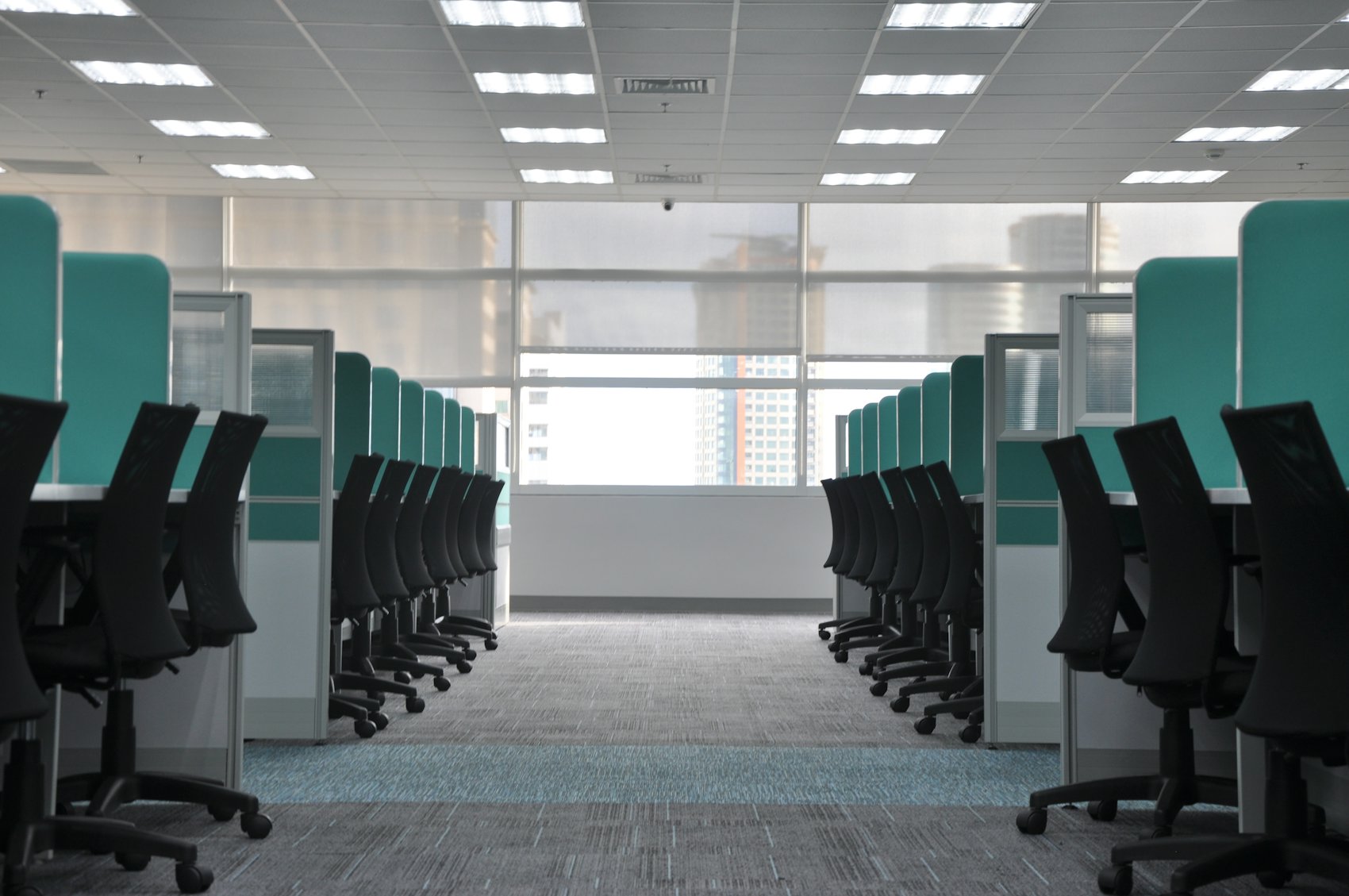
Hybrid work changed how often people come in, but for many companies it did not change the floor plan. The result is a sea of empty stations on Monday and Friday and a scramble for seats on Tuesday. The fix is not a full redesign. It is a disciplined right-sizing: count real demand, clear what you do not need, and fill the gaps with furniture matched to how each group works.
Tip 1: Measure real attendance before you move a single panel
Your lease tells you how many people the space holds. Your badge reader, desk booking tool or Wi-Fi logs tell you how many actually show up. Pull at least six to eight weeks of data so holidays and one-off events do not skew the picture.
Look for three numbers:
- Peak day attendance. The busiest recurring weekday is your design target, not the annual maximum.
- Anchor groups. Teams that come in together on set days need seats near each other.
- Near-daily users. Reception, finance, IT and managers who are in most days usually deserve assigned stations.
Add a buffer of a few seats for visitors and hiring, then compare that total to the stations you currently own. The difference is your surplus, and it is often larger than expected.
Tip 2: Turn surplus stations into a written number
Unused workstations cost you twice. They take up rent-bearing square footage, and they block the reconfiguration you actually need. Before you decide to keep them "just in case," find out what they are worth.
Office Station provides a written net offer: the resale value of the furniture minus the cost of removing it. A positive number means Office Station pays you. A negative number means you know the exact cost of clearing the space. Either way, you are planning with a real figure instead of a guess.
What affects the offer:
- Brand and product line, since systems from makers like Herman Miller, Steelcase, Knoll and Haworth tend to resell better
- Condition, completeness of parts and matching finishes
- Access, including freight elevator availability, dock hours and building rules
- Quantity, since a consistent run of identical stations is easier to resell than mixed pieces
Walkthroughs are typically scheduled within 48 hours in Greater Phoenix and within 2 to 3 business days in other service markets, with offers delivered within 5 business days. Crews can work nights and weekends so the remaining team is not disrupted, and you receive an itemized inventory and a photo-documented broom-clean handback of the vacated area.
Estimate your surplus furniture value
Tip 3: Match the furniture type to the work pattern
A hybrid floor rarely works with one furniture type across the board. Split the plan by how each group uses the office.
Rotating and shared seats: benching
Benching puts more people in less space, needs fewer panels and is easy to reassign as teams change. It works well for people who come in to collaborate and do not store much at the desk. Pair it with lockers so shared seats stay clear.
Assigned and focus seats: cubicles
People who are in most days, handle confidential calls or need storage do better at a cubicle. Panels give acoustic and visual separation, and overhead or pedestal storage keeps work in place overnight. Browse used cubicles for configurations and panel options.
Chairs for everyone
Shared seats see more users per chair, so adjustability matters. A fully adjustable pre-owned task chair lets each person dial in their own fit. See the range of pre-owned office chairs.
Tip 4: Budget the new layout with known prices
Once you know how many seats you need, pricing is straightforward. Office Station lists a 6'x6' workstation, furniture only, at three tiers:
| Tier | Price per 6'x6' station | Typical lead time | 20 stations, before volume pricing |
|---|---|---|---|
| Liquidation-grade | $615 | As little as 72 hours in stock | $12,300 |
| Remanufactured | $1,245 | Usually 7 to 14 days | $24,900 |
| New | $1,920 | 4 to 6 weeks | $38,400 |
Average market rate Prices subject to availability and project pricing.
A few more figures to build a complete budget:
- Volume pricing: 5% at 20 or more stations, 8% at 50 or more, 12% at 100 or more.
- Installation: $95 per workstation with a $495 minimum. Twenty stations would run $1,900.
- Delivery: $195 for central Greater Phoenix, $295 for the wider metro. Freight elsewhere nationwide is quoted per project.
- Space planning: free.
- Not included: electrical work, which you will coordinate separately with your building or electrician.
Mixing tiers is a practical move for hybrid offices. Put remanufactured stations where people sit every day, and use liquidation-grade benching or cubicles for shared seats that simply need to be clean, functional and fast to install.
Hybrid right-sizing checklist
- Pull six to eight weeks of attendance data and identify your peak recurring day.
- List assigned seats versus shared seats by team.
- Count owned stations and calculate surplus.
- Request a walkthrough and written net offer on the surplus.
- Choose benching or cubicles for each zone and pick a tier.
- Confirm lead times against your move-in or reconfiguration date.
- Coordinate electrical, certificates of insurance and building access.
- Schedule removal and installation for nights or weekends if the office stays open.
If electronics are leaving with the furniture, ask about e-waste handling with certificates of data destruction, and request the diversion summary for your sustainability reporting. For a full floor or building exit, office decommissioning covers the broader scope.
Build a quote for your new layout
Frequently asked questions
How many desks does a hybrid office need?
Plan around your peak in-office day, not your total head count. Track badge or booking data for several weeks, find the busiest recurring day, and add a modest buffer for visitors and growth. Teams that come in on set anchor days usually need assigned stations, while occasional visitors can share a smaller pool.
Can I get paid for the workstations I no longer need?
Possibly. Office Station issues a written net offer, which is the resale value of your furniture minus the cost of removing it. If the number is positive, you are paid. If it is negative, you know the exact cost of clearing the space before you commit.
Is benching or cubicles better for a hybrid office?
Benching fits rotating and shared seating because it is dense and easy to reassign. Cubicles fit people who are in most days and need storage, acoustic separation or focus time. Many hybrid floors use both, with cubicles near quiet zones and benching near collaboration areas.
How fast can replacement workstations arrive?
Liquidation-grade stations can be ready in as little as 72 hours when in stock. Remanufactured stations usually take 7 to 14 days, and new stations typically take 4 to 6 weeks. Prices exclude electrical, delivery and professional installation.
Do manufacturer warranties come with pre-owned furniture?
Generally no. Office Station is an independent reseller, not an authorized dealer, and manufacturer warranties generally do not transfer to pre-owned furniture. Condition grades of A, B and C tell you what you are buying before you commit.