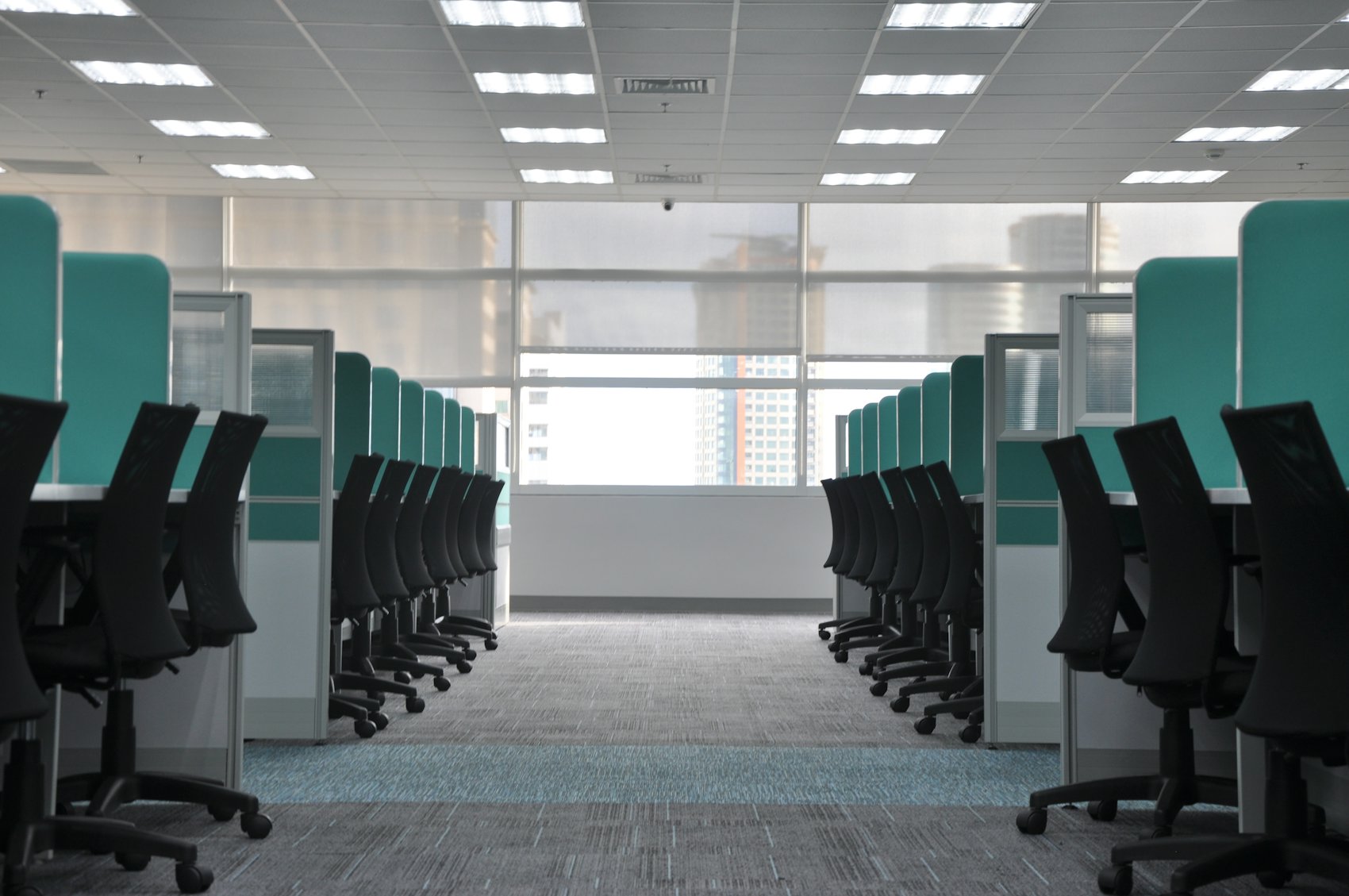
Many companies kept an office built for five days a week while their teams moved to two or three. The result is rows of empty workstations, rent on unused square footage and not enough of the rooms people actually want when they come in. Hybrid office planning starts by admitting the old layout no longer matches the work.
Start with real attendance, not headcount
Your planning number is how many people are in the office on a busy day. Gather at least four to six weeks of data so holidays and one-off events do not skew it.
- Badge or access data shows arrivals by day.
- Desk booking tools show reservations, though no-shows can inflate them.
- Floor walks at mid-morning and mid-afternoon capture who is actually seated.
- Team schedules reveal anchor days when whole departments come in together.
Look at the peak day of a typical week, not the single busiest day of the quarter. Then add a buffer for visitors, new hires and meeting overflow.
Right-size the seat count
Here is how the math might look for a company with 120 employees.
| Planning input | Example |
|---|---|
| Total employees | 120 |
| Typical peak-day attendance | 72 |
| Buffer for visitors and growth (about 15%) | 11 |
| Target workstation count | 83 |
| Existing workstations | 120 |
| Surplus workstations | 37 |
Those 37 surplus stations are not just clutter. They are floor area you can convert into meeting rooms, focus rooms or team tables, and they may carry resale value.
Decide the new mix of spaces
People who commute in on a hybrid schedule usually come to collaborate, so the office needs to support that. As you rework the plan, balance these zones:
- Assigned workstations for people who are in most days or need specialized setups.
- Shared workstations for hybrid staff, with lockers or mobile storage in place of large pedestals.
- Team neighborhoods so departments sit together on anchor days.
- Focus rooms for video calls, which otherwise take over conference rooms.
- Collaboration areas with tables and whiteboards sized for four to eight people.
Free space planning can help you test how many of each fit once the surplus is gone.
Turn surplus furniture into a net offer
Before the reconfiguration, clear what you no longer need. Office Station handles office furniture liquidation across the Southwest, including Phoenix, Tucson, Las Vegas, San Diego, Denver and Salt Lake City.
- Walkthrough. Typically within 48 hours in Greater Phoenix and 2 to 3 business days in other markets.
- Written net offer. Delivered within 5 business days. It equals the resale value of the furniture minus the removal cost. If the number is positive, you are paid.
- Removal. Crews work nights or weekends if needed, with COIs, freight elevator and dock coordination, and an itemized inventory.
- E-waste. Old computers and devices leave with certificates of data destruction.
- Handback. The area is returned broom-clean with photo documentation and a diversion summary.
Estimate your surplus furniture
Reconfigure with pre-owned stations
Hybrid plans change as policies and teams evolve, so avoid locking a reconfiguration into long lead times and new-furniture prices. Compare your options for a 6'x6' workstation, furniture only:
| Grade | Price | Lead time | Best for |
|---|---|---|---|
| Liquidation-grade | $615 | As little as 72 hours in stock | Shared desks, overflow, quick changes |
| Remanufactured | $1,245 | Usually 7 to 14 days | Team neighborhoods and assigned seats |
| New | $1,920 | 4 to 6 weeks | Specific finishes or configurations |
Average market rate Prices subject to availability and project pricing.
Prices exclude electrical, delivery and professional installation. Installation is $95 per workstation with a $495 minimum. Volume pricing applies at 5% for 20 or more stations, 8% for 50 or more and 12% for 100 or more, so an 83-station plan qualifies for 8%.
You may also be able to keep and reconfigure some existing workstations rather than replacing them. Mixing kept stations with used cubicles and pre-owned office chairs is a common way to finish the plan without overbuying.
When hybrid means a smaller office
Some companies find the right answer is a smaller lease, not a new layout. If you are giving back a floor or moving, office decommissioning and corporate relocation cover clearing the old space and setting up the new one, so you coordinate one plan instead of several vendors.
Hybrid office planning checklist
- Collect four to six weeks of attendance data.
- Set a target seat count from the typical peak day plus buffer.
- Count surplus workstations, chairs and storage.
- Decide the mix of assigned, shared, focus and collaboration space.
- Schedule a liquidation walkthrough and get a written net offer.
- Choose furniture grades by zone and confirm lead times.
- Book electrical, delivery and installation.
- Revisit attendance after three months and adjust.
Frequently asked questions
How do I figure out how many desks a hybrid office needs?
Measure attendance over several weeks and plan around a typical peak day rather than the average or the total headcount. Add a small buffer for visitors and growth. Badge data, desk bookings and simple floor counts all work.
What should I do with furniture I no longer need?
Office Station can give you a written net offer, which is the resale value of the furniture minus the cost of removal. When resale value exceeds removal cost, you are paid. Walkthroughs typically happen within 48 hours in Greater Phoenix and 2 to 3 business days in other markets.
Is pre-owned furniture a good fit for a hybrid reconfiguration?
Often, yes. Pre-owned workstations let you change layouts at a lower cost, and shorter lead times help you move quickly. Liquidation-grade stations start at $615 and remanufactured stations at $1,245 for a 6'x6' furniture-only workstation.
Do manufacturer warranties come with pre-owned furniture?
Generally not. Office Station is an independent reseller, not an authorized dealer, and manufacturer warranties generally do not transfer to pre-owned furniture. Condition grades of A, B and C help you know what you are buying.
Can the removal happen without disrupting employees?
Yes. Crews can work nights and weekends, coordinate freight elevators and docks, and provide certificates of insurance for your building. The space is handed back broom-clean with photo documentation.
Average market rate Prices subject to availability and project pricing.